
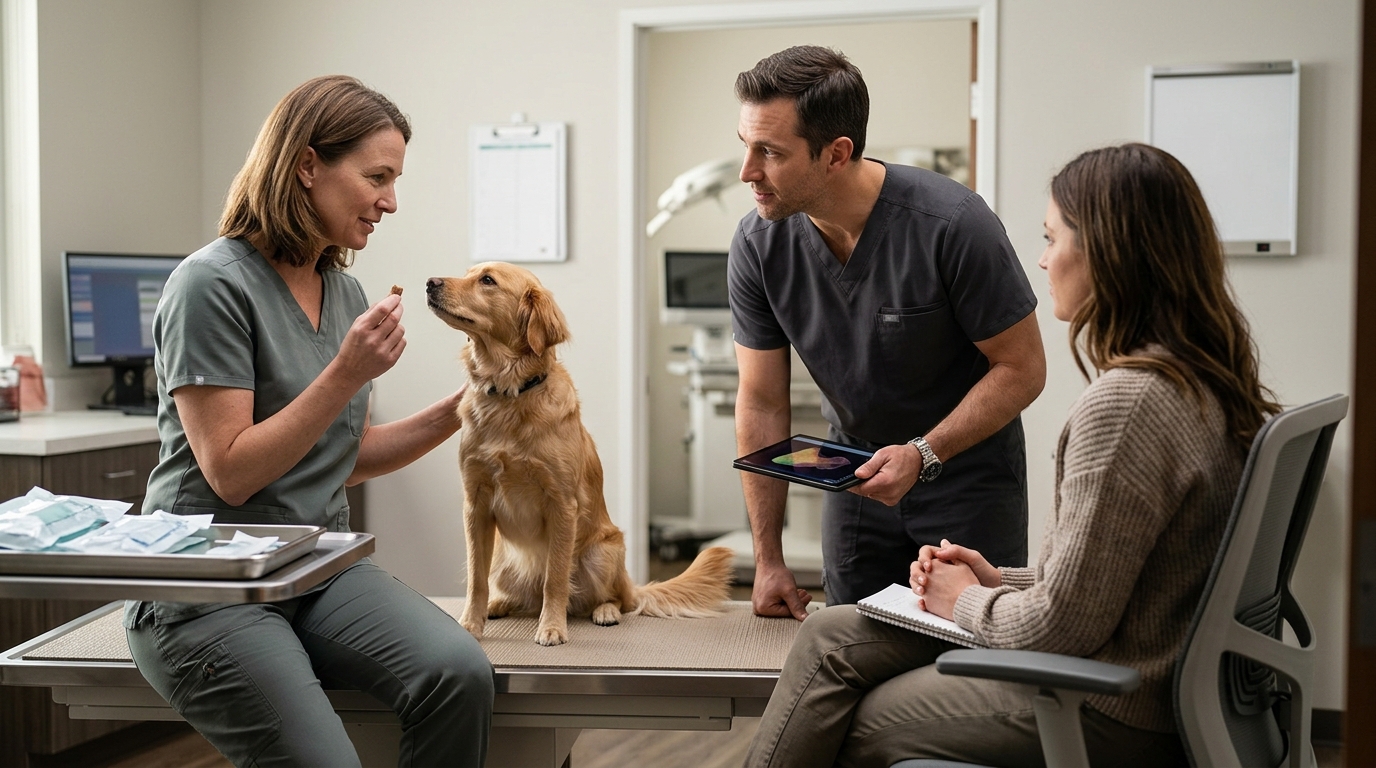
Understanding the distinction between a general practitioner and a specialist is critical when your pet faces complex medical challenges. While both professionals are licensed veterinarians, their training pathways and clinical capabilities differ significantly. According to the American College of Veterinary Surgeons, board-certified surgeons complete an additional three to four years of rigorous residency training after veterinary school. This specialized education ensures they possess the advanced technical skills required for high-risk procedures that general practitioners typically refer out.
Training Pathways and Certification
The primary difference lies in the depth of specialized education. A general veterinarian completes a Doctor of Veterinary Medicine (DVM) degree, which provides a broad foundation in animal health, medicine, and surgery. They are fully qualified to perform routine procedures such as spays, neuters, and basic mass removals. However, their surgical training is limited to common, low-complexity cases.
In contrast, a veterinary surgeon is a Diplomate of the American College of Veterinary Surgeons (ACVS). This title is not automatic. It requires completing an internship followed by a multi-year surgical residency. During this time, they perform thousands of hours of supervised surgery under expert mentors. This rigorous process ensures they are experts in complex orthopedic, soft tissue, and oncological cases. At VSx Veterinary Surgery, every surgeon holds this board-certified status, guaranteeing a high standard of care.
Scope of Practice and Procedures
General practitioners focus on preventive care, diagnostics, and routine medical management. They are the first point of contact for wellness exams, vaccinations, and minor illnesses. When a case exceeds their surgical comfort zone, they refer the patient to a specialist. This collaborative model ensures pets receive the most appropriate care for their specific condition.
Veterinary surgeons specialize in advanced interventions. Their scope includes complex orthopedic repairs, such as tibial plateau leveling osteotomy (TPLO) for cruciate ligament tears. They also perform advanced soft tissue surgeries, including tumor removals and reconstructive procedures. Additionally, they handle oncological surgeries to manage cancer in pets. These procedures require precision and expertise that go beyond general practice capabilities. For more details on our specific services, visit our Services & Pricing page.
Diagnostic Technology and Imaging
Specialized surgical centers often invest in state-of-the-art diagnostic equipment to support complex cases. While general clinics rely on standard digital X-rays, surgical centers may offer advanced imaging options. For example, outpatient CT scans allow for quick, accurate diagnoses of complex conditions without the need for hospitalization. This technology provides a comprehensive view of internal structures, aiding in precise surgical planning.
At VSx, we utilize advanced CT scanning technology to ensure we have the full picture before surgery. This capability reduces diagnostic uncertainty and improves surgical outcomes. Our Chicago facility, led by Dr. Marc Wosar, exemplifies this commitment to advanced diagnostics. Dr. Wosar brings over 20 years of experience to his practice, ensuring thorough diagnosis and treatment planning. You can learn more about our Chicago location here.
When to Refer to a Specialist
Knowing when to seek a specialist can significantly impact your pet's recovery. If your general veterinarian identifies a complex fracture, a suspected tumor, or a neurological issue, they will likely recommend a referral. This is not a sign of inadequacy but rather a standard of care that prioritizes your pet's best interests.
Referral patterns often depend on the complexity of the case. Orthopedic issues, such as hip dysplasia or elbow dysplasia, require specialized surgical techniques. Soft tissue tumors may need wide excision margins to prevent recurrence. In these scenarios, a board-certified surgeon provides the highest standard of surgical care. Our Indianapolis facility, led by Dr. Brian Martin, serves patients throughout Indiana with similar expertise. Learn more about our Indianapolis location.

Comparison of Services
The table below summarizes the key differences between general practitioners and board-certified veterinary surgeons.
| Feature | General Veterinarian | Board-Certified Veterinary Surgeon |
|---|---|---|
| Education | DVM Degree | DVM + Residency + ACVS Certification |
| Primary Focus | Preventive Care & Routine Medicine | Complex Surgery & Advanced Diagnostics |
| Surgical Scope | Routine (Spay/Neuter, Mass Removal) | Orthopedic, Soft Tissue, Oncological |
| Diagnostic Tools | Digital X-ray, Ultrasound | CT Scans, Advanced Imaging |
| Experience | Varies by Practice | Average 15+ Years Specialized Experience |
Key Takeaways
- Board-certified surgeons complete three to four years of residency after veterinary school.
- General veterinarians handle routine care and refer complex cases to specialists.
- VSx surgeons have an average of 15 years of specialized surgical experience.
- Advanced imaging, such as CT scans, is often available only at surgical centers.
- Orthopedic and oncological surgeries require specialized training and expertise.
- Referral to a specialist ensures the highest standard of care for complex conditions.
- VSx operates in Chicago, Indianapolis, and Nashville with surgeon-owned leadership.
Frequently Asked Questions
What does it mean to be a board-certified surgeon?
A board-certified veterinary surgeon is a veterinarian who has completed an internship and a three to four year surgical residency. They must also pass a rigorous certification exam through the American College of Veterinary Surgeons to become a Diplomate of the ACVS.
Can a general vet perform surgery?
Yes, general veterinarians perform routine surgeries such as spays, neuters, and mass removals. However, they typically refer complex orthopedic or soft tissue cases to specialists for advanced care.
Why is CT scanning important for pet surgery?
CT scans provide detailed, three-dimensional images of internal structures. This allows surgeons to plan complex procedures with greater precision, reducing risks and improving outcomes for pets with tumors or fractures.
How do I know if my pet needs a specialist?
If your general veterinarian identifies a complex condition, such as a fracture or tumor, they will likely recommend a referral. Specialists are equipped to handle high-risk cases that require advanced surgical techniques.
What services does VSx offer?
VSx offers orthopedic surgery, soft tissue surgery, oncological surgery, diagnostic imaging, and outpatient CT scans. Our surgeons are board-certified and experienced in a wide range of procedures.
Where are VSx locations?
VSx has locations in Chicago, Illinois; Indianapolis, Indiana; and Nashville, Tennessee. Each facility is led by board-certified surgeons dedicated to providing exceptional care.
How experienced are VSx surgeons?
Every surgeon at VSx is board-certified with an average experience of 15 years. This extensive experience ensures they are well-equipped to handle complex surgical cases.
Contact VSx Veterinary Surgery
If your pet requires specialized surgical care, trust the experts at VSx. Our board-certified surgeons are committed to delivering the highest standard of surgical care and outcomes. We invite you to schedule a consultation with our team to discuss your pet's needs. Visit our Services & Pricing page to learn more about our offerings. For immediate assistance, please contact our Chicago or Indianapolis locations today.