
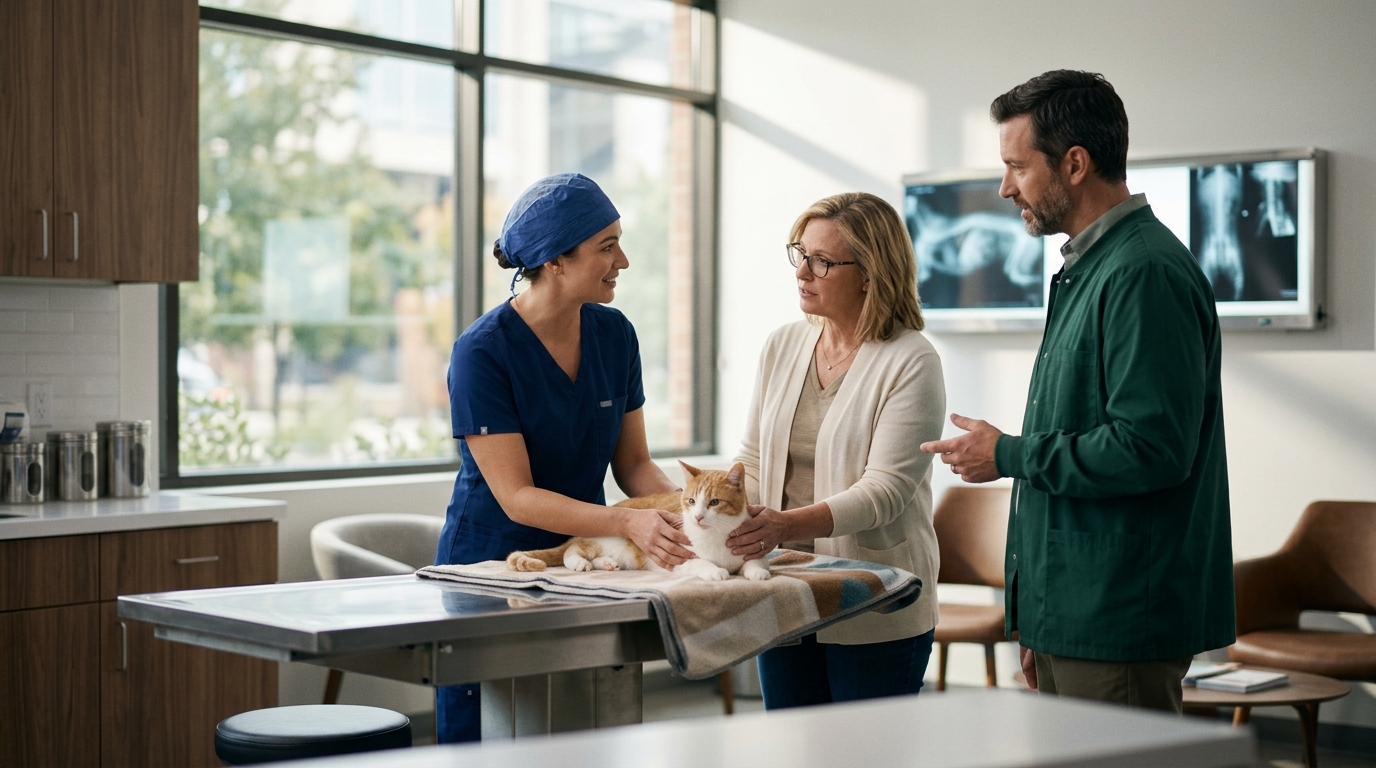
When your pet faces a complex medical issue, the distinction between a general practitioner and a specialist can determine the outcome of their care. Board-certified veterinary surgeons undergo years of specialized post-graduate training that general veterinarians do not complete. While general vets handle routine wellness and common procedures, specialists focus exclusively on advanced orthopedic, soft tissue, and oncological cases. Understanding this difference ensures your pet receives the precise level of care required for their specific condition. (Board Certified Veterinary Surgery)
Training Pathways and Certification
The most significant difference lies in the educational journey. A regular veterinarian completes a four-year doctoral program to earn their DVM or VMD degree. This education provides a broad foundation in animal health, including medicine, surgery, and preventive care. They are fully qualified to perform routine surgeries such as spays, neuters, and simple mass removals. However, their training in advanced surgical techniques is limited by the scope of general practice. (VSx Veterinary Surgery)
In contrast, a board-certified veterinary surgeon is a veterinarian who has gone through years of extra, specialized training after veterinary school. To earn this title, post veterinary degree, they complete an internship and a 3–4 year surgical residency. This involves thousands of hours working alongside experienced surgeons in high-volume surgical environments. Only after this rigorous process can they be called a Diplomate of the ACVS, a true specialist in surgery. (Board Certified Veterinary Surgeons)
At VSx, every surgeon is board-certified with an average experience of 15 years. This depth of experience is critical for managing complex cases that fall outside the scope of general practice. The American College of Veterinary Surgeons (ACVS) sets the highest standards for this certification, ensuring that specialists possess the advanced expertise required for delicate procedures.
Scope of Practice and Procedures
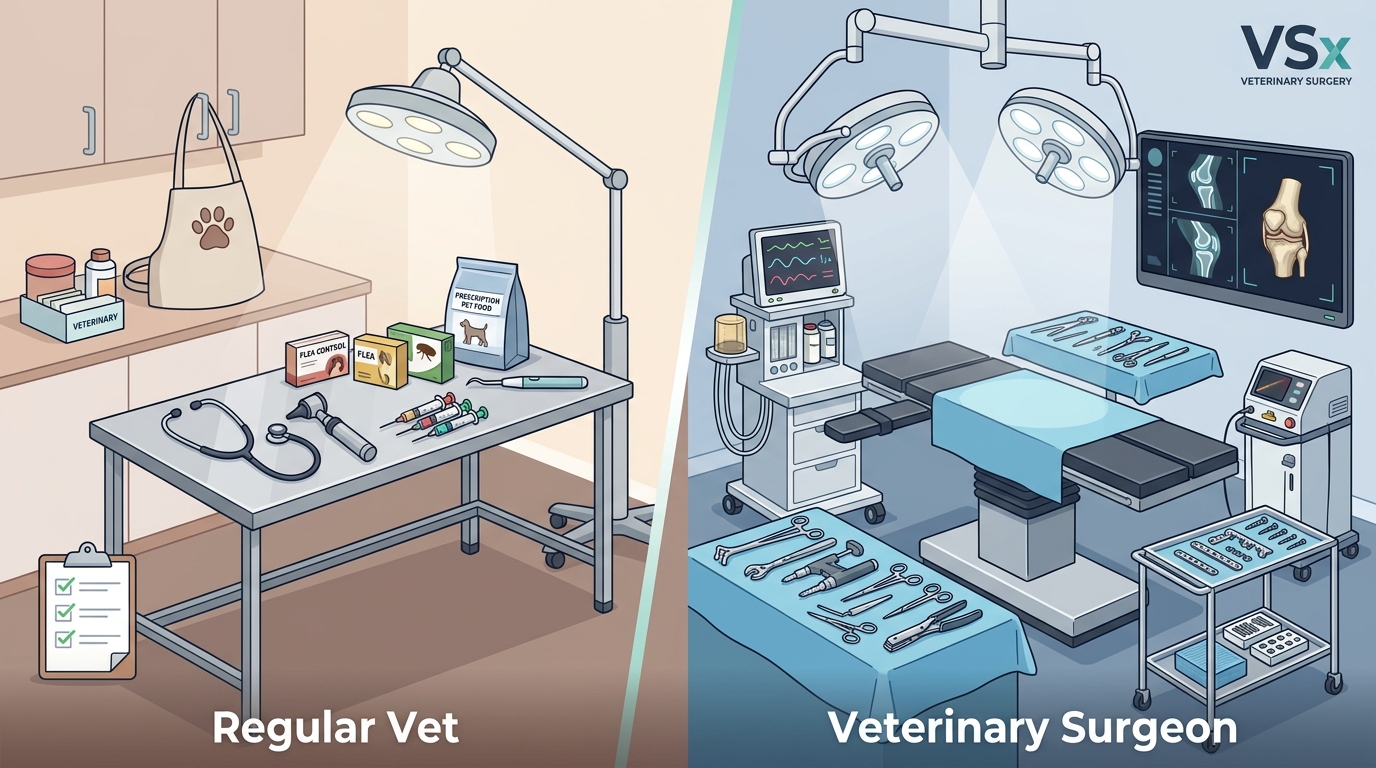
Understanding the scope of practice helps pet owners navigate referral pathways effectively. General veterinarians are the first line of defense for your pet's health. They handle vaccinations, dental cleanings, and routine blood work. When a condition requires surgical intervention, general vets often perform standard procedures. However, for complex orthopedic or soft tissue issues, the margin for error is smaller, and the need for specialized skill is higher.
Veterinary surgeons specialize in advanced orthopedic and soft tissue procedures. Their scope includes:
- Orthopedic Surgery: From TPLO surgeries to advanced fracture repairs, the orthopedic team offers precision to restore mobility. This includes complex joint reconstructions and spinal stabilization.
- Soft Tissue Surgery: Specialists handle tumor removals, reconstructive surgeries, and gastrointestinal procedures. These cases often require intricate tissue handling and advanced closure techniques.
- Oncological Surgery: Specialized oncological procedures help manage and treat cancer in pets. This involves wide excision margins and careful planning to ensure complete removal of malignant tissue.
While general vets provide compassionate care for common ailments, surgeons at VSx focus on delivering exceptional outcomes for patients, pet owners, and referring veterinarians. This focused approach allows for a higher standard of surgical care and outcomes that are difficult to replicate in a general practice setting.
Diagnostic Technology and Imaging
Advanced diagnostics are a cornerstone of specialized surgical care. General practitioners typically rely on digital X-rays and basic ultrasound for initial assessments. While these tools are effective for routine checks, they may not provide the detailed anatomical information required for complex surgical planning.
Specialty centers like VSx utilize state-of-the-art diagnostic and surgical equipment. This includes outpatient CT scans, which allow for quick, accurate diagnoses for complex cases without the need for hospitalization. CT imaging provides three-dimensional views of bones and soft tissues, enabling surgeons to plan intricate procedures with greater precision. This technology reduces surgical time and improves post-operative recovery rates.
The integration of advanced imaging with surgical expertise ensures that every patient receives a tailored treatment plan. This collaborative care model relies on seamless communication between the referring general practice, emergency veterinarians, and the surgical team. It ensures that the pet's journey from diagnosis to recovery is coordinated and efficient.
Collaborative Care Models
The relationship between general veterinarians and surgical specialists is built on collaboration. General vets often identify the need for surgery during routine exams or emergency visits. They then refer the patient to a board-certified surgeon for advanced care. This referral system ensures that pets receive the highest level of expertise for their specific condition.
Dr. Andrew Bean, Medical Director & Partner at BLVD Vet Lakeview-Lincoln, notes that Dr. Wosar has been a trusted surgery referral partner for years. He takes a thorough approach to diagnosis and treatment planning and takes the time to communicate clearly with both our GP veterinarians and the pet owner. This communication is vital for ensuring everyone is well-informed and comfortable with the surgical process.
VSx is founded on the principal that the quality of a practice is dependent on present, independent ownership. By partnering with board-certified surgeons of the highest caliber, VSx creates surgical centers capable of becoming integral to local communities of pet owners and their veterinarians. This model supports the broader veterinary ecosystem by providing a reliable resource for complex cases.
When to Refer to a Specialist
Pet owners often wonder when a referral is necessary. If your general veterinarian recommends surgery for a complex issue, it is crucial to understand the benefits of seeing a specialist. Complex fractures, cruciate ligament tears, spinal disc disease, and soft tissue tumors often require the specialized skills of a board-certified surgeon.
Choosing a board-certified surgeon at VSx means your pet benefits from advanced expertise in complex procedures. It also means years of hands-on surgical experience, performing surgery every single day. This daily practice keeps surgeons sharp and familiar with the latest techniques and technologies. For routine procedures, your trusted primary veterinarian is often the perfect choice. But for more complex needs, a board-certified veterinary surgeon brings the highest level of skill, training, and support.
Additionally, specialized centers offer expert anesthetic and pain management protocols. These protocols are tailored to the specific needs of surgical patients, ensuring comfort and safety throughout the procedure and recovery. Clear communication is another key benefit. With limited patient volume, specialists can provide the time to answer all your questions, reducing anxiety for both the pet and the owner.
Key Takeaways
- Board Certification: A board-certified veterinary surgeon is a veterinarian who has completed a 3–4 year surgical residency and rigorous certification through the ACVS.
- Experience Level: Every surgeon at VSx is board-certified with an average experience of 15 years, ensuring high-level expertise.
- Specialized Services: VSx offers orthopedic, soft tissue, and oncological surgery, along with outpatient CT scans for precise diagnostics.
- Collaborative Care: VSx works closely with referring general practice veterinarians to ensure seamless patient care and communication.
- Location Access: VSx operates in Chicago, Indianapolis, and Nashville, expanding access to board-certified veterinary surgeons.
- Chicago Leadership: VSx Chicago is led by Dr. Marc Wosar, a board-certified surgeon with over 20 years of experience.
- Indianapolis Expansion: VSx Indianapolis is led by Dr. Brian Martin and serves patients throughout Indianapolis and greater Indiana.
Frequently Asked Questions
What does it mean to be a Board-Certified Surgeon?
A board-certified veterinary surgeon is a veterinarian who has completed an internship and a 3–4 year surgical residency, followed by rigorous certification through the American College of Veterinary Surgeons (ACVS). This process ensures they are Diplomates of the ACVS, recognized as true specialists in surgery.
How is a veterinary surgeon different from a general veterinarian?
A board-certified surgeon’s entire career is devoted to surgery, from the simplest procedures to the most advanced and delicate operations. General veterinarians handle a broad range of health issues but may refer complex cases to specialists for advanced care.
What types of surgeries do veterinary surgeons perform?
Veterinary surgeons specialize in orthopedic surgery, soft tissue surgery, and oncological surgery. This includes TPLO procedures, fracture repairs, tumor removals, and reconstructive surgeries that require specialized skills and equipment.
Does VSx offer diagnostic imaging?
Yes, VSx offers comprehensive imaging services, including digital X-ray and outpatient CT scans. These technologies allow for quick, accurate diagnoses for complex cases without the need for hospitalization.
Where are VSx locations?
VSx has locations in Chicago, Illinois; Indianapolis, Indiana; and Nashville, Tennessee. Each location is staffed by board-certified surgeons and equipped with state-of-the-art surgical technology.
How do I book an appointment with a specialist?
You can book an appointment by contacting your referring veterinarian or visiting the VSx website to schedule directly. Your general vet can also facilitate the referral to ensure a smooth transition of care.
Why is board certification important for pet surgery?
Board certification ensures that the surgeon has undergone extensive specialized training and has demonstrated advanced expertise in surgical techniques. This leads to better outcomes, safer anesthesia, and more precise care for your pet.
Contact VSx Veterinary Surgery
If your pet requires advanced surgical care, trust the experts at VSx. Our board-certified surgeons are dedicated to providing the highest standard of surgical care and outcomes. Whether you are in Chicago, Indianapolis, or Nashville, we are here to support your pet's health journey.
Visit VSx Veterinary Surgery to learn more about our services, meet our surgeons, and schedule a consultation. We are committed to expanding access to board-certified veterinary surgeons and delivering exceptional value for patients, pet owners, and referring veterinarians.