
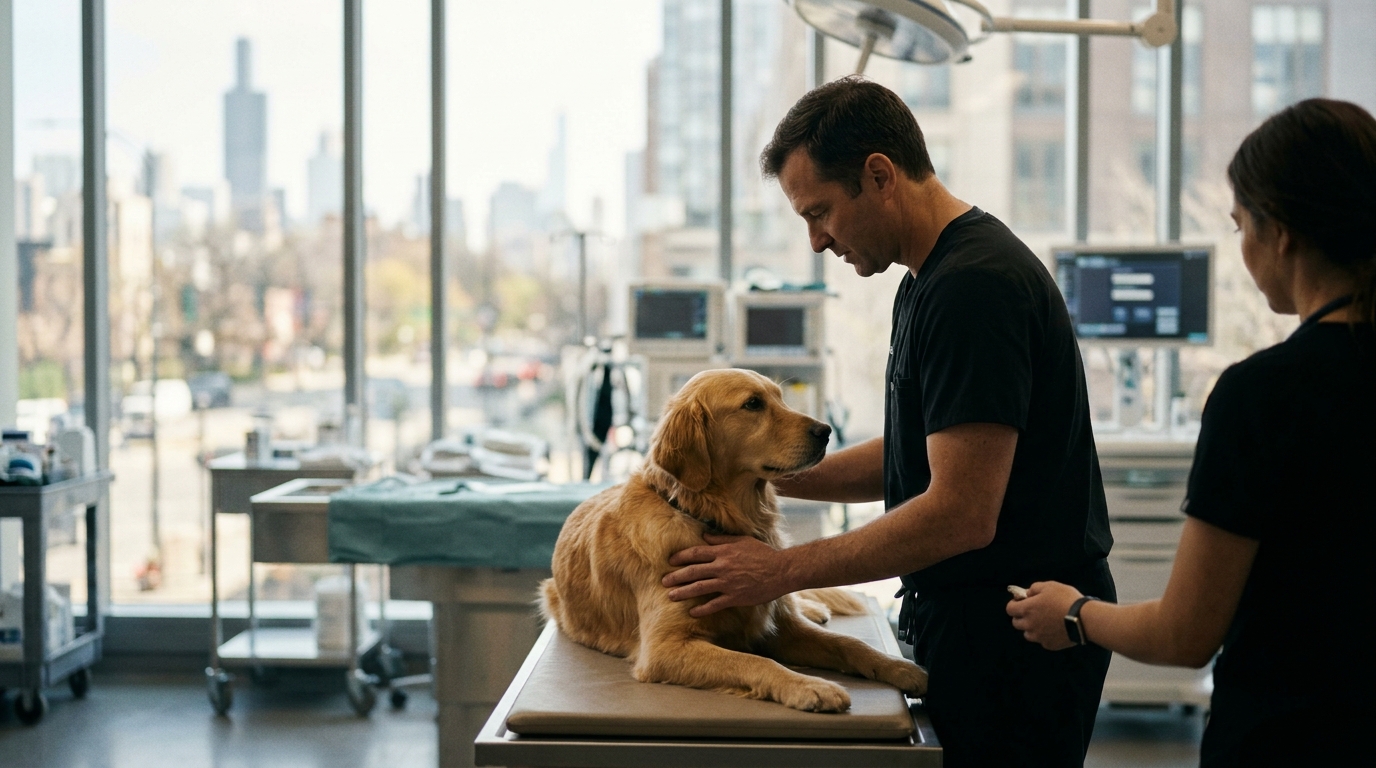
Board-certified veterinary surgeons at VSx Veterinary Surgery of Chicago perform oncological surgery for dogs. This guide explains the referral process, the specific surgical techniques used for cancer treatment, and how to evaluate a surgical team. It covers the difference between general practice and specialty surgery, the role of advanced imaging, and what to expect during the recovery phase.
Understanding Oncological Surgery
Oncological surgery is the surgical removal or management of tumors in animals. In veterinary medicine, this field focuses on treating both benign and malignant growths that affect a dog's quality of life. While many tumors can be managed with medication or radiation, surgery often remains the primary treatment for solid masses. The goal is to remove the tumor with clean margins while preserving as much healthy tissue as possible.
For dogs in the Chicago area, access to specialized surgical care is critical. General practice veterinarians handle routine procedures, but complex oncological cases often require a surgeon who performs these operations daily. At VSx, our team specializes in advanced soft tissue and orthopedic surgeries, including reconstructive oncological surgery. This focused approach ensures that the surgical team has the specific experience needed to handle complex cancer cases.
The Referral Process
Most pet owners begin the journey with their primary care veterinarian. The general practice veterinarian evaluates the pet, performs initial diagnostics, and determines if a surgical solution is necessary. If the case requires specialized oncological surgery, the veterinarian will refer the patient to a specialty center. This collaborative model ensures that the pet receives a second opinion from a specialist while maintaining a relationship with the primary care team.
How to Prepare for a Referral
When your veterinarian refers your dog to VSx, they will coordinate directly with our team to collect necessary records. You should expect to schedule a consultation with our board-certified surgeons. During this visit, we will review the diagnostic imaging and discuss all treatment options. We prioritize clear communication, so you will have the opportunity to ask questions and understand the proposed plan of action.
VSx works closely with general practice veterinarians, emergency hospitals, and specialty teams across the Chicagoland area. This network allows for efficient scheduling and seamless care coordination. To start the process, you can book a consultation or have your veterinarian submit a surgical referral.
Board Certification and Expertise
A board-certified veterinary surgeon is a veterinarian who has completed extensive post-graduate training in surgery. To earn this title, a surgeon must complete an internship and a three to four year surgical residency. They must also pass a rigorous certification exam through the American College of Veterinary Surgeons (ACVS). Only after this process can they be called a Diplomate of the ACVS.
This level of training is distinct from general veterinary practice. Many veterinarians perform surgery, but a board-certified surgeon devotes their entire career to the craft. At VSx, our surgeons bring decades of combined experience to the operating room. For example, Dr. Marc Wosar has over 20 years of surgical experience, while Dr. Rebecca Ball specializes in reconstructive oncological surgery with over 15 years of practice. This depth of experience is vital for complex oncological cases where precision is paramount.
Surgical Techniques for Cancer
Oncological surgery in dogs involves a variety of techniques depending on the location and type of tumor. Our team performs a range of soft tissue procedures, from simple mass removals to complex reconstructive surgeries. The choice of technique depends on the tumor's size, location, and the dog's overall health.
Common Oncological Procedures
Some of the most common oncological procedures include the removal of mast cell tumors, mammary tumors, and other soft tissue masses. For certain cases, a total ear canal ablation (TECA) may be required if medical therapy fails. In orthopedic oncology, procedures may involve the removal of bone tumors or the use of prosthetics. Each procedure is tailored to the individual patient to maximize the chance of a positive outcome.
VSx utilizes state-of-the-art equipment to ensure precision in every procedure. Our operating suites are equipped with advanced technology that supports safer and more precise care. This includes expert anesthetic and pain management protocols designed for patient comfort and safety.
Diagnostic Imaging and Planning
Accurate diagnosis is the foundation of successful oncological surgery. Before any procedure, the surgical team must understand the extent of the tumor and its relationship to surrounding structures. VSx offers advanced diagnostic imaging services, including CT scans and digital radiology. These tools allow surgeons to plan the procedure with greater accuracy.
CT scans are particularly useful for evaluating tumors in complex anatomical areas. They provide detailed cross-sectional images that help the surgeon determine the best approach. At VSx, imaging services are available on an outpatient basis, meaning they can be used for surgical planning or as standalone diagnostics. This flexibility ensures that pets receive timely access to the information needed for treatment decisions.
Recovery and Post-Operative Care
Recovery from oncological surgery varies depending on the complexity of the procedure. Many procedures allow for same-day discharge, while others may require an overnight stay for observation. The surgical team will provide clear instructions on how to care for your pet at home. This includes guidelines on activity restriction, wound care, and pain management.
Follow-up care is essential to monitor healing and check for any signs of recurrence. Your primary care veterinarian will work with the surgical team to manage the post-operative phase. Regular check-ups and additional imaging may be recommended to ensure the best possible long-term outcome. At VSx, we are committed to supporting both the pet and the owner throughout the recovery process.
Comparison of Surgical Care Models
| Feature | General Practice Veterinarian | Board-Certified Surgeon (VSx) |
|---|---|---|
| Training Focus | Broad range of medical conditions | Exclusive focus on surgery |
| Procedure Complexity | Routine spays, neuters, simple mass removals | Complex oncological, orthopedic, and soft tissue cases |
| Imaging Technology | Standard radiology | Advanced CT and digital radiology |
| Referral Role | Primary diagnosis and initial treatment | Specialized surgical intervention and planning |
Key Takeaways
- Board-certified veterinary surgeons at VSx specialize in oncological and soft tissue surgery for dogs.
- The referral process begins with your primary care veterinarian, who coordinates with the surgical team.
- Board certification requires years of post-graduate training and certification by the ACVS.
- Advanced imaging, such as CT scans, is critical for planning complex oncological procedures.
- VSx surgeons bring decades of combined experience to the operating room.
- Recovery plans are individualized, with clear instructions provided for home care.
- Collaborative care between the primary veterinarian and the surgical team ensures continuity of care.
Frequently Asked Questions
Who performs oncological surgery for dogs in Chicago?
Board-certified veterinary surgeons at VSx Veterinary Surgery of Chicago perform oncological surgery for dogs. Our team specializes in advanced soft tissue and orthopedic procedures, including the removal of tumors and reconstructive surgeries.
Do I need a referral to see a VSx surgeon?
Referral policies vary by location. In many cases, primary care veterinarians refer patients to VSx for specialized evaluation, but pet owners can also contact their local VSx practice directly to confirm referral requirements and consultation options.
What is the difference between a general veterinarian and a board-certified surgeon?
A general veterinarian handles a wide range of medical issues, while a board-certified surgeon has completed additional years of specialized training in surgery. Board-certified surgeons are Diplomates of the American College of Veterinary Surgeons and focus exclusively on surgical procedures.
What types of tumors can VSx surgeons treat?
VSx surgeons treat a variety of tumors, including mast cell tumors, mammary tumors, and other soft tissue masses. They also perform orthopedic oncology procedures when bone tumors are present. The specific treatment plan depends on the type and location of the tumor.
How long does recovery take after oncological surgery?
Recovery time varies based on the complexity of the surgery. Some pets may go home the same day, while others may stay overnight. Your surgeon will provide specific instructions for activity restriction and wound care to ensure a smooth recovery.
Does VSx offer diagnostic imaging for cancer cases?
Yes, VSx offers advanced diagnostic imaging services, including CT scans and digital radiology. These services are available for surgical planning and can also be used as standalone diagnostics for non-surgical cases.
Conclusion
Choosing the right surgical team is a critical decision when your dog is facing a cancer diagnosis. In Chicago, VSx Veterinary Surgery provides a trusted option for pet owners seeking advanced oncological care. Our board-certified surgeons bring specialized expertise, state-of-the-art technology, and a commitment to compassionate care. By working closely with your primary care veterinarian, we ensure that your pet receives a comprehensive and individualized treatment plan.
If you believe your dog may need specialized surgical care, start the conversation with your veterinarian today. You can also explore our services to learn more about our scheduling options. We are here to support you and your pet through every step of the journey.