
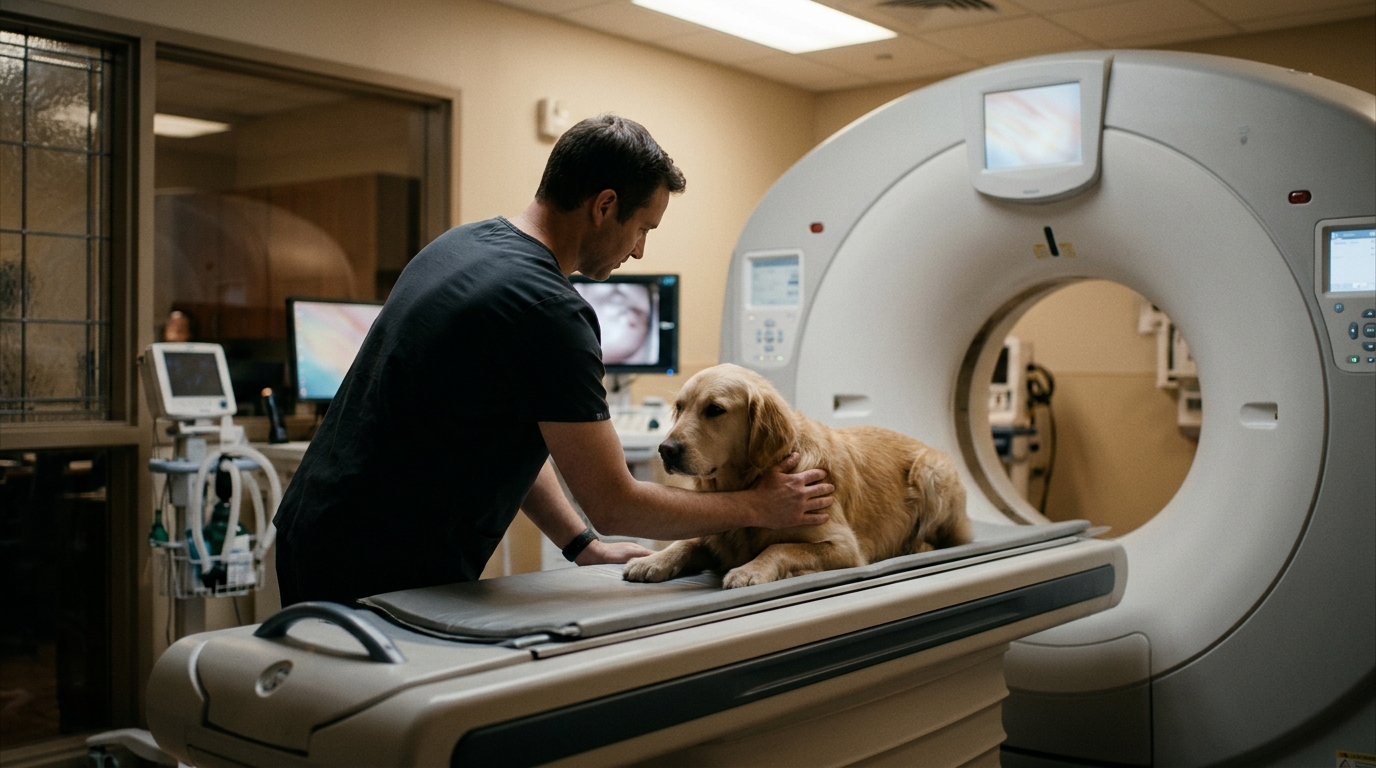
Before booking veterinary imaging for your dog or cat, you should understand the specific modality required, the preparation steps, and how the results will guide treatment. At VSx Veterinary Surgery, we provide advanced diagnostic imaging, including CT scans and digital radiology, to support surgical planning and standalone diagnostics. This guide explains what to expect when scheduling these essential services.
Understanding the Types of Veterinary Imaging
Veterinary imaging is the use of technology to visualize the internal structures of an animal's body. Different modalities serve different diagnostic purposes, and your veterinarian will select the appropriate tool based on the clinical signs. Digital radiography, commonly known as X-rays, is the most frequent starting point for evaluating bones, joints, and organs. It provides a quick, two-dimensional view that is often sufficient for diagnosing fractures or assessing lung health.
Computed Tomography (CT) is a cross-sectional imaging technique that produces detailed three-dimensional images of the body. CT scans are particularly valuable for complex cases where standard X-rays are inconclusive, such as evaluating the brain, spine, or intricate bone structures. At VSx, our outpatient imaging services allow for detailed diagnostic information without the need for immediate surgery. Understanding the difference between these tools helps you appreciate the depth of information your pet's care team is gathering.
Preparation and Protocols for Imaging Appointments
Proper preparation is critical for obtaining clear images and ensuring your pet's safety. For many CT scans and certain X-rays, fasting is required to prevent motion artifacts and reduce the risk of aspiration if anesthesia is needed. Anesthesia is often used in veterinary imaging to keep the patient perfectly still, as even slight movement can blur the results. Your veterinary team will provide specific fasting instructions, typically requiring no food for 8 to 12 hours before the appointment.
It is also important to discuss your pet's medical history, including any allergies or current medications, with the imaging team. Some CT protocols involve the administration of contrast dye to highlight blood vessels and organs. This dye helps differentiate between healthy and abnormal tissues. By following these protocols strictly, you help ensure that the imaging study is accurate and that your pet remains comfortable and safe throughout the procedure.
The Role of Imaging in Surgical Planning
Imaging is not just about diagnosis; it is a fundamental component of surgical planning. For orthopedic procedures, such as a Tibial Plateau Leveling Osteotomy (TPLO), precise measurements are required to select the correct implant size and determine the angle of the cut. CT scans provide the detailed anatomical maps that allow board-certified veterinary surgeons to plan these complex repairs with high precision. This level of detail is often impossible to achieve with standard X-rays alone.
In soft tissue surgery, imaging helps determine the extent of a mass or the location of a foreign body. For example, a CT scan can reveal the exact size and boundaries of a tumor, which is crucial for deciding whether a complete surgical removal is feasible. At VSx, our surgeons utilize this advanced imaging data to tailor individualized treatment recommendations. This collaborative approach ensures that the surgical strategy is aligned with the specific anatomical challenges presented by the imaging results.
Interpreting Results and Next Steps
After the imaging study is completed, a radiologist or the surgical team will review the images to generate a report. This report will describe any abnormalities found and provide recommendations for further evaluation or treatment. It is important to remember that imaging results are interpreted in the context of your pet's clinical signs and physical examination. A finding on a scan does not always mean a disease is present, and conversely, a normal scan does not rule out all conditions.
Your veterinarian will discuss these results with you in detail, explaining what they mean for your pet's health and what the next steps might be. These steps could include additional testing, a referral for surgery, or a period of monitoring. At VSx, we maintain open communication with referring veterinarians and pet owners throughout this process. We ensure that you are informed at every stage, from the initial scan to the final treatment plan, so you can make confident decisions about your pet's care.
Choosing a Provider for Advanced Imaging
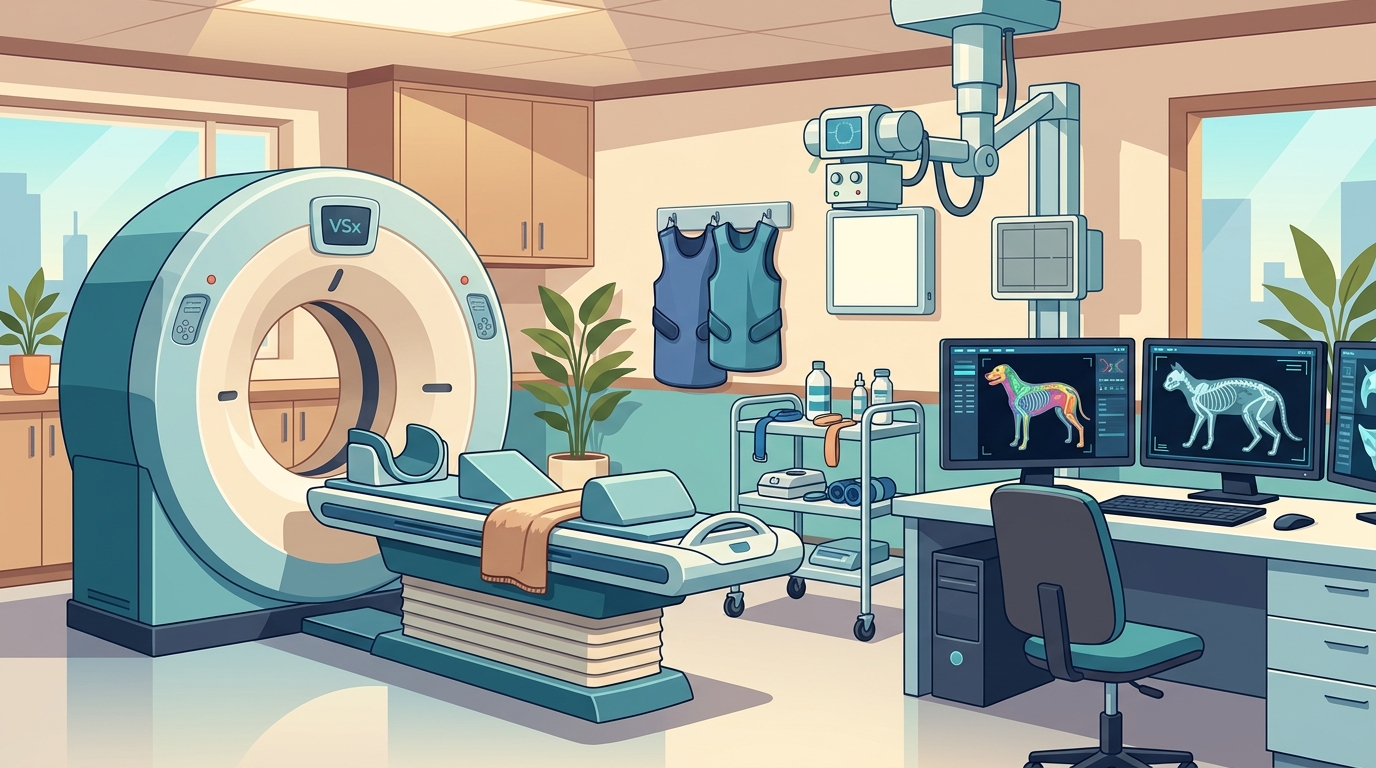
When selecting a provider for veterinary imaging, consider the expertise of the team and the quality of the equipment. Advanced imaging requires specialized training and high-resolution technology to produce diagnostic-quality images. VSx focuses exclusively on surgery and advanced imaging, which allows our team to concentrate on these specific areas of expertise. Our facilities are equipped with state-of-the-art technology, including 32-slice CT scanners, designed to optimize surgical precision and patient recovery.
Choosing a provider that integrates imaging with surgical care can streamline the diagnostic and treatment process. At VSx, our board-certified surgeons work closely with the imaging team to ensure that the data collected is directly applicable to the surgical plan. This integrated approach reduces delays and ensures that your pet receives comprehensive care in a single, coordinated environment. Whether you are in Chicago or Indianapolis, VSx is committed to providing accessible and high-quality imaging services for pets.
Key Takeaways
- Veterinary imaging includes various modalities, with digital radiography and CT scans being the most common for surgical planning.
- Fasting and anesthesia are often required for imaging appointments to ensure image clarity and patient safety.
- CT scans provide detailed 3D images that are essential for planning complex orthopedic and soft tissue surgeries.
- Imaging results must be interpreted in the context of a physical exam and clinical signs by a veterinarian.
- VSx offers outpatient CT and digital radiology services in Chicago and Indianapolis, integrated with surgical care.
- Choosing a provider with specialized imaging technology and board-certified surgeons can improve diagnostic accuracy.
Frequently Asked Questions
Do all pets need a CT scan before surgery?
No, not all pets require a CT scan. The choice of imaging modality depends on the specific condition and the type of surgery planned. Standard X-rays are often sufficient for many orthopedic cases, while CT scans are reserved for more complex situations where detailed 3D visualization is necessary. Your veterinarian will determine the most appropriate imaging study based on your pet's clinical presentation.
Is anesthesia safe for my pet during imaging?
Anesthesia is generally safe when administered by qualified veterinary professionals. It is often necessary to keep the pet still for the duration of the scan, which can be several minutes. The veterinary team will monitor your pet's vital signs closely throughout the procedure to ensure safety. Pre-anesthetic blood work may be recommended to assess your pet's overall health before administering anesthesia.
How long does it take to get imaging results?
The timing of results depends on the complexity of the case and the provider's workflow. In many cases, preliminary results can be discussed with your veterinarian shortly after the scan is completed. A formal radiology report may take a few days to finalize. At VSx, we prioritize efficient communication to ensure that referring veterinarians and pet owners receive updates in a timely manner.
Can I bring my pet to VSx for imaging without surgery?
Yes, VSx offers advanced diagnostic imaging services, including CT scans and digital radiology, on an outpatient basis. These services are available for non-surgical cases as well. We are happy to collaborate with your primary veterinarian to provide detailed diagnostic information for your pet's condition, regardless of whether surgery is ultimately required.
What should I do if my pet is anxious about the clinic?
If your pet is anxious, inform the veterinary team upon arrival. They can take steps to help calm your pet, such as allowing them to acclimate to the environment or using mild sedation if appropriate. A calm pet is easier to handle and can lead to better imaging results. The VSx team is trained to provide compassionate care and minimize stress for patients during their visits.
How much does veterinary imaging cost?
The cost of veterinary imaging varies based on the type of study, the size of the pet, and the specific location. CT scans are generally more expensive than standard X-rays due to the advanced technology and time required. For specific pricing details, please consult the VSx services and pricing page or contact your local VSx location directly for an estimate.
Conclusion
Understanding veterinary imaging services is a crucial step in ensuring your pet receives the right diagnosis and treatment. By knowing the types of imaging available, the preparation required, and the role of these tools in surgical planning, you can partner effectively with your veterinary care team. At VSx Veterinary Surgery, we are committed to providing advanced, high-quality imaging and surgical care for dogs and cats in Chicago and Indianapolis. If you have questions about imaging for your pet, we encourage you to reach out to our team for more information.