
Choosing the right treatment for a torn cruciate ligament depends on your dog's size, activity level, and overall health. In Chicago, pet owners have several surgical and non-surgical paths to restore mobility and comfort. VSx Veterinary Surgery provides board-certified surgeons who can evaluate these options with your primary veterinarian to determine an appropriate fit for your pet.
1. Tibial Plateau Leveling Osteotomy (TPLO)
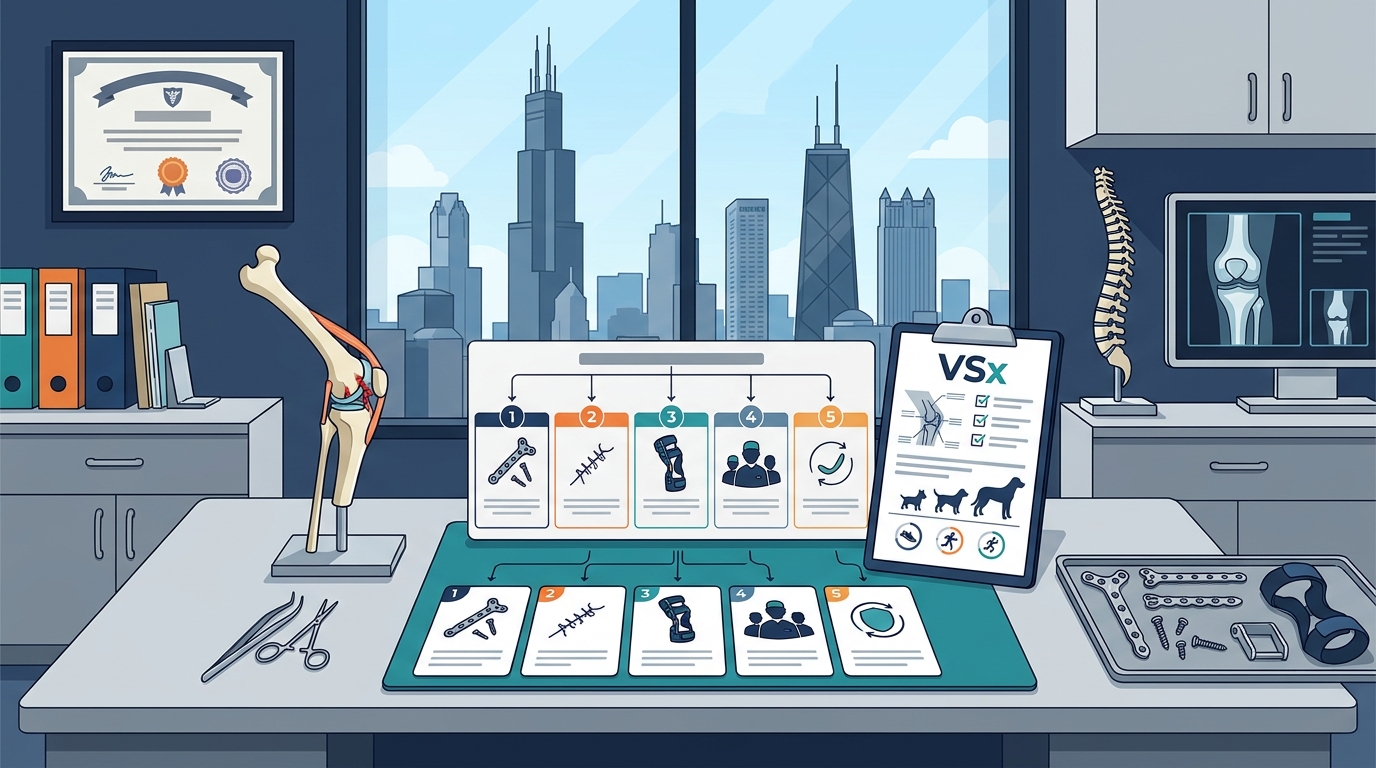
TPLO is the most common surgical approach for medium to large dogs with cranial cruciate ligament tears. This procedure involves cutting the tibia to create a stable joint surface that prevents the tibia from sliding forward. It is a single-limb surgery that addresses the mechanical instability caused by the ligament tear. At VSx Chicago, our surgeons perform TPLO with a focus on precision and long-term joint stability.
2. Tibial Tuberosity Advancement (TTA)
TTA is an alternative surgical technique that stabilizes the knee by moving the tibial tuberosity. This method changes the angle of the patellar tendon to neutralize the tibial thrust. It is often considered for dogs where TPLO may not be the optimal choice due to specific anatomical factors. A board-certified surgeon can assess which surgical technique aligns best with your dog's unique skeletal structure.
3. Lateral Suture (Extracapsular Repair)
Lateral suture is a less invasive surgical option often used for smaller dogs or those with less severe instability. This procedure places a suture outside the joint to limit tibial movement. It is generally a shorter procedure with a faster initial recovery period compared to osteotomies. However, it may not be suitable for large, highly active dogs, so a thorough evaluation is necessary to ensure long-term success.
4. Conservative Management (Non-Surgical)
Conservative management involves strict rest, weight control, and physical rehabilitation without surgery. This approach is sometimes recommended for very small dogs, senior pets with other health issues, or owners who prefer to avoid anesthesia. It requires a significant commitment to controlled exercise and monitoring. Your veterinarian will guide you on the specific activity restrictions and rehabilitation protocols required for this path.
5. Advanced Imaging and Diagnostic Evaluation
Accurate diagnosis is the foundation of any successful treatment plan for cruciate ligament injuries. Advanced imaging, such as digital radiographs and CT scans, helps surgeons visualize the joint and plan the procedure. VSx resources highlight the importance of thorough diagnostics in surgical planning. Ensuring a complete evaluation helps rule out concurrent injuries and sets realistic expectations for recovery.
Choosing the Right Path
There is no single