
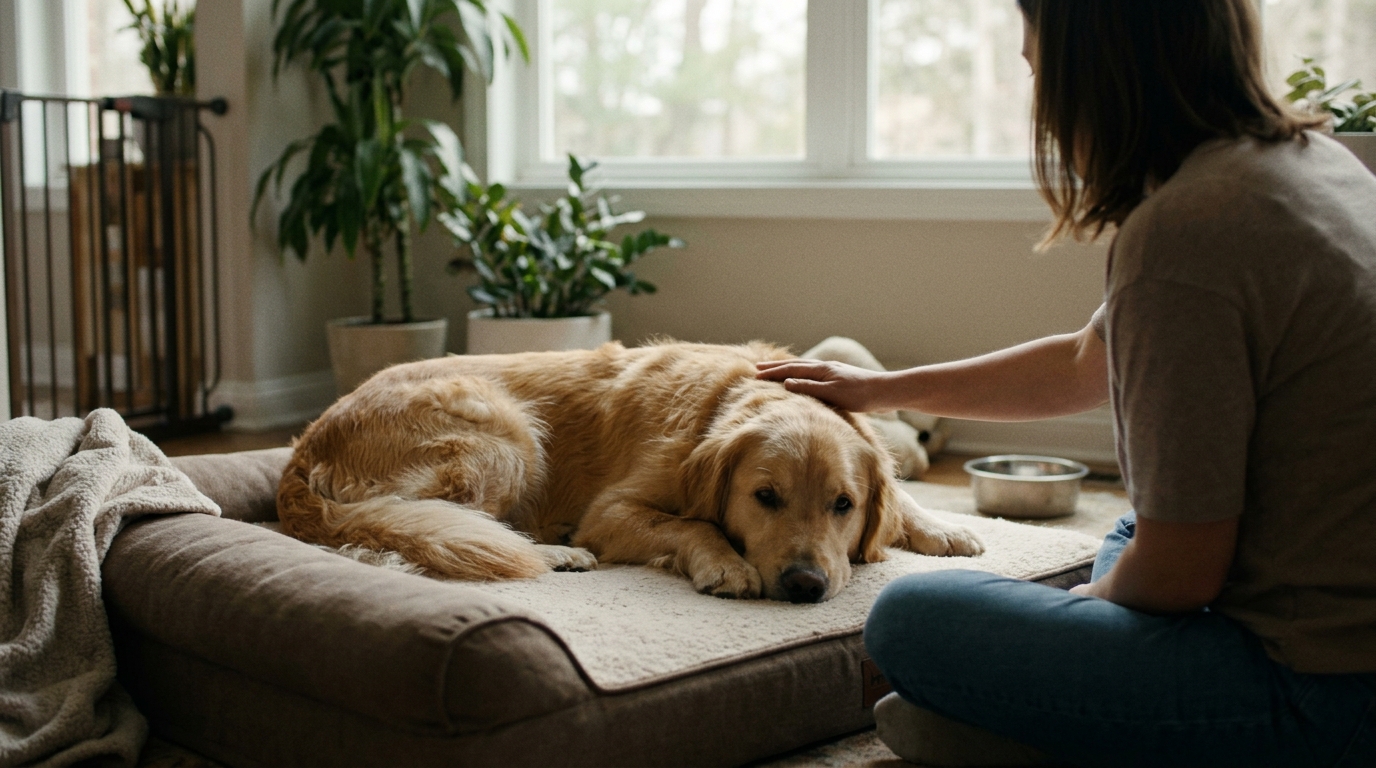
Recovery after cruciate ligament surgery typically involves 8 to 12 weeks of restricted activity, pain management, and physical rehabilitation. The specific timeline depends on the surgical technique used, such as TPLO or extracapsular repair, and your dog's individual health profile. At VSx Veterinary Surgery, our board-certified surgeons provide detailed post-operative instructions to ensure a safe and structured healing process.
The First 48 Hours: Monitoring and Comfort
The immediate post-operative period focuses on pain control and preventing complications. Your dog will likely be sedated or drowsy for the first 24 hours. It is critical to monitor their incision site for excessive swelling, bleeding, or signs of infection. Most dogs will not eat or drink immediately after anesthesia, but they should resume normal intake within 24 hours. If your dog refuses food or water for more than 24 hours, contact your veterinary team immediately.
Keep your dog in a quiet, comfortable environment during this phase. Limit their movement to short, leashed walks for bathroom breaks only. Avoid allowing them to jump on furniture, run, or play. The goal is to minimize stress on the healing joint while keeping the dog comfortable.
Restricted Activity: The Core of Rehabilitation
Restricted activity is the most critical component of recovery. A cruciate ligament repair is a surgical procedure designed to stabilize the knee joint, but the bone and soft tissues need time to heal. For the first 4 to 6 weeks, your dog should be on strict leash walks only. These walks should be short, typically 5 to 10 minutes, and performed on a flat surface. Avoid stairs, slippery floors, and uneven terrain.
After the initial 6 weeks, your veterinarian may gradually increase the duration and frequency of walks. However, off-leash play, running, and jumping are usually prohibited for at least 8 to 12 weeks. Premature return to high-impact activities can compromise the surgical repair and lead to long-term instability. Consistency in activity restriction is more important than speed.
Pain Management and Medication
Monitor your dog for side effects, such as vomiting, diarrhea, or changes in appetite. If you notice any adverse reactions, contact your veterinary team. Pain management is not just about comfort; it allows your dog to participate in necessary physical therapy exercises and maintain muscle mass during the healing process.
Physical Rehabilitation and Physiotherapy
Physical rehabilitation helps restore range of motion and muscle strength. A physical rehabilitation program is a structured plan of exercises designed to improve mobility and prevent muscle atrophy. Your veterinarian may recommend passive range of motion exercises, which you can perform at home. These involve gently moving the leg through its full range of motion without forcing it.
As recovery progresses, your dog may benefit from active exercises, such as swimming or underwater treadmill therapy. These low-impact activities help rebuild muscle strength without placing excessive stress on the joint. At VSx, our surgeons collaborate with rehabilitation specialists to create individualized treatment recommendations for each patient. This collaborative care ensures that your dog receives the right exercises at the right time.
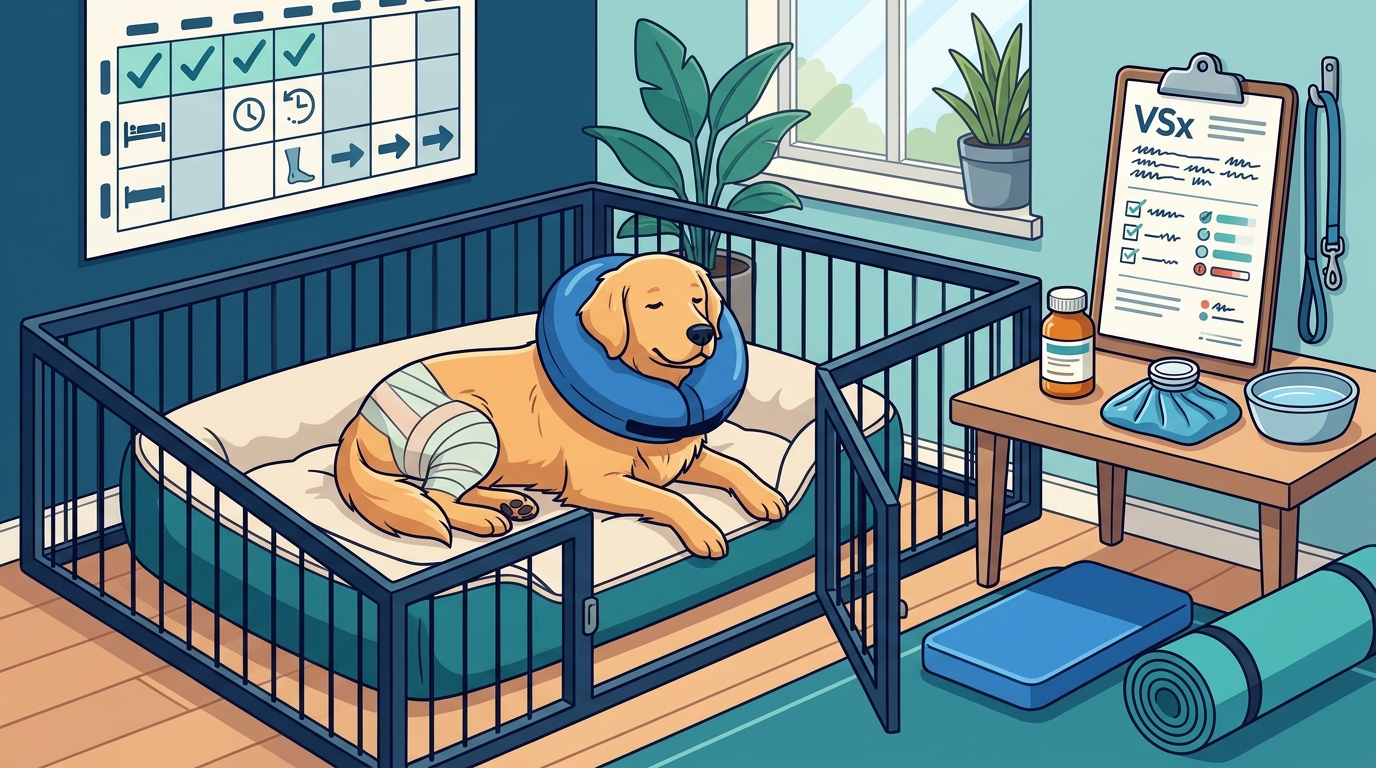
Follow-Up Appointments and Long-Term Care
Regular follow-up appointments are necessary to monitor healing and adjust the rehabilitation plan. Your surgeon will typically schedule rechecks at 2 weeks, 6 weeks, and 12 weeks post-surgery. During these visits, they will assess the incision, check for joint stability, and evaluate your dog's progress. Radiographs may be taken to ensure the surgical hardware is in place and the bone is healing correctly.
Key Takeaways
- Recovery typically takes 8 to 12 weeks, with strict activity restriction for the first 6 weeks.
- Pain management is crucial; administer medications exactly as prescribed.
- Physical rehabilitation helps restore strength and range of motion.
- Regular follow-up appointments are essential to monitor healing and adjust the plan.
- Maintain a healthy weight to reduce stress on the joints long-term.
- Collaborative care between your primary veterinarian and surgical team supports positive recovery outcomes.
Frequently Asked Questions
How long does it take for a dog to recover from cruciate ligament surgery?
Most dogs require 8 to 12 weeks of restricted activity and rehabilitation. The specific timeline depends on the surgical technique and the individual dog's healing rate. Your surgeon will provide a detailed schedule based on your pet's progress.
Can my dog walk after cruciate ligament surgery?
Yes, but only on a leash for short, controlled walks. Off-leash play, running, and jumping are prohibited for at least 8 to 12 weeks to protect the surgical repair.
What are the signs of a complication after surgery?
Do I need to perform physical therapy exercises at home?
Yes, your surgeon may prescribe passive range of motion exercises to perform at home. These exercises help maintain joint flexibility and prevent muscle atrophy. Follow the instructions provided by your veterinary team carefully.
When can my dog return to normal activity?
Most dogs can return to normal activity after 12 weeks, provided they have completed their rehabilitation program and cleared by their surgeon. Gradual reintroduction to high-impact activities is recommended.
Next Steps for Your Pet's Recovery
Recovery from cruciate ligament surgery is a journey that requires patience, consistency, and close monitoring. By following your veterinarian's instructions and maintaining a structured rehabilitation plan, you can help support your dog's successful healing and mobility. At VSx Veterinary Surgery, our board-certified surgeons are committed to providing advanced surgical care and individualized treatment recommendations. To discuss your pet's specific needs, contact our Chicago team or our Indianapolis team to schedule a consultation. Learn more: Veterinary Surgery Services amp.