
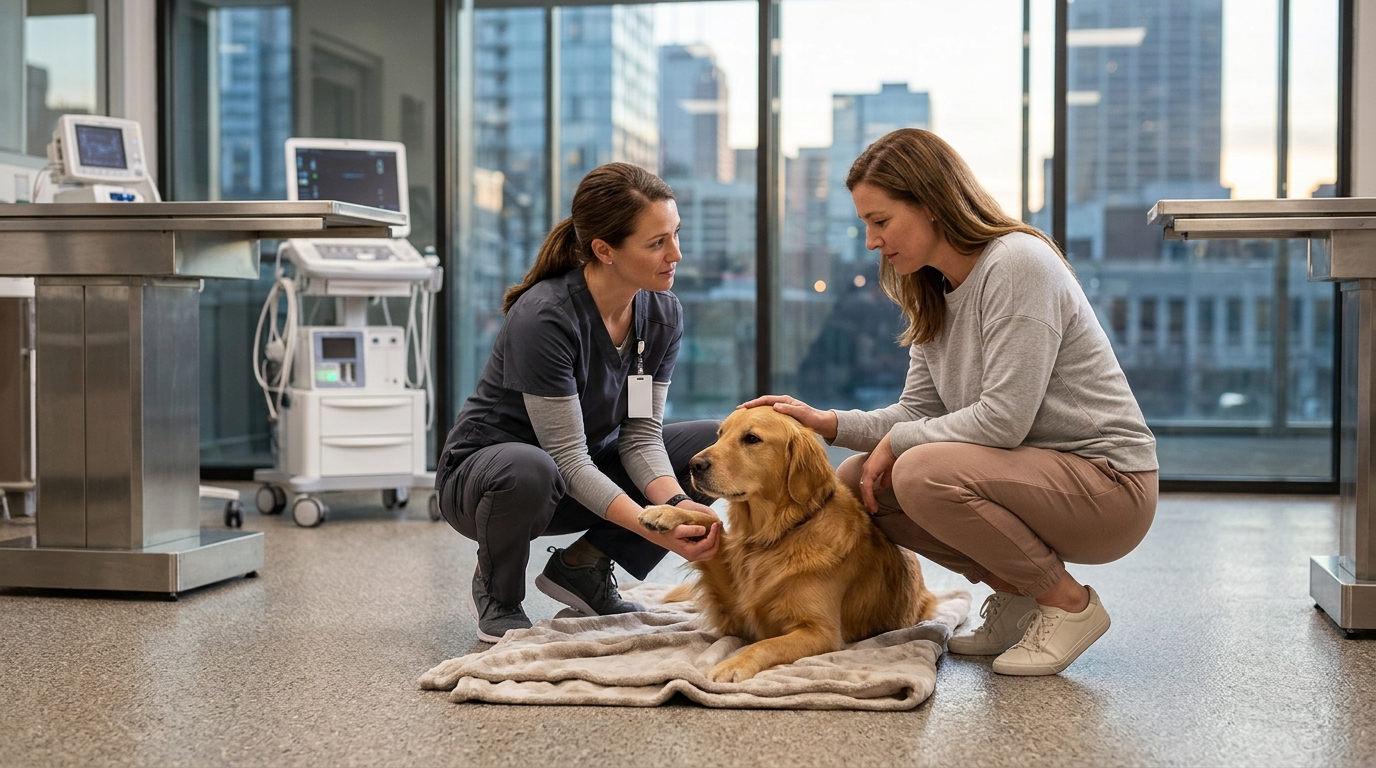
Orthopedic surgery is a specialized branch of veterinary medicine focused on repairing the musculoskeletal system. When a pet suffers from a bone fracture, joint instability, or degenerative condition, a board-certified veterinary surgeon can provide advanced surgical care to restore mobility and comfort. At VSx, our team of experienced surgeons performs these complex procedures in Chicago, Indianapolis, and Nashville, ensuring that pets receive individualized treatment recommendations tailored to their specific needs.
1. Tibial Plateau Leveling Osteotomy (TPLO)
TPLO is the gold standard for repairing cranial cruciate ligament tears in dogs. This procedure involves cutting the tibia and rotating a segment of the bone to change the angle of the joint. By altering the biomechanics of the knee, the surgery stabilizes the joint without relying on the torn ligament. It is a highly precise operation that requires advanced surgical skills and careful post-operative management to ensure proper healing.
2. Fracture Repair
Fracture repair stabilizes broken bones using internal or external fixation devices. Depending on the location and severity of the break, surgeons may use plates, screws, pins, or rods to hold the bone fragments in place. This allows the bone to heal in the correct alignment and restores structural integrity to the limb. The choice of implant depends on the specific fracture pattern and the patient's size and activity level.
3. Patellar Luxation Repair
Patellar luxation repair corrects a dislocated kneecap to restore normal joint function. This condition is common in small breed dogs and involves the kneecap sliding out of its groove. Surgical correction typically involves deepening the groove and tightening the surrounding soft tissues. This helps keep the kneecap in place and reduces pain and lameness associated with the condition.
4. Femoral Head and Neck Ostectomy (FHO)
FHO is a procedure that removes the head and neck of the femur to create a false joint. This surgery is often performed for severe hip dysplasia or femoral head necrosis in small to medium-sized dogs. The body forms a fibrous capsule around the cut end of the bone, creating a functional joint that allows for good mobility. It is a reliable option for pets that cannot undergo more complex hip replacement surgeries.
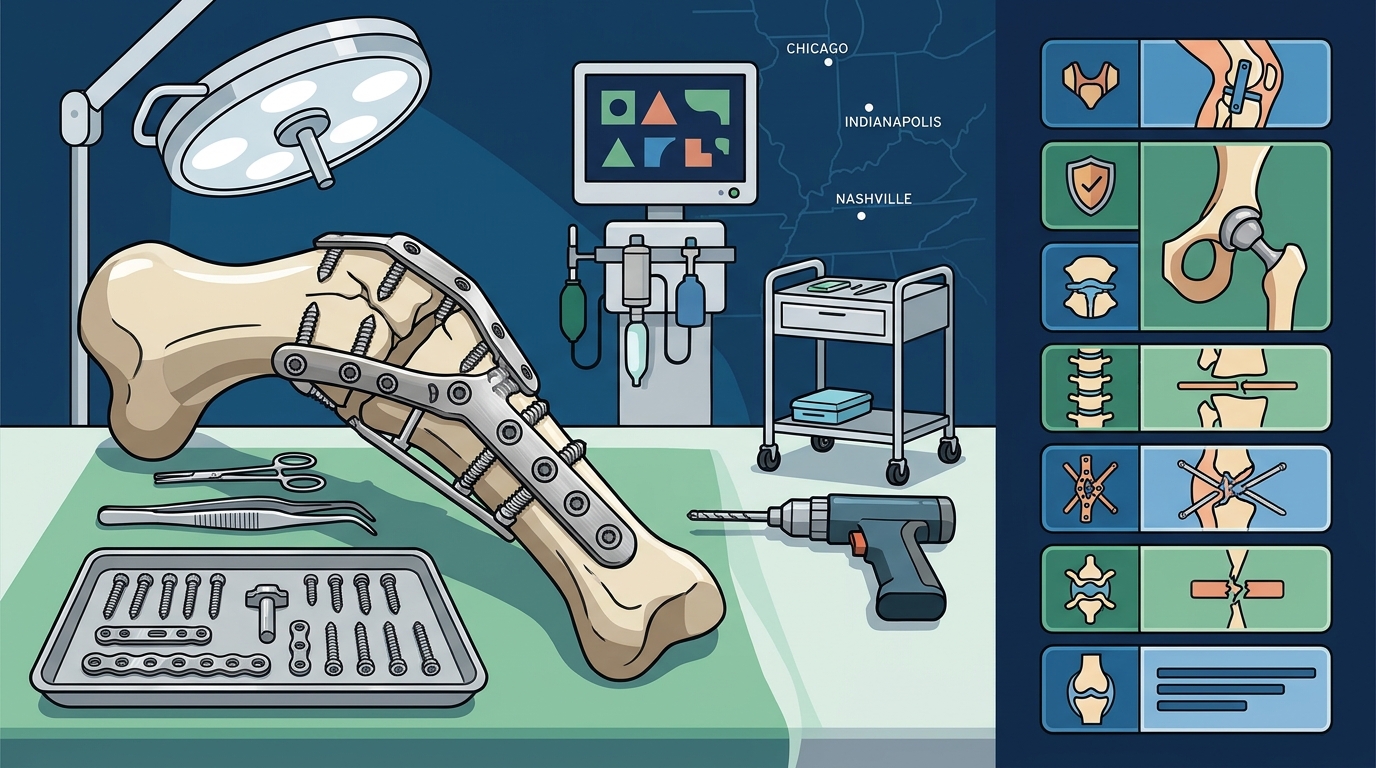
5. Total Hip Replacement
Total hip replacement involves replacing a diseased hip joint with a prosthetic implant. This is a complex procedure typically reserved for larger dogs with severe hip dysplasia or arthritis. The implant consists of a metal ball and a plastic socket that mimic the natural joint's movement. While it is a major surgery, it can significantly improve the quality of life for pets with end-stage hip disease.
6. Arthroscopic Surgery
Arthroscopic surgery is a minimally invasive technique used to diagnose and treat joint problems. Surgeons use a small camera and specialized instruments to view and repair the inside of the joint. This approach results in less tissue damage, reduced pain, and faster recovery times compared to traditional open surgery. It is particularly useful for addressing cartilage defects and ligament injuries.
7. Osteochondritis Dissecans (OCD) Repair
OCD repair removes unstable cartilage fragments from the joint surface. This condition occurs when a piece of cartilage and underlying bone separates from the joint, causing pain and inflammation. The surgeon removes the loose fragment and smooths the remaining cartilage to prevent further joint damage. Early intervention is key to preserving joint health and function.
Choosing the Right Orthopedic Procedure
Selecting the appropriate orthopedic surgery depends on the specific diagnosis, the pet's size, age, and overall health. A board-certified veterinary surgeon will evaluate your pet's condition and discuss the benefits and risks of each option. At VSx, we collaborate closely with referring veterinarians to ensure that every treatment plan is tailored to the individual needs of the patient. Our commitment to excellent clinical care and outcomes ensures that pets receive the highest standard of surgical treatment.
Frequently Asked Questions
What is the most common orthopedic surgery in dogs?
Tibial Plateau Leveling Osteotomy (TPLO) is one of the most common orthopedic surgeries performed in dogs, particularly for cranial cruciate ligament tears. It is a highly effective procedure that restores joint stability and function.
How long does it take for a pet to recover from orthopedic surgery?
Recovery times vary depending on the specific procedure and the individual pet. Generally, pets require several weeks to months of restricted activity and physical rehabilitation. Your veterinarian will provide a detailed recovery plan based on your pet's progress.
Is orthopedic surgery safe for older pets?
Orthopedic surgery can be performed on older pets, but the risks and benefits must be carefully evaluated. Anesthesia and surgical risks may be higher in senior patients, but the potential for improved quality of life often outweighs these risks. A thorough pre-operative evaluation is essential to ensure safety.
Do I need a referral to see a VSx surgeon?
VSx works closely with referring veterinarians to provide specialized surgical care. While we encourage collaboration with your primary care veterinarian, we also welcome direct consultations from pet owners. to discuss your pet's specific needs and determine the best course of action.
What are the signs that my pet needs orthopedic surgery?
Next Steps for Your Pet's Care
If you believe your pet may benefit from advanced orthopedic surgery, the first step is to consult with your primary care veterinarian. They can perform a thorough examination and recommend the appropriate diagnostic tests. If specialized surgical care is needed, they can refer you to a board-certified veterinary surgeon at VSx. Our team is committed to providing compassionate and expert care to ensure the best possible outcomes for your pet. To schedule a consultation or learn more about our services, please contact VSx Veterinary Surgery of Chicago or VSx Veterinary Surgery of Indianapolis.