
What Vet Can Do Cat Blockages? A Complete Guide to Feline Urethral Obstruction
Cat blockages, medically known as feline urethral obstruction, are life-threatening emergencies where urine cannot pass. A veterinarian can perform immediate stabilization, urinary catheterization, or surgical procedures like a perineal urethrostomy to restore urine flow. This guide explains the medical interventions available, the role of emergency care, and how board-certified veterinary surgeons at VSx provide advanced surgical solutions for complex cases in Chicago, Indianapolis, and Nashville.
Understanding Feline Urethral Obstruction
Feline urethral obstruction is a condition where the urethra becomes blocked, preventing urine from leaving the bladder. This blockage is most common in male cats due to their narrower urethra. The blockage can be caused by urethral plugs, which are collections of crystals and mucus, or by urethral spasms and strictures. When urine cannot exit, pressure builds in the bladder, leading to severe pain, vomiting, and potentially fatal kidney failure.
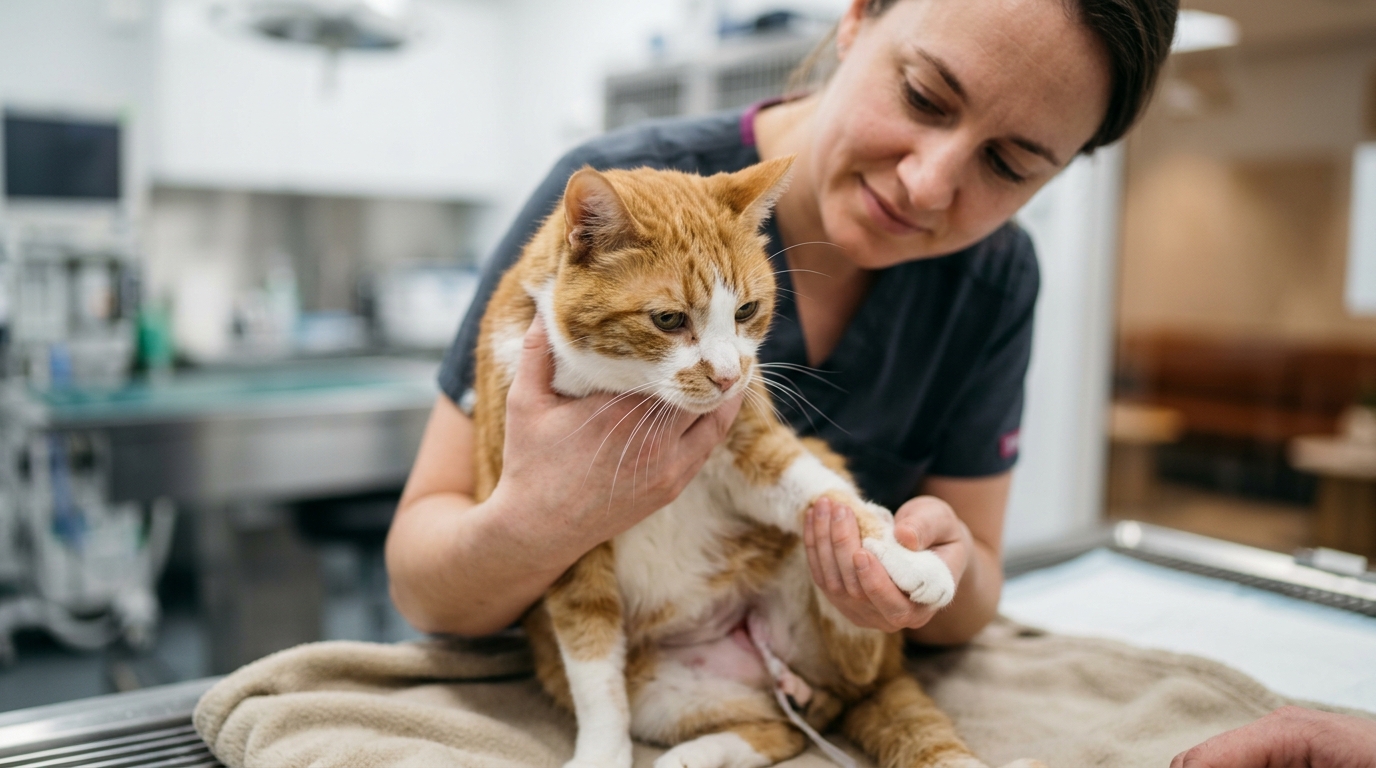
Recognizing the signs early is critical. Cats may strain in the litter box without producing urine, cry out in pain, or appear lethargic. Because this condition progresses rapidly, it is considered a medical emergency. General practice veterinarians are often the first line of defense, providing initial stabilization and fluid therapy. However, complex or recurrent cases often require the expertise of a board-certified veterinary surgeon. At VSx, our team specializes in advanced surgical care for pets, ensuring that cats with severe obstructions receive the specialized attention they need.
Urinary Catheterization
Urinary catheterization is the primary immediate intervention for most cat blockages. This procedure involves inserting a small, flexible tube through the urethra into the bladder to drain urine. The goal is to relieve pressure, flush out the blockage, and restore normal urine flow. This is typically performed by a general practice veterinarian in an emergency setting.
The Catheterization Process
The veterinarian will first stabilize the cat with intravenous fluids and pain management. Once the cat is calm and hydrated, the vet will attempt to pass a catheter through the urethra. If the blockage is a plug, the vet may flush the urethra with warm saline to dissolve the material. The catheter is often left in place for 2 to 3 days to allow the urethra to heal and to monitor urine output. During this time, the cat is usually hospitalized for close monitoring.
When Catheterization Fails
In some cases, the urethra may be too narrow, scarred, or spasming for a catheter to pass. If catheterization is unsuccessful, or if the cat has a history of recurrent blockages, a surgical approach may be necessary. This is where the role of a specialty surgical center becomes important. VSx provides board-certified veterinary surgeons who can evaluate complex urological cases and determine if a more permanent surgical solution is required.
Perineal Urethrostomy
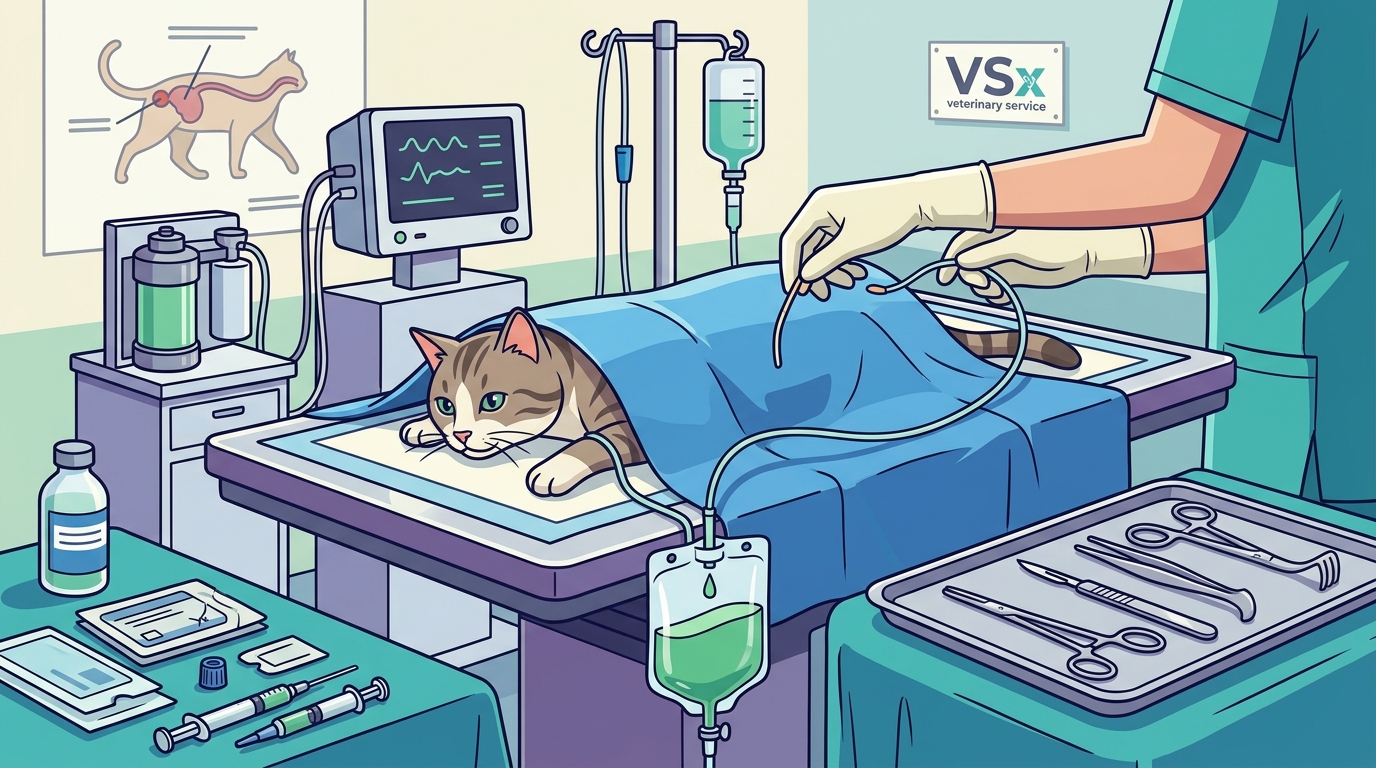
Perineal urethrostomy is a surgical procedure that creates a new, permanent opening for urine to exit the body. This surgery bypasses the narrow distal urethra, which is the most common site for blockages in male cats. By creating a wider opening near the anus, the surgery significantly reduces the risk of future obstructions. This procedure is typically recommended for cats that have had multiple blockages or for those with anatomical abnormalities that make catheterization difficult.
Surgical Technique and Recovery
The surgery is performed under general anesthesia. The surgeon makes an incision in the perineal area and creates a new stoma, or opening, that connects the urethra to the skin. The procedure requires precise technique to ensure the new opening remains patent and does not scar over. Recovery from a perineal urethrostomy typically involves a few weeks of restricted activity and careful wound care. While the surgery is highly effective at preventing future blockages, it is a major procedure that requires a skilled surgeon.
Role of Board-Certified Surgeons
Not all veterinary practices perform perineal urethrostomies. This is a specialized procedure that requires advanced training and experience. VSx offers board-certified veterinary surgeons who are experts in soft-tissue surgery, including urological procedures. If your cat has a history of recurrent blockages, a referral to a specialty surgical center like VSx may be the best option for long-term management. Our surgeons work collaboratively with referring veterinarians to develop individualized treatment recommendations for each patient.
Emergency Vet Care
Emergency veterinary care is the first and most critical step in treating a cat with a blockage. Time is of the essence, as untreated obstruction can lead to kidney failure and death within 24 to 48 hours. When you bring your cat to an emergency clinic, the veterinary team will immediately assess the cat's vital signs, perform a physical examination, and run blood work to check kidney function and electrolyte levels.
Stabilization and Monitoring
The initial focus is on stabilizing the cat. This includes administering intravenous fluids to correct dehydration and electrolyte imbalances, providing pain relief, and managing any cardiac arrhythmias that may result from high potassium levels. Once the cat is stable, the veterinarian will attempt to relieve the obstruction, usually via catheterization. The cat will then be hospitalized for monitoring, with regular checks on urine output and blood work to ensure the kidneys are recovering.
Transition to Specialty Care
While emergency care addresses the immediate crisis, it may not solve the underlying cause of the blockage. If the cat has a structural issue or a history of recurrence, the emergency veterinarian may recommend a referral to a specialty surgical center. VSx serves as a trusted partner for referring veterinarians, providing advanced surgical care for complex cases. Our locations in Chicago, Indianapolis, and Nashville are equipped to handle a wide range of surgical needs, ensuring that your pet receives the best possible care.
Comparison of Interventions
| Intervention | Primary Goal | Typical Provider | Long-Term Solution |
|---|---|---|---|
| Urinary Catheterization | Immediate relief of obstruction | General Practice / Emergency Vet | No, temporary measure |
| Perineal Urethrostomy | Prevent future blockages | Board-Certified Veterinary Surgeon | Yes, permanent anatomical change |
| Emergency Stabilization | Correct dehydration and electrolyte imbalance | Emergency Veterinary Team | No, supportive care |
Key Takeaways
- Cat blockages are life-threatening emergencies that require immediate veterinary attention.
- Urinary catheterization is the standard first-line treatment to relieve the obstruction.
- Perineal urethrostomy is a surgical option for cats with recurrent blockages.
- Board-certified veterinary surgeons are essential for complex or recurrent urological cases.
- Emergency care focuses on stabilization, while specialty care addresses long-term management.
- VSx provides advanced surgical care for pets in Chicago, Indianapolis, and Nashville.
- Collaborative care between general practice vets and specialty surgeons ensures the best outcomes.
Frequently Asked Questions
What is a cat blockage?
A cat blockage, or feline urethral obstruction, is a condition where the urethra is blocked, preventing urine from passing. It is a medical emergency that requires immediate treatment.
Can a regular vet treat a cat blockage?
Yes, a general practice veterinarian can perform catheterization to relieve the obstruction. However, complex or recurrent cases may require referral to a board-certified veterinary surgeon.
What is a perineal urethrostomy?
A perineal urethrostomy is a surgical procedure that creates a new, permanent opening for urine to exit the body, bypassing the narrow part of the urethra to prevent future blockages.
How long does a cat stay in the hospital after a blockage?
Cats typically stay in the hospital for 2 to 3 days after catheterization to allow the urethra to heal and to monitor urine output. Surgical cases may require a longer stay.
Does VSx perform cat blockage surgeries?
VSx provides board-certified veterinary surgeons who specialize in soft-tissue surgery, including urological procedures. They can evaluate complex cases and perform surgeries like perineal urethrostomy when indicated.
Where is VSx located?
VSx has locations in Chicago, Indianapolis, and Nashville, providing advanced surgical care for pets in these regions.