

How to Prepare Your Dog for Knee Surgery: The 2026 Ultimate Guide
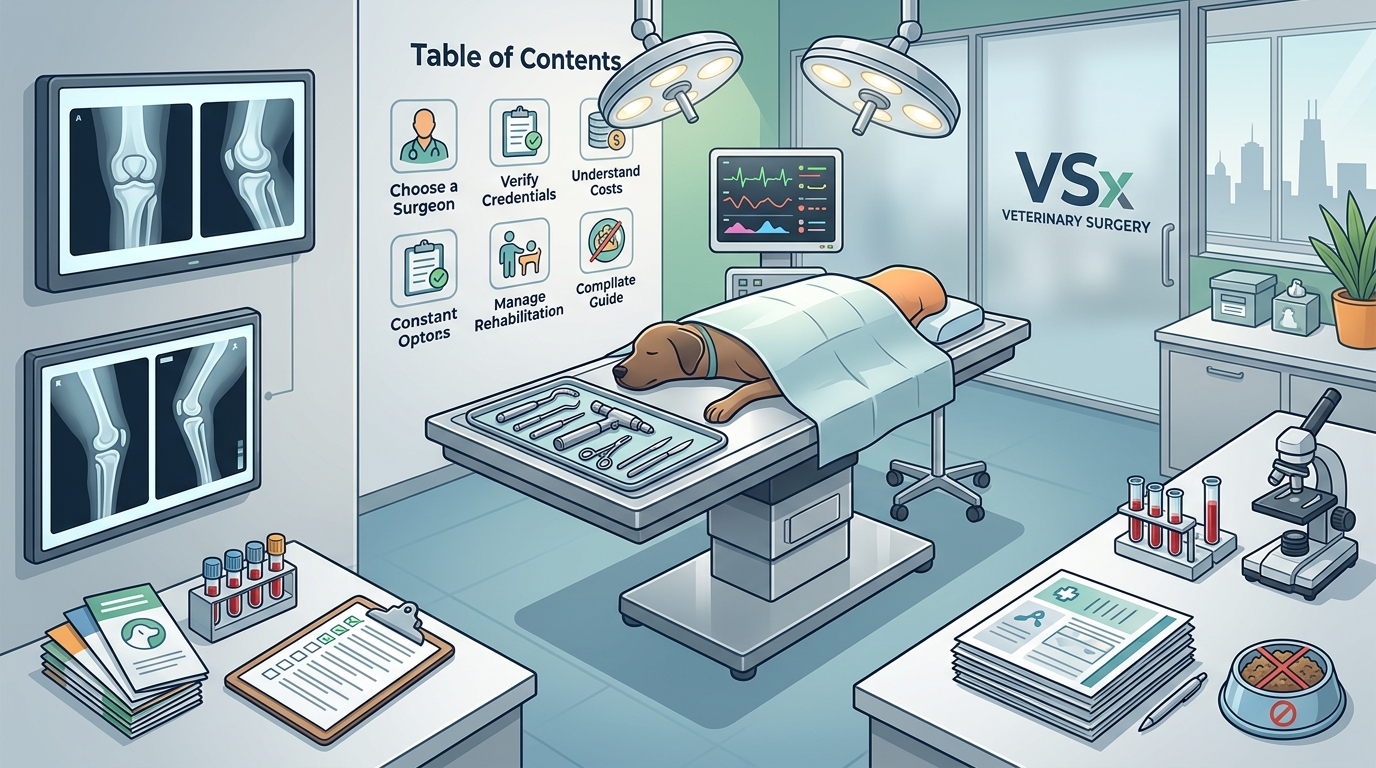
Preparing your dog for knee surgery involves pre-operative diagnostics, fasting, and strict post-operative activity restriction. At VSx Veterinary Surgery, our board-certified surgeons guide you through every step to ensure a safe and effective recovery. This guide covers how to choose a surgeon, verify credentials, understand costs, and manage the long-term rehabilitation process.
How to Choose a Surgical Provider
Choosing the right surgical team is the most critical decision in your dog's recovery. A board-certified veterinary surgeon is a veterinarian who has completed a rigorous residency and passed a national board examination. This certification ensures a high level of specialized training in surgical techniques. General practice veterinarians often perform routine procedures, but complex knee issues require a specialist.
Board Certification Matters
Look for surgeons who are Diplomates of the American College of Veterinary Surgeons (ACVS). This credential signifies that the surgeon has dedicated years to surgical mastery. At VSx, our surgeons are board-certified, bringing advanced expertise to every case. This level of training is essential for complex orthopedic repairs.
Facility and Technology
The environment in which surgery takes place is equally important. Modern facilities equipped with advanced imaging and sterile operating suites reduce the risk of complications. VSx utilizes state-of-the-art technology, including digital radiology and CT scanners, to plan precise surgical interventions. A dedicated surgical facility often provides a more focused and efficient care model than a general hospital.
What to Ask Before Committing
Before scheduling a procedure, you must ask specific questions to ensure you understand the plan. These questions help you gauge the surgeon's experience and the expected recovery timeline. Clear communication is the foundation of a successful surgical partnership.
Key Questions for the Surgeon
- What is the specific diagnosis, and how was it confirmed?
- What is the recommended surgical procedure, and why is it the best option?
- What are the potential risks and complications associated with this surgery?
- What is the expected recovery timeline and activity restriction protocol?
- How will post-operative pain be managed?
Questions for Your Primary Veterinarian
Your primary care veterinarian is your first point of contact. Ask them why they are referring your dog for surgery. Understanding the referral process helps you prepare the necessary medical records. VSx FAQs provide detailed information on how referrals work and what to expect during the consultation.
How to Verify Credentials
Verifying a surgeon's credentials is a simple but vital step. You can check the American College of Veterinary Surgeons directory to confirm if a doctor is a current Diplomate. This ensures that the surgeon's certification is valid and up to date. It is also wise to check for any disciplinary actions or complaints.
Checking the ACVS Directory
The ACVS maintains a public directory of all board-certified veterinary surgeons. You can search by name or location to verify their status. This step provides peace of mind and confirms that the surgeon has met the national standards for surgical competence. At VSx Chicago, our team's credentials are transparent and easily verifiable.
Reviewing Experience and Outcomes
Ask about the surgeon's volume of similar cases. Experience with a specific procedure, such as a TPLO, often correlates with better outcomes. While you cannot guarantee a specific result, a surgeon who performs these procedures daily is likely to be more efficient and skilled. Reviewing patient testimonials or asking for references can also provide insight into the quality of care.
How the Surgical Process Works
Understanding the sequence of events helps reduce anxiety for both you and your dog. The process typically begins with a consultation, followed by diagnostics, surgery, and a structured recovery period. Each step is designed to optimize the chances of a successful outcome.
Pre-Operative Phase
The pre-operative phase includes a physical examination, blood work, and diagnostic imaging. These tests ensure your dog is healthy enough for anesthesia and help the surgeon plan the procedure. You will receive specific instructions on fasting, which is critical for anesthesia safety. Fasting usually begins 8 to 12 hours before the scheduled surgery time.
The Surgery Day
On the day of surgery, your dog will be admitted to the facility. The surgical team will administer anesthesia and perform the procedure. You will typically be contacted after the surgery is complete to discuss the immediate outcome. The surgery itself can take several hours, depending on the complexity of the case.
Post-Operative Recovery
Recovery is the longest phase of the process. It involves strict activity restriction, pain management, and regular follow-up appointments. Your dog will likely need to wear a cone or a recovery suit to prevent licking the incision site. The VSx resources section offers detailed guides on post-operative care and recovery expectations.
What Knee Surgery Costs
The cost of knee surgery varies based on the procedure, the facility, and the complexity of the case. It is important to obtain a detailed estimate before committing to surgery. This estimate should include the cost of the surgery, anesthesia, hospitalization, and follow-up visits.
Factors Influencing Cost
| Cost Component | Description |
|---|---|
| Consultation | Initial evaluation by the surgeon |
| Diagnostic Imaging | X-rays or CT scans for planning |
| Surgical Fee | Cost of the procedure and surgeon's time |
| Anesthesia | Monitoring and medication during surgery |
| Hospitalization | Overnight stay for monitoring |
VSx offers transparent pricing for many of its services. For example, the Chicago location provides specific pricing for TPLO procedures. Understanding these costs upfront helps you budget for the full course of treatment. Insurance may cover some of these expenses, so check with your provider.
Common Mistakes to Avoid
Many recovery complications arise from simple mistakes made by pet owners. Avoiding these pitfalls can significantly improve your dog's outcome. The most common error is allowing too much activity too soon.
Overexertion
Dogs are eager to return to normal activities, but their bones and tissues need time to heal. Allowing your dog to run, jump, or play too early can undo the surgical repair. Strict leash walks and crate rest are essential during the initial healing phase. This discipline is the single most important factor in a successful recovery.
Medication Errors
Missing doses of pain medication or antibiotics can lead to complications. Pain management is crucial for keeping your dog comfortable and encouraging them to use the limb. Follow the prescribed schedule exactly and do not stop medication without consulting your veterinarian. Proper pain control also helps prevent behavioral issues during recovery.
Knee Surgery Versus Alternatives
Surgery is not the only option for every knee condition. Conservative management, including weight loss, physical therapy, and anti-inflammatory medication, may be appropriate for some cases. The decision depends on the severity of the injury and your dog's overall health.
Conservative Management
For mild cases or older dogs with comorbidities, conservative care may be recommended. This approach focuses on managing symptoms rather than fixing the underlying structural issue. It requires a long-term commitment to lifestyle changes and regular monitoring. Your surgeon will discuss the pros and cons of this approach during the consultation.
Surgical Intervention
Preparation for Specific Situations
Some dogs have unique needs that require additional preparation. Large breed dogs, for example, may need more extensive imaging due to the complexity of their anatomy. Dogs with pre-existing health conditions, such as heart or kidney disease, require careful anesthetic planning.
Large Breed Considerations
Large and giant breed dogs are prone to specific knee issues, such as cranial cruciate ligament tears. These dogs often require more robust surgical implants and a longer recovery period. Their size also means that anesthesia carries different risks, which must be carefully managed by the veterinary team.
Senior Dogs
Senior dogs may have age-related changes in their organs that affect how they process anesthesia and medications. Blood work is essential to assess organ function before surgery. The surgical plan may be adjusted to minimize stress and ensure a safe recovery. Close monitoring during the post-operative period is critical for older patients.
Rules and Protections
Understanding the rules and protections that apply to veterinary care helps you advocate for your pet. Informed consent is a fundamental part of the surgical process. You must sign a consent form that outlines the risks, benefits, and alternatives of the procedure.
Informed Consent
The informed consent process ensures that you understand what is being done and why. It is your right to ask questions and seek clarification before signing any documents. The surgeon should explain the potential complications in plain language. This process protects both you and the veterinary team by establishing clear expectations.
Legal and Ethical Standards
Veterinarians are bound by professional codes of ethics and state regulations. These standards ensure that care is provided with the appropriate level of skill and attention. If you have concerns about the care your pet is receiving, you have the right to seek a second opinion. This is a normal and respected part of the veterinary process.
Local Specifics for Chicago and Indianapolis
VSx operates in specific locations, and local factors can influence your care. The Chicago and Indianapolis locations offer specialized surgical services in modern facilities. Understanding the local availability of care can help you plan your logistics.
Chicago Location
The VSx Chicago facility is located in the North Side of Chicago. It serves the greater Chicagoland area and offers a range of orthopedic and soft tissue surgeries. The facility is designed for efficiency, with streamlined workflows that reduce wait times for patients.
Indianapolis Location
The VSx Indianapolis location serves the greater Indiana region. It provides similar services to the Chicago location, with a focus on advanced surgical care. Both locations are staffed by board-certified surgeons who are committed to excellent clinical outcomes.
Timing and Urgency
The timing of surgery can impact the outcome. Acute injuries, such as a sudden tear of the cruciate ligament, often require prompt intervention. Delaying surgery can lead to further damage to the joint and make the procedure more complex. However, not all cases are emergencies, and some can be scheduled at a convenient time.
Acute vs. Chronic Cases
Acute cases typically require surgery within a few days to a week. Chronic cases, where the dog has been managing the condition for some time, may allow for more flexible scheduling. Your surgeon will advise you on the urgency based on the specific diagnosis. Prompt action is generally associated with better long-term outcomes.
Scheduling Logistics
Once you have decided to proceed with surgery, the facility will work with you to schedule the procedure. This involves coordinating with your primary veterinarian to ensure all records are transferred. The VSx FAQs provide information on how quickly surgeries can be scheduled. Planning ahead helps ensure a smooth transition from diagnosis to treatment.
Long-Term Results and Outcomes
The goal of knee surgery is to restore function and reduce pain. Most dogs recover well and return to normal activity levels. However, the long-term outcome depends on various factors, including the severity of the initial injury and the quality of post-operative care.
Short-Term Recovery
In the first few weeks, your dog will be limited in activity. Pain and swelling should gradually decrease. By the end of the first month, many dogs are walking comfortably on short leash walks. This phase is critical for building the foundation for a full recovery.
Long-Term Function
Over the following months, your dog will gradually increase their activity level. Physical therapy and rehabilitation exercises can help restore strength and range of motion. Most dogs return to their pre-injury activity levels within six to twelve months. Regular follow-up appointments allow the surgeon to monitor the healing process and make adjustments as needed.
Key Takeaways
- Choose a board-certified veterinary surgeon for complex knee issues.
- Verify credentials through the American College of Veterinary Surgeons directory.
- Ask specific questions about the diagnosis, procedure, and recovery plan.
- Understand the full cost of surgery, including diagnostics and follow-up.
- Strictly enforce activity restrictions during the recovery period.
- Manage pain medication carefully to ensure comfort and healing.
- Consider conservative management for mild cases or senior dogs.
- Plan for a long-term recovery process that may take up to a year.
Frequently Asked Questions
How long does it take to recover from knee surgery?
Recovery typically takes six to twelve months. The initial healing phase lasts a few weeks, followed by a gradual increase in activity. Strict adherence to the activity restriction protocol is essential for a successful long-term outcome.
Is knee surgery painful for dogs?
Dogs experience pain after surgery, but it is managed with prescribed medication. Proper pain control is crucial for keeping your dog comfortable and encouraging them to use the limb. Your veterinarian will provide a detailed pain management plan.
Do I need a referral to see a VSx surgeon?
VSx primarily works with referring veterinarians. Your primary care veterinarian will evaluate your dog and refer them to VSx if specialized surgery is needed. This collaborative approach ensures continuity of care.
What is a TPLO surgery?
A Tibial Plateau Leveling Osteotomy (TPLO) is a surgical procedure used to treat cranial cruciate ligament tears. It involves cutting and repositioning the tibia to stabilize the knee joint. It is one of the most common orthopedic procedures performed by board-certified surgeons.
How much does knee surgery cost?
Costs vary based on the procedure and facility. VSx provides transparent pricing for many services. You should request a detailed estimate that includes all components of the treatment, from consultation to follow-up visits.
Can my dog live a normal life after knee surgery?
Most dogs return to normal activity levels after a full recovery. The long-term outcome depends on the severity of the injury and the quality of post-operative care. With proper rehabilitation, many dogs lead active and pain-free lives.