
Choosing a Board-Certified Veterinary Surgeon in Indiana: A 2026 Guide
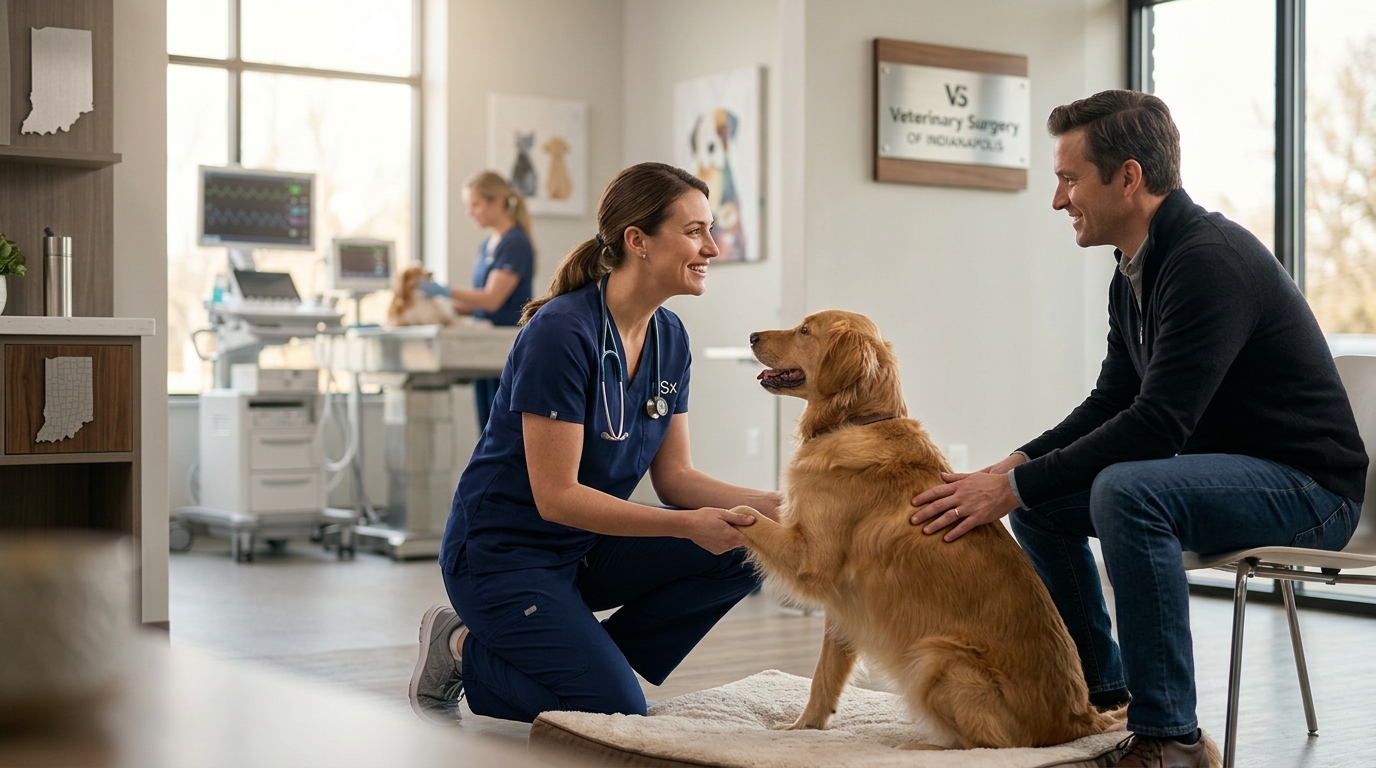
When searching for the best veterinary surgeon in Indiana, pet owners should prioritize board-certified specialists with dedicated surgical focus and advanced diagnostic capabilities. VSx Veterinary Surgery of Indianapolis provides this level of care through its team of Diplomates of the American College of Veterinary Surgeons. This guide explains how to evaluate surgical credentials, understand orthopedic and soft tissue options, and navigate the referral process for your pet.
Understanding Board Certification
Board certification is the gold standard in veterinary medicine, distinguishing general practitioners from true surgical specialists. A board-certified veterinary surgeon is a veterinarian who has completed an internship and a three to four year surgical residency after veterinary school. This rigorous training involves thousands of hours working alongside experienced surgeons and passing a certification exam through the American College of Veterinary Surgeons (ACVS). Only after this process can a veterinarian be called a Diplomate of the ACVS.
General Practice vs. Specialty Surgery
Many general veterinarians perform common procedures like spays, neuters, and mass removals with excellent results. However, a board-certified surgeon devotes their entire career to surgery, from simple to complex operations. As veterinary clinics modernize, the practice of mentoring general veterinarians in advanced surgical techniques is increasingly limited due to high appointment loads. Choosing a specialist ensures your pet receives care from a surgeon who performs these procedures daily.
Why Specialization Matters for Outcomes
Specialization allows for deeper expertise in specific anatomical systems. At VSx, our surgeons focus exclusively on advanced soft tissue and orthopedic surgeries. This concentrated focus means they are constantly refining their techniques and staying current with the latest surgical innovations. For complex cases involving the spine, pelvis, or advanced cancer removal, this level of dedicated experience is critical for achieving the best possible clinical outcomes.
Orthopedic Surgery in Indiana
Orthopedic surgery addresses conditions of the musculoskeletal system, including bones, joints, and ligaments. It is a highly technical field requiring precision and advanced equipment. VSx Veterinary Surgery of Indianapolis offers a range of orthopedic procedures designed to restore mobility and reduce pain for dogs and cats. Our team brings roughly 30 years of combined experience to these complex cases.
Common Orthopedic Conditions
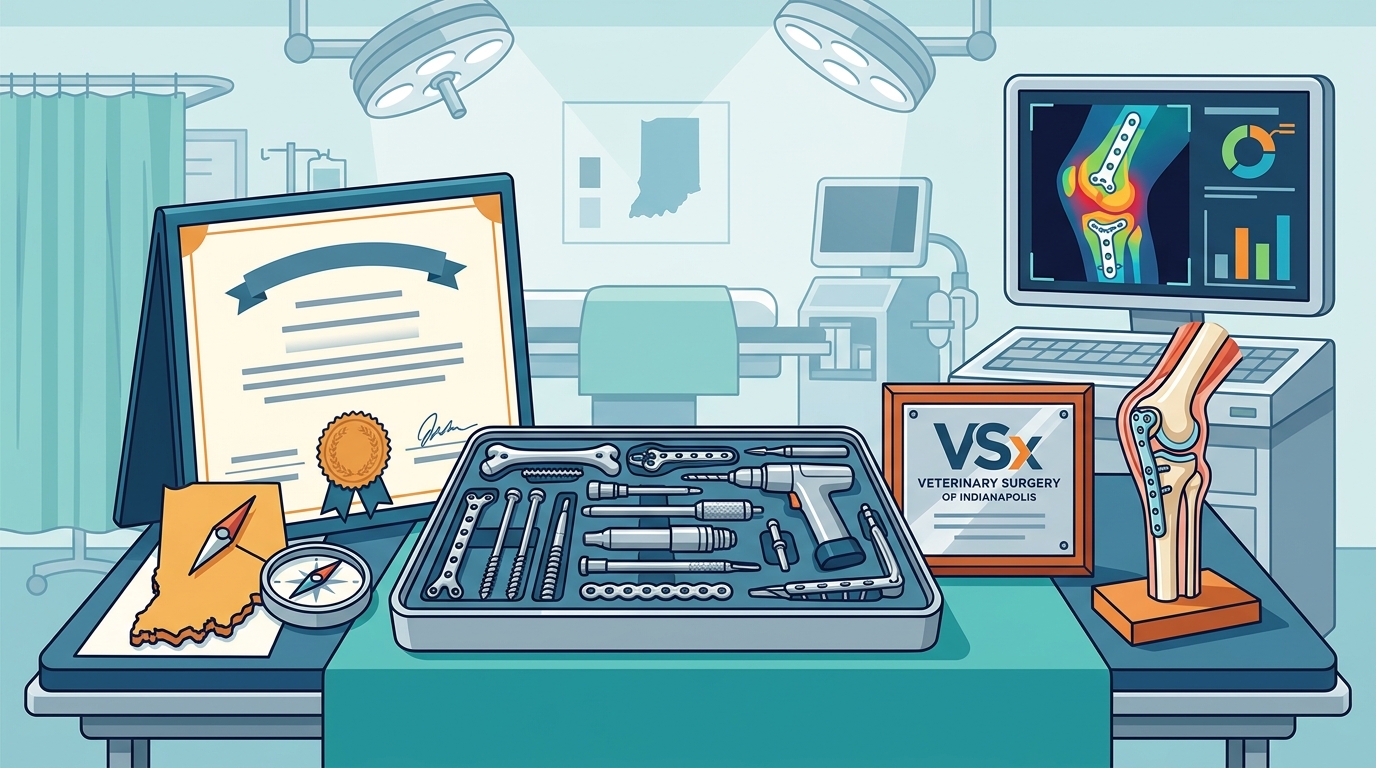
Several conditions frequently require surgical intervention in pets. Cranial Cruciate Ligament (CCL) tears are among the most common, often treated with a Tibial Plateau Leveling Osteotomy (TPLO). Fracture repair is another major category, where surgeons use pins, plates, screws, or external fixators to stabilize broken bones. A Femoral Head and Neck Ostectomy (FHO) is a procedure where the head and neck of the femur are removed, allowing the body to form a false joint that provides comfort and mobility.
Advanced Techniques and Equipment
Successful orthopedic surgery depends on both skill and access to the right tools. VSx utilizes state-of-the-art equipment, including digital radiology and advanced CT scanning technology. These tools allow surgeons to plan procedures with millimeter precision. Minimally invasive techniques, such as arthroscopy, are also available for certain joint conditions, potentially leading to faster recovery times and less post-operative pain.
Soft Tissue and Oncological Surgery
Soft tissue surgery involves organs and tissues other than the musculoskeletal system, including the gastrointestinal, urinary, and reproductive tracts. Oncological surgery is a specialized subset focused on the removal of tumors. VSx surgeons are experienced in advanced soft tissue procedures, from tumor removals to reconstructive surgeries. This expertise ensures that complex conditions are managed with care and compassion.
Managing Tumors and Masses
Mast cell tumors are the most common type of skin tumor in dogs, representing about 20% of all skin tumors. Surgical removal is the preferred treatment, but the complexity depends on the tumor's grade and location. Mammary tumors are also common in unspayed female dogs and cats. In these cases, a mammary chain removal is often recommended to treat the tumors and prevent future growth. Our surgeons work closely with pathologists to determine the appropriate surgical margins for optimal oncological outcomes.
Reconstructive and Salvage Procedures
Some conditions require more extensive reconstructive work. For example, a Total Ear Canal Ablation (TECA) with Bulla Osteotomy (BO) is a salvage procedure performed when medical therapy for chronic ear infections has failed. This involves removing the entire ear canal to eliminate the source of infection. Similarly, reconstructive oncological surgery may be needed to remove tumors that invade surrounding tissues. Dr. Rebecca Ball, a board-certified surgeon at VSx Chicago, specializes in this area, highlighting the depth of expertise available across the VSx network.
The Role of Diagnostic Imaging
Accurate diagnosis is the foundation of successful surgery. Diagnostic imaging provides the detailed anatomical information surgeons need to plan their approach. VSx offers comprehensive imaging services, including digital X-ray and outpatient CT scans. These services are available for both surgical planning and standalone diagnostic needs, ensuring that referring veterinarians have the full picture before making treatment decisions.
CT Scanning for Complex Cases
Computed Tomography (CT) scanning provides cross-sectional images that offer superior detail compared to standard X-rays. This is particularly useful for evaluating the spine, pelvis, and complex fractures. VSx utilizes advanced CT technology to provide quick, accurate diagnoses for complex cases. The radiologist report accompanying the scan helps both the surgeon and the referring veterinarian understand the extent of the pathology.
Imaging as a Standalone Service
Not every imaging case leads to surgery at VSx. We offer outpatient CT scanning and X-rays as standalone services for non-surgical cases. This flexibility allows general practice veterinarians to access advanced diagnostic tools without committing to a surgical procedure. By collaborating with referring veterinarians, we ensure that diagnostic information is shared promptly, facilitating timely treatment decisions for the patient.
Navigating the Referral Process
Understanding how to refer a case to a specialty surgery center is essential for pet owners and veterinarians. At VSx, we have streamlined the referral process to ensure efficient communication and timely care. Referring a case is easy; veterinarians can via phone or submit a referral through our online forms. We coordinate directly with the referring veterinarian to collect necessary records and schedule the procedure.
Communication and Updates
Open communication is a cornerstone of our practice. Referring veterinarians receive updates on their patient's progress at key stages, including pre-op assessments, post-surgery outcomes, and during recovery. This ensures that the general practice veterinarian remains informed and can provide seamless care for the patient post-surgery. For pet owners, our team provides clear instructions on preparation, such as fasting, and keeps you informed throughout the procedure.
Scheduling and Availability
We prioritize efficiency and strive to accommodate urgent cases as quickly as possible. Most surgeries can be scheduled within a week, depending on the complexity of the case. For diagnostic imaging, we offer flexible scheduling to ensure timely access to our services. This commitment to efficiency helps minimize wait times and reduces disruptions for both pets and their families.
Key Takeaways
- Board certification through the ACVS is the highest standard of surgical training in veterinary medicine.
- VSx Veterinary Surgery of Indianapolis features board-certified surgeons with decades of combined experience.
- Orthopedic surgery at VSx includes advanced procedures like TPLO, fracture repair, and FHO.
- Soft tissue and oncological surgery require specialized skills for tumor removal and reconstruction.
- Advanced diagnostic imaging, including CT scans, is available as a standalone service at VSx.
- The referral process at VSx is streamlined, with regular updates to referring veterinarians.
- Choosing a surgery-only facility ensures focused expertise and efficient care coordination.
Frequently Asked Questions
What does it mean to be a board-certified veterinary surgeon?
A board-certified veterinary surgeon is a veterinarian who has completed an internship and a 3-4 year surgical residency, followed by a rigorous certification exam through the American College of Veterinary Surgeons (ACVS). This title indicates a high level of specialized training and expertise in surgery.
How is a board-certified surgeon different from a general veterinarian?
While general veterinarians perform common surgeries, a board-certified surgeon devotes their entire career to surgery. They undergo years of additional specialized training and perform a wider variety of complex procedures daily, providing a higher level of expertise for advanced cases.
What types of surgeries does VSx perform in Indianapolis?
VSx Veterinary Surgery of Indianapolis specializes in advanced soft tissue and orthopedic surgeries. This includes procedures such as TPLO for knee joint ligament repair, fracture repair, oncological surgery, and minimally invasive procedures like arthroscopy.
Can my pet receive diagnostic imaging at VSx without surgery?
Yes, VSx offers advanced diagnostic imaging services, including CT scans and digital radiology, even for non-surgical cases. These imaging services are available on an outpatient basis and can be used for standalone diagnostic needs.
How quickly can I schedule a surgery at VSx?
VSx prioritizes efficiency and strives to accommodate urgent cases as quickly as possible. Most surgeries can be scheduled within a week, depending on the complexity of the case. Diagnostic imaging offers flexible scheduling for timely access.
Will I receive updates on my pet's progress after surgery?
Yes, VSx maintains open communication throughout the process. Referring veterinarians receive updates during key stages, such as pre-op assessments and post-surgery outcomes. Pet owners are also kept informed about their pet's recovery and care instructions.
Do I need a referral to see a VSx surgeon?
VSx works closely with general practice veterinarians, emergency hospitals, and specialty teams. While a referral from your primary veterinarian is the standard pathway, you can contact VSx directly to discuss your pet's needs and determine the appropriate next steps.
Conclusion
Choosing the right veterinary surgeon in Indiana requires looking for board certification, specialized focus, and advanced diagnostic capabilities. VSx Veterinary Surgery of Indianapolis meets these criteria with a team of experienced Diplomates of the ACVS and a surgery-only practice model. By prioritizing these factors, you can ensure your pet receives the highest standard of surgical care. To discuss your pet's specific needs, contact our Indianapolis team or consult your primary care veterinarian for a referral.