
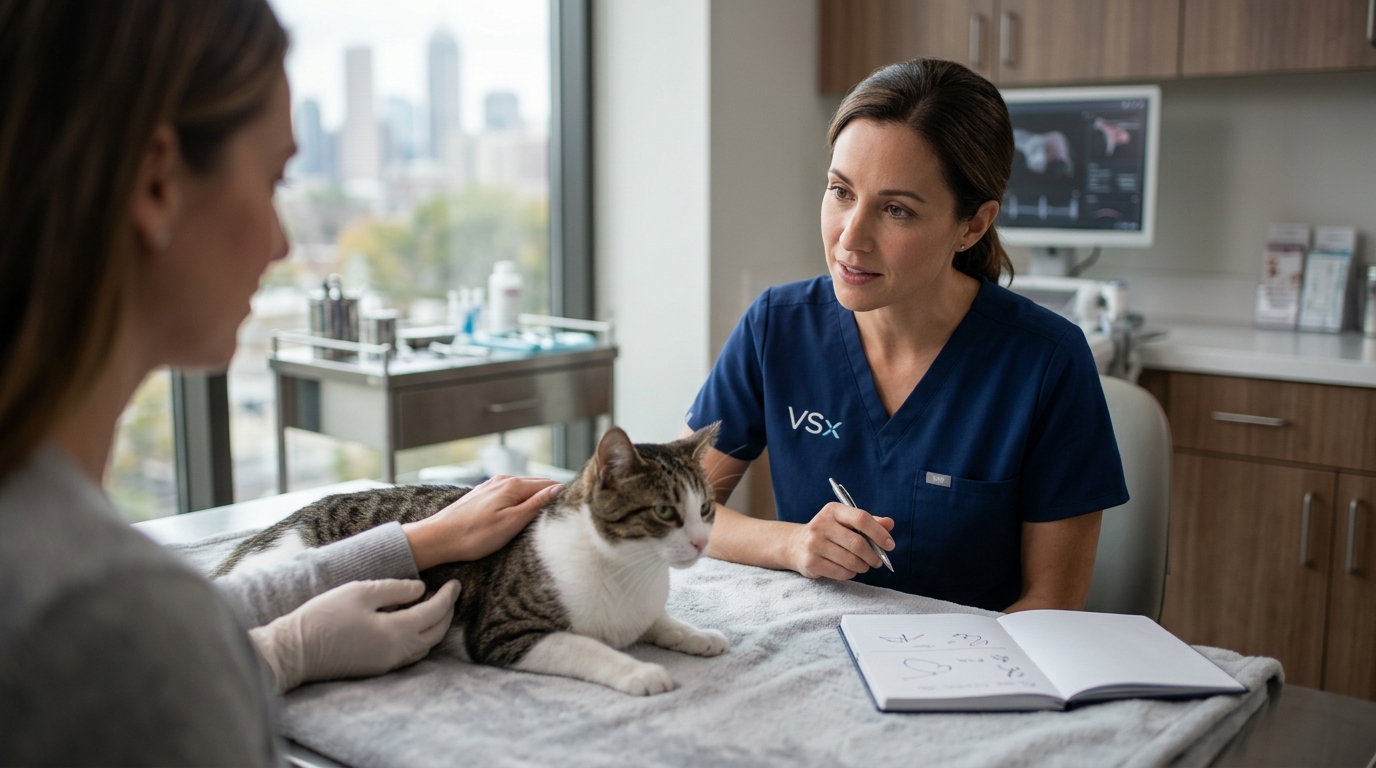
Cat blockages are serious medical events that require prompt veterinary evaluation. A veterinarian can diagnose and treat urinary or intestinal obstructions using catheterization, surgery, or specialized procedures. This guide explains how board-certified veterinary surgeons at VSx approach these conditions, the specific treatments available, and how to recognize when your cat needs advanced surgical care.
Emergency Veterinary Care
Recognizing the signs of a blockage is the first step in saving your cat's life. Emergency veterinary care focuses on stabilizing the patient and determining the type of obstruction. A blockage is a physical obstruction that prevents the normal flow of urine or intestinal contents. Cats with urinary blockages often show straining in the litter box, vocalizing in pain, or producing no urine at all. Intestinal blockages may present as vomiting, lethargy, or a distended abdomen.
Initial Assessment and Stabilization
When a cat arrives at an emergency facility, the veterinary team performs a rapid assessment. This includes checking vital signs, hydration status, and blood work to evaluate kidney function. Dehydration and electrolyte imbalances are common in blocked cats and must be corrected before any surgical intervention. The goal is to stabilize the patient so they can safely undergo anesthesia if surgery is required.
Diagnostic Imaging
Diagnostic imaging is essential for confirming the type and location of the blockage. Radiographs (X-rays) can reveal bladder stones or foreign bodies in the intestines. Ultrasound provides detailed views of soft tissues and can help identify the exact site of an intestinal obstruction. These tools allow the veterinary surgeon to plan the most appropriate treatment approach.
Urinary Catheterization
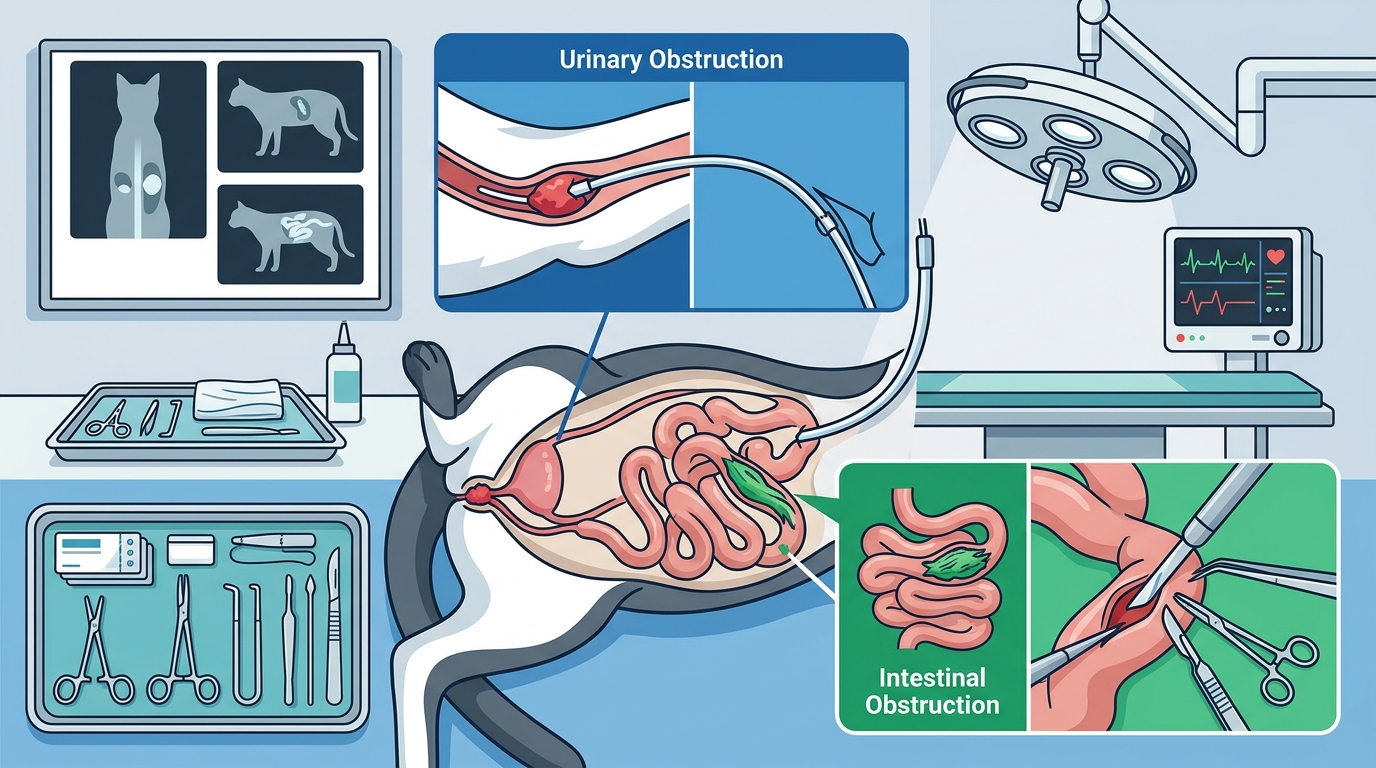
Urinary catheterization is a procedure used to relieve a urethral blockage in male cats. This condition, often called feline urethral obstruction, is a medical emergency. A veterinarian inserts a small, flexible tube through the urethra to drain urine from the bladder. This procedure relieves immediate pressure and allows the bladder to empty, which is critical for preventing kidney damage.
The Catheterization Process
The procedure is typically performed under sedation or general anesthesia to ensure the cat remains still and comfortable. The veterinarian lubricates the catheter and gently guides it through the urethra into the bladder. Once in place, the catheter allows urine to flow freely. The catheter may be left in place for 24 to 72 hours to prevent the urethra from swelling shut again.
When Catheterization Is Not Enough
While catheterization resolves the immediate emergency, it does not address the underlying cause of the blockage. Many male cats experience recurrent obstructions due to anatomical or behavioral factors. In these cases, a board-certified veterinary surgeon may recommend a more permanent solution, such as a perineal urethrostomy. VSx surgeons specialize in these complex soft-tissue procedures to provide long-term relief for patients with recurrent issues.
Intestinal Blockage Surgery
Intestinal blockage surgery is required when a foreign object, tumor, or stricture prevents food from moving through the digestive tract. This is a life-threatening condition that requires prompt surgical intervention. A board-certified veterinary surgeon performs an exploratory laparotomy to locate and remove the obstruction. The surgery involves opening the abdomen and carefully examining the intestines to identify the blockage.
Types of Intestinal Obstructions
Cats may ingest various foreign bodies, including string, hairballs, or plastic toys. String is particularly dangerous because it can cause a linear foreign body, which can cut into the intestinal wall and lead to severe complications. Tumors or inflammatory strictures can also cause blockages. The surgical approach depends on the type and location of the obstruction.
Surgical Techniques
Depending on the severity, the surgeon may perform an enterotomy (opening the intestine to remove the object) or an intestinal resection and anastomosis (removing the damaged section and reconnecting the healthy ends). These procedures require advanced surgical skills and careful post-operative care. VSx provides advanced surgical care for complex intestinal cases, ensuring that the procedure is performed by experienced board-certified surgeons.
Perineal Urethrostomy
A perineal urethrostomy is a surgical procedure that creates a new, permanent opening for urine to exit the body. This procedure is typically recommended for male cats with recurrent urethral obstructions. By bypassing the narrow urethra, the surgery prevents future blockages. The new opening is located near the base of the penis, making it easier for urine to flow without obstruction.
Why Choose a Perineal Urethrostomy?
Male cats have a long, narrow urethra that is prone to blockage. A perineal urethrostomy widens the urethral opening, significantly reducing the risk of future obstructions. This procedure is considered a definitive treatment for cats that have experienced multiple blockages. It is a specialized soft-tissue surgery that requires expertise in feline anatomy and surgical technique.
Recovery and Aftercare
Recovery from a perineal urethrostomy typically involves a few weeks of restricted activity and wound care. The cat may need to wear an Elizabethan collar to prevent licking the surgical site. Owners should monitor the new opening for any signs of infection or swelling. VSx surgeons provide detailed aftercare instructions to ensure a smooth recovery and long-term success.
Emergency Vet Care
Emergency vet care is the first line of defense when your cat shows signs of a blockage. Not all veterinary clinics have the surgical expertise to handle complex blockages. Referring to a specialty surgical center ensures that your cat receives care from board-certified veterinary surgeons who focus exclusively on advanced procedures. This collaborative approach allows your primary veterinarian to manage the initial stabilization while the surgical team prepares for definitive treatment.
The Referral Process
When a primary veterinarian identifies a complex blockage, they may refer the patient to a specialty center like VSx. The referral process involves sharing medical records, diagnostic images, and treatment plans. This ensures that the surgical team has all the necessary information to make informed decisions. VSx works closely with referring veterinarians to provide seamless, collaborative care for patients and their owners.
Choosing the Right Facility
When selecting an emergency vet facility, consider the availability of advanced surgical services and board-certified surgeons. VSx offers board-certified veterinary surgery services in Chicago, Indianapolis, and Nashville. Their team of experts provides individualized treatment recommendations based on the specific needs of each patient. Choosing a facility with specialized surgical expertise can significantly improve outcomes for cats with complex blockages.
Key Takeaways
- Cat blockages are medical emergencies that require prompt veterinary evaluation and treatment.
- Urinary catheterization is a critical first step in relieving urethral obstructions in male cats.
- Intestinal blockage surgery is necessary when foreign objects or tumors obstruct the digestive tract.
- A perineal urethrostomy is a permanent solution for male cats with recurrent urethral blockages.
- Board-certified veterinary surgeons provide advanced surgical care for complex blockage cases.
- Collaborative care between primary veterinarians and specialty surgeons ensures the best possible outcomes.
- VSx offers specialized surgical services in Chicago, Indianapolis, and Nashville for cats with blockages.
Frequently Asked Questions
What are the signs of a urinary blockage in a cat?
Can a veterinarian remove a blockage without surgery?
For urinary blockages, a veterinarian can often relieve the obstruction using a catheter. However, intestinal blockages typically require surgical intervention to remove the foreign object or damaged tissue.
What is a perineal urethrostomy?
A perineal urethrostomy is a surgical procedure that creates a new, permanent opening for urine to exit the body. It is used to prevent recurrent urethral blockages in male cats.
How long does it take for a cat to recover from blockage surgery?
Recovery time varies depending on the type of surgery. Urinary catheterization may require 24 to 72 hours of hospitalization, while intestinal surgery or perineal urethrostomy may require several weeks of restricted activity and wound care.
Do I need to refer my cat to a specialty surgeon?
For complex or recurrent blockages, a referral to a board-certified veterinary surgeon may be recommended. Your primary veterinarian can help determine if specialty care is necessary for your cat's specific condition.
Where can I find board-certified veterinary surgeons for my cat?
VSx provides board-certified veterinary surgery services in Chicago, Indianapolis, and Nashville. You can learn more about their team and services on their website.
Conclusion
Cat blockages are serious conditions that require prompt and specialized veterinary care. From emergency stabilization to advanced surgical procedures, the right veterinary team can make a significant difference in your cat's outcome. VSx is committed to providing advanced surgical care for cats with complex blockages. Their board-certified veterinary surgeons work collaboratively with referring veterinarians to ensure that each patient receives individualized treatment recommendations. If your cat is showing signs of a blockage, contact your veterinarian immediately to discuss the best course of action.
To learn more about VSx's surgical services and to find a location near you, visit VSx Veterinary Surgery.