
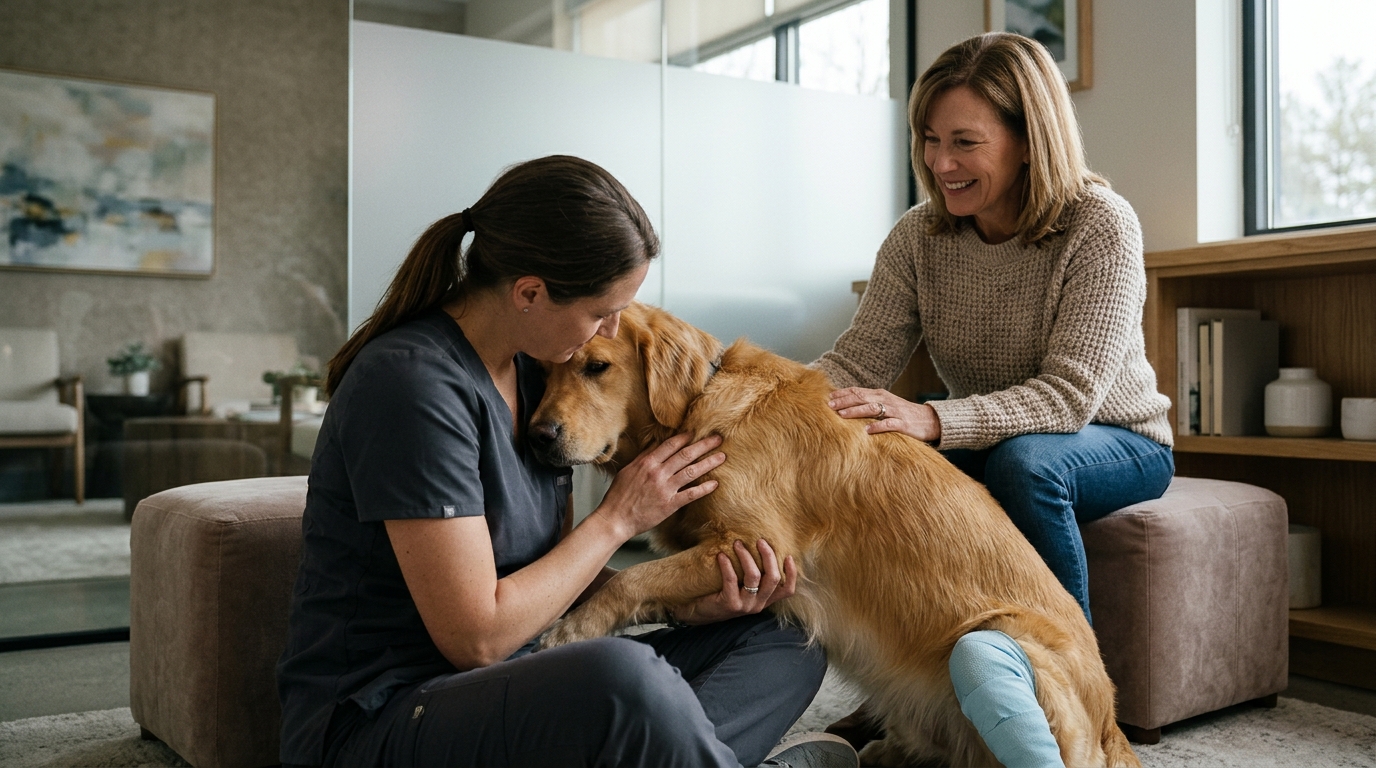
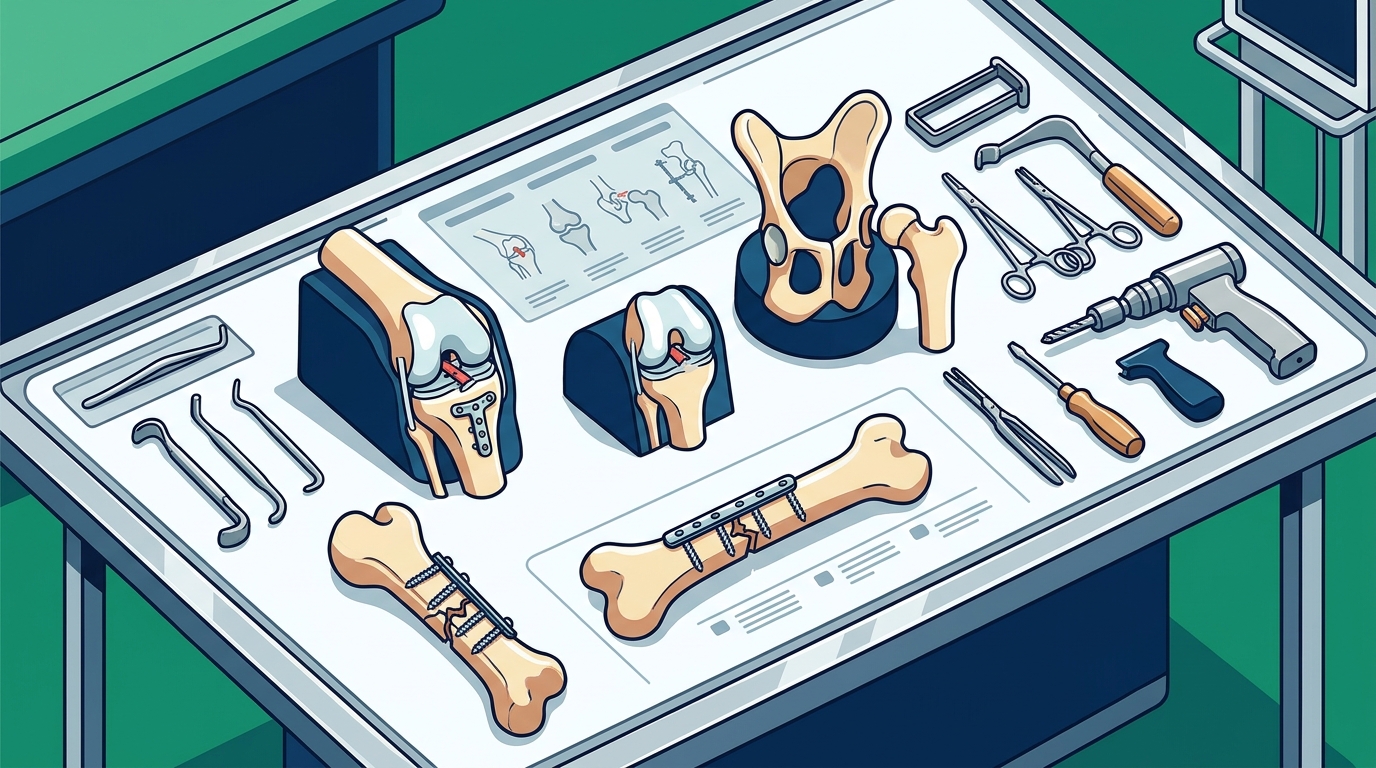
Board-certified veterinary surgeons at VSx most frequently perform tibial plateau leveling osteotomy (TPLO), fracture repair, and femoral head and neck ostectomy (FHO) for dogs and cats. These procedures address the most prevalent orthopedic conditions, including cranial cruciate ligament tears, traumatic bone breaks, and hip dysplasia. Choosing the right surgical approach depends on the specific injury, the patient's size, and their overall health.
The Gold Standard for Cruciate Ligament Tears
The cranial cruciate ligament (CCL) is the equivalent of the anterior cruciate ligament (ACL) in humans. When this ligament tears, the knee joint becomes unstable, leading to pain and accelerated arthritis. A TPLO is a surgical procedure that corrects the standing angle of the top of the tibia to eliminate this forward instability. It is widely considered the gold standard for treating CCL tears in dogs and is also performed in cats.
During a TPLO, the surgeon explores the stifle joint to address any meniscal damage. They then make a cut in the top of the tibia, rotate the segment, and secure it with a specially designed plate and screws. Postoperative radiographs confirm appropriate implant placement. This anatomical change neutralizes the slope of the tibial plateau, allowing the joint to function without the ligament. At VSx Veterinary Surgery, our board-certified surgeons have performed hundreds of these procedures, consistently achieving excellent outcomes and a return to full activity.
Managing Bone Fractures and Trauma
A fracture is a break or crack in a bone, ranging from a small hairline crack to a complete break. Fractures often happen due to trauma, but serious trauma is not always required to break a bone. Young puppies and kittens often sustain fractures from normal play and activities. Signs of a fracture include limping, holding a limb up, swelling, visible deformity, and pain.
While some fractures can be managed medically with a cast or splint, many require surgery to provide enough stability for the bone to heal. Common surgical methods include using pins and wires, plates and screws, rods, or external fixators. Surgery results in more stability and more predictable healing in many fracture types. As noted by the CSU Veterinary Health System, trauma is the most common cause of bone fractures, and most require surgery because dogs and cats walk on all four limbs. Strict rest is an absolute must for a fracture to heal, and many fractures take between 4 to 12 weeks to heal.
Salvage Procedures for Hip Disease
Hip dysplasia and avascular necrosis of the femoral head are common conditions that can cause significant pain and mobility issues. An FHO is a surgical procedure where the head and the neck of the femur (the thigh bone) are permanently removed. This is considered a salvage procedure, meaning the head and neck are not replaced as they are in a total hip replacement.
After an FHO, the femur is kept in place by the muscles of the leg. As the body heals, scar tissue develops, creating a "false joint" that is more comfortable and results in better mobility than the diseased joint. An FHO is best suited to small and medium-sized dogs and cats. Post-operative rehabilitative therapy is crucial for the best outcome. You can learn more about this procedure on the FHO surgery page at VSx. Proper activity restriction often requires a crate, pen, or small room with no furniture to prevent injuries during recovery.
Advanced Fracture Repair Techniques
Orthopedic surgery aims to diagnose and treat diseases affecting the bones, joints, ligaments, tendons, and muscles in dogs and cats. The Purdue University Small Animal Hospital offers comprehensive orthopedic surgery services, from simple fracture repairs to complex joint surgeries. At VSx, our surgeons utilize state-of-the-art equipment and techniques for safer, more precise care. We specialize in a range of orthopedic procedures, providing advanced orthopedic care to restore mobility to your pet.
For complex fractures, surgeons may use a combination of internal and external fixation methods. The choice of implant depends on the location and severity of the break, as well as the age of the pet. Younger animals often heal faster and may tolerate different fixation methods than older adults. Our team believes in making advanced surgical services more accessible and affordable for pet owners, so we created a practice where compassionate care meets concentrated focus on surgery.
Rehabilitation and Post-Operative Care
Recovery from orthopedic surgery is a critical phase of the healing process. For TPLO, recovery time is typically 8-12 weeks. All high-impact activity should be eliminated until your veterinarian clears your pet to resume normal activity. This means no running, jumping, or unassisted stairs. Activity should be limited to short leash walks for bathroom breaks only.
Physical therapy and rehabilitation play a vital role in restoring strength and function. The Washington State University Veterinary Teaching Hospital emphasizes that exercises can benefit dogs that are arthritic, recovering from surgery, or suffering from muscle atrophy. At VSx, we provide clear post-surgery care instructions to ensure a smooth recovery at home. Our goal is to make the process as stress-free as possible for both you and your pet.
Key Takeaways
- TPLO is the gold standard for treating cranial cruciate ligament tears in dogs and cats.
- Fracture repair often requires surgery with plates, screws, or external fixators for stability.
- FHO is a salvage procedure for hip disease, best suited for small and medium-sized pets.
- Strict activity restriction is essential for proper healing after orthopedic surgery.
- Rehabilitation and physical therapy are crucial for restoring strength and function post-surgery.
- Board-certified surgeons at VSx provide advanced, compassionate care for complex orthopedic cases.
Frequently Asked Questions
What is the most common orthopedic surgery in dogs?
The most common orthopedic surgery in dogs is the TPLO, which treats cranial cruciate ligament tears.
Can cats undergo TPLO surgery?
Yes, TPLO is also performed in cats to treat cranial cruciate ligament tears.
How long does it take for a fracture to heal?
Many fractures take between 4 to 12 weeks to heal, depending on the type and location of the break.
What is an FHO?
An FHO is a surgical procedure where the head and neck of the femur are removed to treat hip disease.
Do I need to refer my pet to a specialist for orthopedic surgery?
Your general practice veterinarian will evaluate your pet and determine if a surgical solution is necessary. If they believe specialized surgery is required, they will refer you to VSx for a consultation with our board-certified surgeons.
What should I expect on the day of surgery?
On the day of surgery, our team will provide you with clear instructions on when to bring your pet in and how to prepare them. You will receive post-surgery care instructions to ensure a smooth recovery at home.
Consult a Board-Certified Surgeon
If your pet is showing signs of orthopedic distress, it is important to seek professional evaluation. At VSx Veterinary Surgery, our board-certified surgeons are committed to providing advanced surgical care and individualized treatment recommendations. We partner closely with general practice veterinarians to deliver collaborative, high-quality surgical care for pets and the veterinarians who care for them. To plan your visit, .