
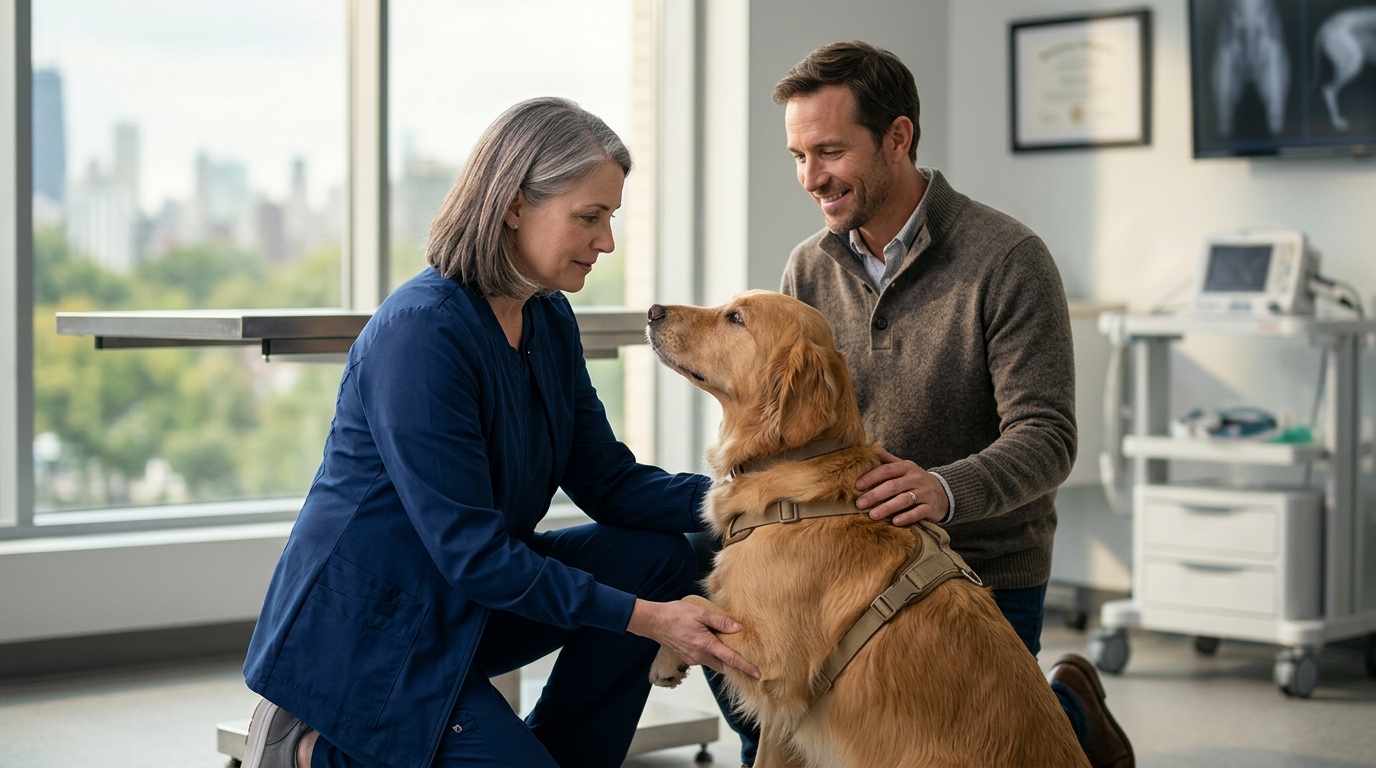
Specialty veterinary surgery has evolved into a highly specialized field where precision and expertise dictate patient outcomes. According to recent industry data, the demand for board-certified veterinary surgeons has grown significantly, with many pet owners now seeking second opinions for complex conditions. This shift highlights the critical difference between general practice procedures and advanced surgical interventions. Understanding the specific roles of orthopedic and soft tissue surgery is essential for pet owners navigating these decisions. At VSx, we provide clarity on these distinct pathways to ensure your pet receives the most appropriate care. (Board Certified Veterinary Surgery)
Understanding Orthopedic Surgery
Orthopedic surgery focuses on the musculoskeletal system, which includes bones, joints, ligaments, tendons, and muscles. This specialty is critical for restoring mobility and alleviating pain in pets suffering from structural abnormalities or traumatic injuries. At VSx, our orthopedic team specializes in high-precision procedures that require advanced technical skill and state-of-the-art equipment. (FAQs mdash VSx Veterinary)
One of the most common orthopedic procedures we perform is the Tibial Plateau Leveling Osteotomy (TPLO). This surgery is specifically designed to treat cranial cruciate ligament (CCL) ruptures in dogs. The procedure involves cutting the tibia and rotating it to stabilize the knee joint, effectively eliminating the need for the torn ligament. This approach has become the gold standard for restoring function in active dogs. (Board Certified Veterinary Surgery)
Orthopedic surgery also encompasses advanced fracture repairs. Unlike general practitioners who may handle simple fractures, board-certified surgeons at VSx utilize internal fixation techniques, such as plates, screws, and pins, to ensure proper alignment and healing. These procedures are often necessary for complex breaks that cannot be managed with external splints alone. The precision required in these surgeries minimizes the risk of long-term arthritis and joint instability. (VSx Veterinary Surgery)
Another critical area of orthopedic care is the management of hip dysplasia and other congenital conditions. Early diagnosis and intervention can significantly improve the quality of life for pets with hereditary skeletal issues. Our surgeons work closely with referring veterinarians to develop comprehensive treatment plans that address both immediate pain and long-term joint health.
Understanding Soft Tissue Surgery
Soft tissue surgery involves procedures on organs and structures that are not part of the skeletal system. This includes the gastrointestinal tract, urinary system, respiratory system, and skin. Soft tissue surgery at VSx is characterized by its complexity and the need for meticulous technique to ensure optimal healing and function.
One of the primary indications for soft tissue surgery is oncological surgery. This involves the removal of tumors and masses from various parts of the body. Whether the tumor is benign or malignant, the goal is to achieve clean margins to prevent recurrence. Our oncological surgeons are trained to handle delicate structures and ensure that the removal of the mass does not compromise surrounding tissues.
Reconstructive surgeries are another key component of our soft tissue practice. These procedures are often required after trauma or to correct congenital defects. For example, reconstructive surgery may be needed to repair a torn urethra or to correct a cleft palate in puppies. These surgeries require a deep understanding of anatomy and physiology to restore normal function.
Soft tissue surgery also includes procedures on the gastrointestinal tract, such as the removal of foreign bodies or the treatment of bloat (gastric dilatation-volvulus). These conditions can be life-threatening and require immediate surgical intervention. Our surgeons are equipped to handle these emergencies with speed and precision, ensuring the best possible outcome for the patient.
Key Differences in Approach
While both orthopedic and soft tissue surgery aim to improve the health and well-being of pets, their approaches and techniques differ significantly. Orthopedic surgery is primarily concerned with structural integrity and mechanical function. It often involves the use of specialized implants and hardware to stabilize bones and joints. The focus is on restoring the biomechanics of the musculoskeletal system.
In contrast, soft tissue surgery focuses on the physiological function of organs and tissues. It often involves delicate dissection and reconstruction of internal structures. The goal is to remove diseased tissue while preserving the function of surrounding organs. This requires a different set of skills and a different approach to surgical planning.
Another key difference is the recovery process. Orthopedic surgeries often require strict confinement and physical therapy to ensure proper healing of the bones and joints. Soft tissue surgeries may require different post-operative care, such as wound management and monitoring for infection. Understanding these differences is crucial for pet owners to provide the best possible care during the recovery period.
The Role of Diagnostic Imaging
Accurate diagnosis is the foundation of successful surgical outcomes. At VSx, we utilize advanced diagnostic imaging technologies to plan and execute surgeries with precision. Our facility is equipped with state-of-the-art digital X-ray and outpatient CT scan capabilities.
Digital X-rays provide immediate, high-resolution images of the skeletal system, allowing our surgeons to identify fractures, joint abnormalities, and other orthopedic issues. These images are essential for planning the surgical approach and selecting the appropriate implants.
Outpatient CT scans offer a more detailed view of complex anatomical structures. This technology is particularly valuable for soft tissue surgeries, where understanding the three-dimensional relationships between organs and tissues is critical. CT scans allow us to visualize tumors, vascular structures, and other soft tissue abnormalities with exceptional clarity. This level of detail enables us to plan surgeries that are safer and more effective.
The integration of diagnostic imaging into our surgical workflow ensures that we have a comprehensive understanding of each patient's condition before making the first incision. This proactive approach minimizes surprises during surgery and enhances the overall quality of care.
Service Comparison Overview
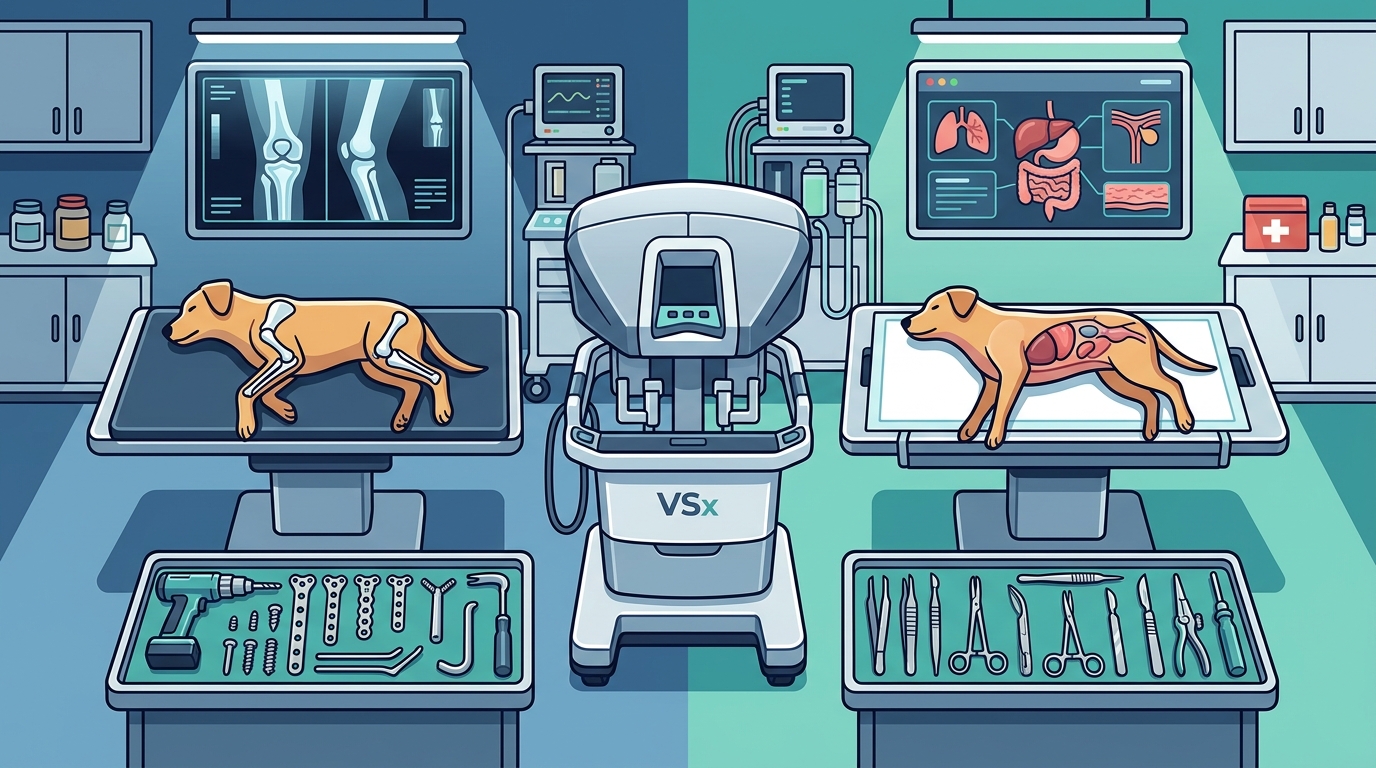
To help you understand the distinctions between our primary surgical specialties, we have compiled a comparison of the key features, indications, and outcomes associated with orthopedic and soft tissue surgery.
| Feature | Orthopedic Surgery | Soft Tissue Surgery |
|---|---|---|
| Primary Focus | Bones, joints, ligaments, and muscles | Organs, skin, and internal structures |
| Common Procedures | TPLO, fracture repair, hip dysplasia treatment | Tumor removal, reconstructive surgery, GI procedures |
| Key Equipment | Internal fixation hardware, digital X-ray | Advanced sutures, CT scan technology |
| Recovery Focus | Confinement, physical therapy, joint mobility | Wound care, organ function monitoring |
| Expertise Required | Biomechanics and structural stability | Physiological function and tissue preservation |
Key Takeaways
- Board-Certified Expertise: Every surgeon at VSx is board-certified with an average of 15 years of experience, ensuring the highest standard of care.
- Orthopedic Specialization: Our orthopedic team excels in TPLO surgeries and advanced fracture repairs, restoring mobility and function.
- Soft Tissue Precision: We provide specialized oncological and reconstructive surgeries, focusing on organ preservation and tissue health.
- Advanced Diagnostics: Our outpatient CT scans and digital X-rays enable precise surgical planning and accurate diagnoses.
- Surgeon-Owned Model: VSx is founded on the principle of surgeon ownership, fostering a culture of accountability and excellence.
- Collaborative Care: We work closely with referring veterinarians to ensure seamless communication and coordinated treatment plans.
- Multiple Locations: With facilities in Chicago, Indianapolis, and Nashville, we provide accessible specialty care to more communities.
Frequently Asked Questions
What is the difference between a general veterinarian and a board-certified surgeon?
A board-certified veterinary surgeon has completed additional specialized training, including a residency and rigorous certification through the American College of Veterinary Surgeons (ACVS). This extra training allows them to handle complex cases that general practitioners may not be equipped to manage.
How do I know if my pet needs orthopedic or soft tissue surgery?
Your referring veterinarian will assess your pet's condition and determine the appropriate specialty. Orthopedic surgery is typically needed for skeletal and joint issues, while soft tissue surgery is required for organ, tumor, or reconstructive needs. VSx surgeons collaborate closely with referring vets to make this determination.
What diagnostic imaging services does VSx offer?
VSx offers comprehensive diagnostic imaging, including digital X-rays and outpatient CT scans. These technologies provide detailed insights into your pet's condition, aiding in accurate diagnosis and surgical planning.
Are your surgeons experienced in both orthopedic and soft tissue procedures?
Yes, our surgeons are trained in both specialties. However, they often have specific areas of focus. Our team includes experts in orthopedic surgery, oncological surgery, and reconstructive procedures, ensuring that your pet receives care from a specialist in their specific condition.
How does VSx ensure high-quality outcomes?
VSx is surgeon-owned and led, which fosters a culture of accountability and excellence. We use state-of-the-art equipment and follow rigorous protocols for patient care. Our commitment to expanding access to board-certified surgeons ensures that your pet receives the best possible care.
What is the recovery process like after surgery?
Recovery varies depending on the type of surgery. Orthopedic surgeries often require strict confinement and physical therapy, while soft tissue surgeries may focus on wound care and organ function monitoring. Our team provides detailed post-operative instructions and support to ensure a smooth recovery.
Can VSx handle emergency surgical cases?
Yes, VSx is equipped to handle complex surgical emergencies. Our surgeons are available to provide urgent care for conditions such as bloat, traumatic injuries, and other acute soft tissue or orthopedic issues.
Contact VSx
If you are considering specialty surgery for your pet, VSx is here to help. Our team of board-certified surgeons is dedicated to providing exceptional care and support. We invite you to explore our services or visit our locations in Chicago, Indianapolis, or Nashville. Contact us today to schedule a consultation and learn more about how we can help your pet.