

Choosing the right surgical provider for your pet is one of the most critical decisions a pet owner can make. According to the American College of Veterinary Surgeons, board-certified surgeons undergo rigorous training that far exceeds standard veterinary education. This distinction directly impacts surgical safety, recovery times, and long-term health outcomes for animals requiring complex procedures. Understanding these differences ensures you provide the highest standard of care. (Board Certified Veterinary Surgery)
What Is a Board-Certified Surgeon?
A board-certified veterinary surgeon is a veterinarian who has completed extensive post-graduate training in surgery. This title is not automatic. It requires passing a rigorous certification process administered by the American College of Veterinary Surgeons (ACVS). The journey begins with a Doctor of Veterinary Medicine (DVM) degree, followed by a one-year internship and a three to four-year surgical residency.
During this residency, the surgeon performs thousands of hours of supervised surgery. They specialize in specific areas such as orthopedics, soft tissue, or oncology. Only after demonstrating exceptional skill and knowledge do they earn the title of Diplomate of the ACVS. This certification ensures that the surgeon is up-to-date with the latest techniques and standards in veterinary medicine.
At VSx Veterinary Surgery, every surgeon holds this prestigious credential. Our team includes specialists like Dr. Marc Wosar and Dr. Brian Martin, who bring decades of combined experience to complex cases. This level of expertise is vital for pets facing serious health challenges.
Scope of Practice: General vs. Specialist
General veterinarians are the first line of defense for pet health. They are highly skilled in preventive care, diagnostics, and routine surgeries. However, their scope of practice is broad. They manage everything from vaccinations to common spays and neuters. When a case becomes complex, the general vet often refers the patient to a specialist.
Board-certified surgeons focus exclusively on surgical interventions. Their entire career is devoted to mastering surgical techniques. They handle complex orthopedic repairs, advanced soft tissue procedures, and oncological surgeries. This focused expertise allows them to manage difficult cases that general practitioners may not feel comfortable performing.
For example, a torn cranial cruciate ligament (CCL) in a dog requires precise orthopedic repair. While some general vets perform TPLO surgeries, board-certified orthopedic surgeons perform these procedures daily. This repetition leads to higher precision and faster recovery times. VSx specializes in these advanced procedures to ensure the best possible outcome for your pet.
Technology and Diagnostic Capabilities
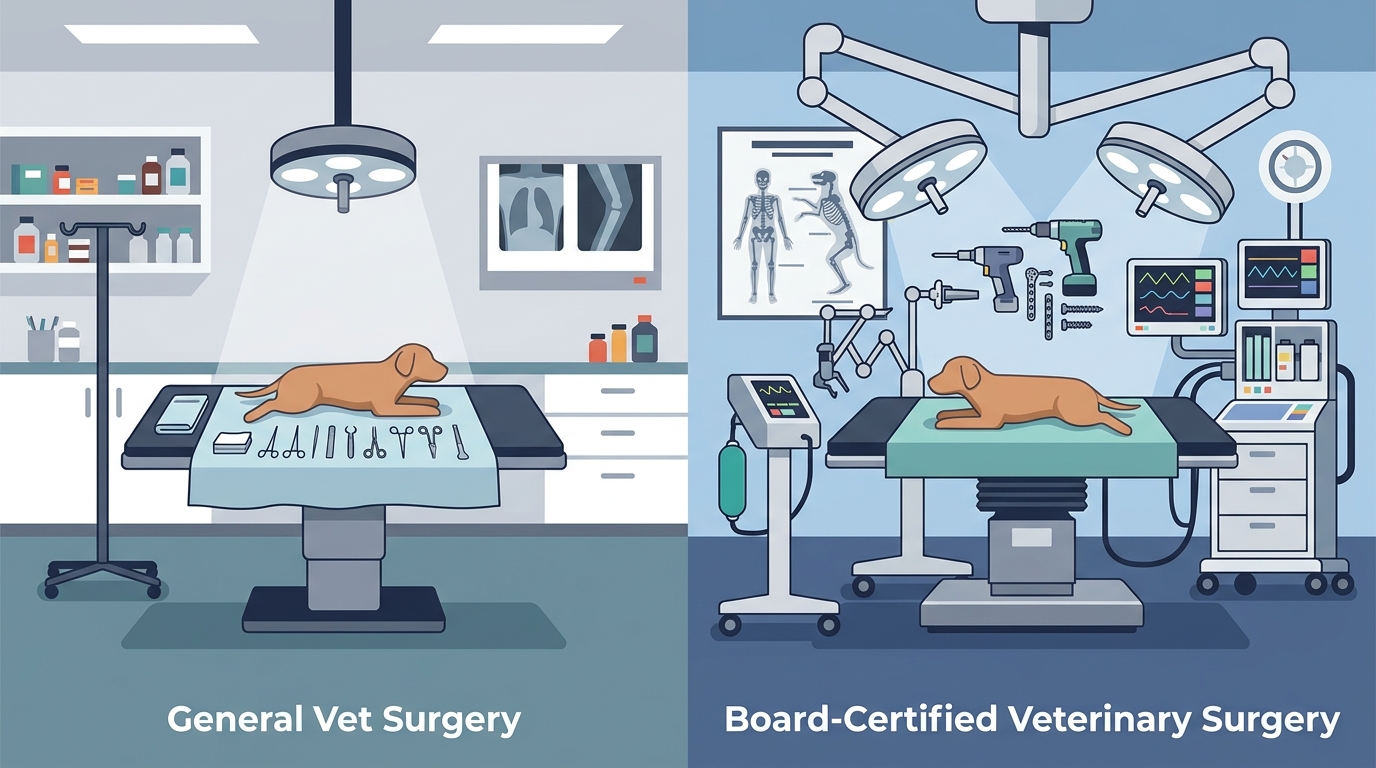
Modern veterinary surgery relies heavily on advanced technology. Board-certified surgeons typically work in facilities equipped with state-of-the-art diagnostic tools. These tools allow for accurate pre-surgical planning and real-time intraoperative guidance.
At VSx, we utilize comprehensive imaging services, including digital X-rays and outpatient CT scans. CT scans provide detailed three-dimensional images of bones and soft tissues. This technology is crucial for planning complex tumor removals or intricate orthopedic repairs. It allows surgeons to see exactly what they are dealing with before making the first incision.
General veterinary clinics may have digital X-ray capabilities. However, they often lack access to advanced modalities like CT scanning or specialized surgical microscopes. This technological gap can limit the complexity of cases they can safely manage. By referring to a specialist, you gain access to this advanced infrastructure.
Outcomes and Patient Safety
The primary goal of any surgery is patient safety and positive outcomes. Board-certified surgeons are trained to manage anesthesia and pain with exceptional precision. They understand the unique physiological responses of different species and breeds.
Data indicates that specialized surgical centers often report lower complication rates for complex procedures. This is due to the surgeon's experience and the supportive environment. VSx maintains a surgery-only focus. This means our teams are dedicated entirely to surgical excellence. We do not split our attention with general practice duties.
Pain management is another critical factor. Board-certified surgeons develop customized pain management protocols for each patient. This approach minimizes discomfort and promotes faster healing. General vets also prioritize pain management, but specialists have deeper training in managing severe post-surgical pain associated with major surgeries.
Cost and Value Analysis
Cost is a significant consideration for pet owners. Specialist surgery is often more expensive than general practice surgery. This is due to the advanced training, technology, and specialized staff involved. However, cost should be viewed in the context of value and long-term health.
Consider the following comparison of typical service offerings:
| Feature | General Veterinarian | Board-Certified Surgeon (VSx) |
|---|---|---|
| Training Focus | Broad general practice | Exclusive surgical specialization |
| Complex Cases | Limited or referred | Expert management |
| Diagnostic Tech | Standard X-ray/Ultrasound | CT Scans, Advanced Imaging |
| Pain Management | Standard protocols | Customized, advanced protocols |
| Referral Network | Outgoing referrals | Collaborative partnerships |
While the upfront cost may be higher, the value lies in reduced risk and better outcomes. A successful surgery means less time in recovery and fewer follow-up procedures. This can ultimately save money and stress for both the pet and the owner. VSx provides transparent pricing and works closely with referring veterinarians to ensure clarity.
When to Refer to a Specialist
Knowing when to seek specialized care is crucial. Your general veterinarian is your best resource for determining if a referral is necessary. They will assess the complexity of the condition and recommend the appropriate level of care.
Common reasons for referral include:
- Orthopedic Issues: Fractures, joint luxations, or cruciate ligament tears.
- Soft Tissue Masses: Tumors requiring complex removal or reconstruction.
- Oncological Surgery: Cancerous growths that require wide margins for removal.
- Neurological Conditions: Spinal cord issues or nerve damage.
- Failed Previous Surgery: Cases that did not heal as expected.
At VSx, we welcome referrals from general practitioners across Chicago, Indianapolis, and Nashville. Our team collaborates closely with referring vets to ensure seamless care. We provide detailed reports and maintain open communication throughout the recovery process.
Key Takeaways
- Board-certified surgeons complete 3-4 years of specialized residency training beyond veterinary school.
- VSx surgeons are Diplomates of the ACVS, ensuring the highest standard of surgical expertise.
- Specialized facilities like VSx offer advanced diagnostics, including outpatient CT scans.
- Complex cases such as orthopedic repairs and oncological surgeries benefit significantly from specialist care.
- VSx operates in Chicago, Indianapolis, and Nashville, providing regional access to top-tier surgical care.
- Collaborative care between general vets and specialists ensures comprehensive patient management.
- Investing in specialized surgery often leads to better long-term outcomes and reduced complications.
Frequently Asked Questions
What is the difference between a general vet and a board-certified surgeon?
A general veterinarian provides broad medical care and performs routine surgeries. A board-certified surgeon has completed extensive post-graduate training and specializes exclusively in complex surgical procedures. This specialization ensures deeper expertise in specific areas like orthopedics or oncology.
How do I know if my pet needs a specialist?
Your general veterinarian will assess your pet's condition. If the case involves complex anatomy, high risk, or requires advanced technology, they will recommend a referral to a board-certified surgeon. Trust their judgment, as they know the limits of general practice.
Does VSx accept referrals from out-of-state vets?
VSx primarily serves the Chicago, Indianapolis, and Nashville regions. However, we collaborate with referring veterinarians to ensure smooth transitions. Contact our team to discuss specific referral needs and availability.
What types of surgeries does VSx perform?
VSx specializes in orthopedic surgery, soft tissue surgery, and oncological surgery. We also provide diagnostic imaging services, including CT scans. Our surgeons handle everything from fracture repairs to complex tumor removals.
Is surgery more expensive at a specialist clinic?
Specialist surgery often has a higher upfront cost due to the advanced training and technology involved. However, the value lies in improved outcomes, reduced complications, and faster recovery times. This can lead to better long-term health and potentially lower overall costs.
How does VSx communicate with referring veterinarians?
We maintain strong collaborative relationships with general practitioners. Our team provides detailed surgical reports and post-operative care instructions. We prioritize clear communication to ensure continuity of care for your pet.
What is the recovery process like at VSx?
VSx focuses on outpatient care where possible. We provide comprehensive pain management and detailed home care instructions. Our team is available to answer questions and monitor progress. We aim to minimize stress and promote rapid healing.
Contact VSx Veterinary Surgery
If your pet requires specialized surgical care, trust the experts at VSx. Our board-certified surgeons are dedicated to providing the highest standard of care. We invite you to schedule a consultation or discuss a referral with your general veterinarian.
Visit our locations page to find the nearest VSx facility. Whether you are in Chicago, Indianapolis, or Nashville, our team is ready to help. Explore our services to learn more about how we can support your pet's health.