
Urinary blockages in cats are not merely inconvenient; they are life-threatening emergencies that require immediate, specialized intervention. According to veterinary emergency data, a blocked cat can suffer fatal kidney failure within 24 to 48 hours if the obstruction is not relieved. Many pet owners delay seeking care because they mistake the symptoms for simple constipation or behavioral issues. This guide outlines the critical errors owners make during this crisis and how board-certified surgeons at VSx prevent recurrence through advanced surgical and diagnostic protocols.
Common Owner Mistakes in Early Detection
The most dangerous mistake owners make is misinterpreting the early signs of feline lower urinary tract disease (FLUTD). Cats are masters at hiding pain. When a male cat is straining to urinate, producing only drops, or licking his genitals excessively, owners often assume he is constipated. This misdiagnosis leads to a critical delay in treatment. Veterinary emergency statistics show that every hour spent waiting at home increases the risk of irreversible bladder rupture or cardiac arrest from potassium toxicity.
Another frequent error is attempting home remedies. Giving water or food to a blocked cat can be dangerous if surgery is imminent, as it increases the risk of aspiration during anesthesia. Owners must recognize that urinary blockages are mechanical obstructions, not dietary issues that can be resolved with home care. Immediate transport to a facility equipped for emergency surgery is the only safe course of action.
Why General Care Is Insufficient for Blockages
While general practitioners are vital for routine care, they often lack the specialized surgical infrastructure required to resolve complex blockages. A urinary blockage is not just a clogged pipe; it is a systemic crisis affecting the kidneys, heart, and bladder integrity. Board-certified veterinary surgeons undergo years of specialized residency training to manage these high-risk cases. They are equipped to handle the delicate tissue manipulation required when the bladder is severely distended or damaged.
General clinics may stabilize a patient with IV fluids and catheterization, but they often refer to specialty centers for the definitive surgical repair. This referral process is not a failure of general care but a standard of practice for complex urological cases. Understanding this distinction helps owners seek the right level of care immediately, rather than cycling through multiple visits that waste precious time.
The Role of Board-Certified Surgeons
At VSx, our mission is to provide the highest standard of surgical care for pets with complex conditions. Our surgeons are Diplomates of the American College of Veterinary Surgeons (ACVS). This certification signifies that they have completed an internship, a three-to-four-year surgical residency, and passed rigorous board examinations. Only after this process can they be called a Diplomate of the ACVS, a true specialist in surgery.
When managing a recurrent urinary blockage, the surgeon must evaluate the entire urinary tract. This includes checking for bladder stones, urethral plugs, or anatomical abnormalities that general practitioners might miss. Our team focuses on expanding access to board-certified veterinary surgeons who can deliver exceptional value for patients, pet owners, and referring veterinarians. We ensure that every patient receives a tailored surgical plan based on their specific anatomy and health status.
Diagnostic Imaging and Surgical Options
Accurate diagnosis is the cornerstone of preventing recurrence. VSx utilizes state-of-the-art diagnostic imaging, including digital X-ray and outpatient CT scans, to visualize the urinary tract without hospitalization. Our advanced CT scanning technology allows us to provide quick, accurate diagnoses for complex cases. This precision is critical when planning soft tissue or orthopedic procedures that involve the pelvic canal.
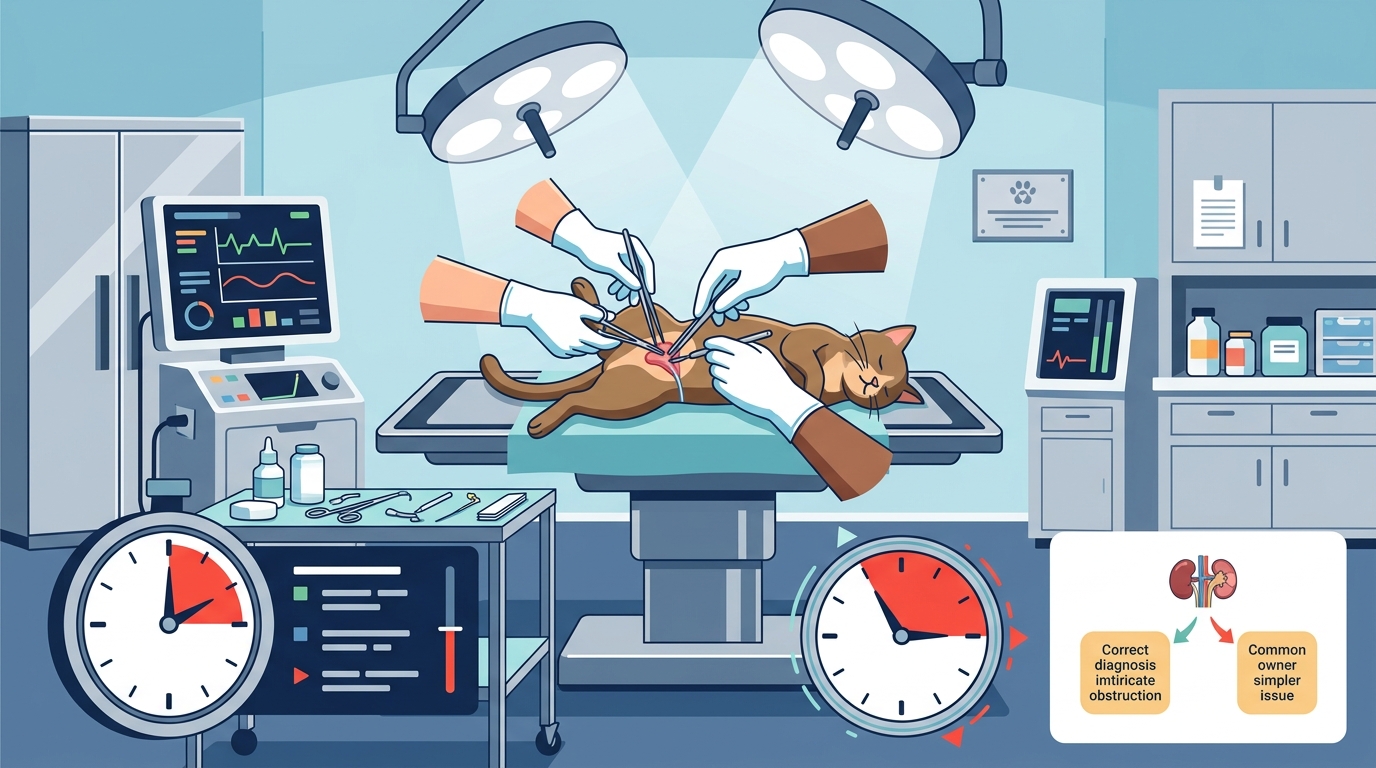
We offer a range of services tailored to the severity of the blockage. For chronic cases, we may recommend a perineal urethrostomy, a surgical procedure that creates a new opening for urine to exit the body, bypassing the narrow urethra. This procedure is a definitive solution for cats who suffer from frequent blockages. Our team specializes in a range of soft tissue procedures, from tumor removals to reconstructive surgeries, ensuring your pet receives the best care for complex conditions.
Preventing Recurrence Through Lifestyle Changes
Surgery resolves the immediate blockage, but it does not cure the underlying tendency to form crystals or stones. Prevention requires a multi-faceted approach involving diet, hydration, and stress management. According to veterinary nutrition guidelines, prescription urinary diets can help dissolve struvite crystals and prevent oxalate stone formation. However, diet alone is rarely enough.
Hydration is the most powerful preventive tool. Cats have a low thirst drive, so wet food is essential to increase urine volume and dilute minerals. Stress is another major trigger for FLUTD. In multi-cat households, providing multiple litter boxes, water fountains, and vertical space can reduce anxiety. Our surgeons work closely with referring veterinarians to create a long-term management plan that addresses both the surgical and behavioral aspects of feline urinary health.
Key Takeaways for Cat Owners
- Time is Critical: A urinary blockage can be fatal within 24 hours. Do not wait for symptoms to resolve on their own.
- Specialized Care Matters: Board-certified surgeons have an average of 15 years of experience in complex procedures.
- Advanced Diagnostics: Outpatient CT scans provide precise imaging for accurate surgical planning.
- Definitive Solutions: Procedures like perineal urethrostomy can prevent future blockages in recurrent cases.
- Hydration is Key: Wet food and water fountains are essential for preventing crystal formation.
- Stress Management: Environmental enrichment reduces the risk of stress-induced urinary issues.
- Collaborative Care: VSx partners with general practitioners to ensure seamless post-operative care.
Frequently Asked Questions
How do I know if my cat has a urinary blockage?
Signs include frequent trips to the litter box, straining to urinate, crying while urinating, and licking the genital area. If you see blood in the urine or your cat is lethargic, seek emergency care immediately.
What is the difference between a general vet and a board-certified surgeon?
A board-certified surgeon has completed additional residency training and passed rigorous exams. They specialize in complex soft tissue and orthopedic procedures that general practitioners may not be equipped to handle.
Can urinary blockages be prevented?
While not all cases are preventable, diet, hydration, and stress reduction significantly lower the risk. Prescription diets and increased water intake are the most effective preventive measures.
What is a perineal urethrostomy?
It is a surgical procedure that creates a new, wider opening for urine to exit the body, bypassing the narrow urethra. It is a common solution for cats with recurrent blockages.
How long does recovery from urinary blockage surgery take?
Most cats require 24 to 48 hours of hospitalization for IV fluids and monitoring. Full recovery of the bladder tissue can take several weeks, during which activity is restricted.
Why do male cats get blocked more often?
Male cats have a longer, narrower urethra that is more prone to obstruction from crystals, plugs, or stones. Female cats have a shorter urethra, making blockages less common but still possible.
What diagnostic tests are needed before surgery?
Blood work, urinalysis, and imaging such as X-rays or CT scans are standard. These tests help determine the cause of the blockage and the best surgical approach.
Secure Your Cat's Health Today
Do not wait for a crisis to act. If your cat is showing signs of urinary distress, contact VSx Veterinary Surgery immediately. Our board-certified surgeons are ready to provide the specialized care your pet needs. Visit our Chicago or Indianapolis locations to schedule a consultation or emergency appointment. Your pet's life depends on timely, expert intervention.