
Understanding the TPLO Procedure
Tibial Plateau Leveling Osteotomy (TPLO) is a surgical procedure used to treat cranial cruciate ligament (CCL) tears in dogs. The surgery involves cutting the tibia (shin bone) and rotating a segment to level the joint surface. This change in geometry prevents the tibia from sliding forward, effectively stabilizing the knee without relying on the torn ligament. By altering the mechanical forces within the joint, the procedure allows the dog to bear weight and move with significantly less pain.
Because TPLO is a complex orthopedic intervention, it is performed by board-certified veterinary surgeons who specialize in advanced surgical techniques. The procedure requires precise instrumentation and a deep understanding of canine anatomy. For many dogs, particularly larger breeds, TPLO offers a durable solution that restores function and quality of life. Understanding the mechanics of the surgery helps owners appreciate why strict post-operative care is essential for long-term success.
The First Two Weeks: Critical Rest and Monitoring
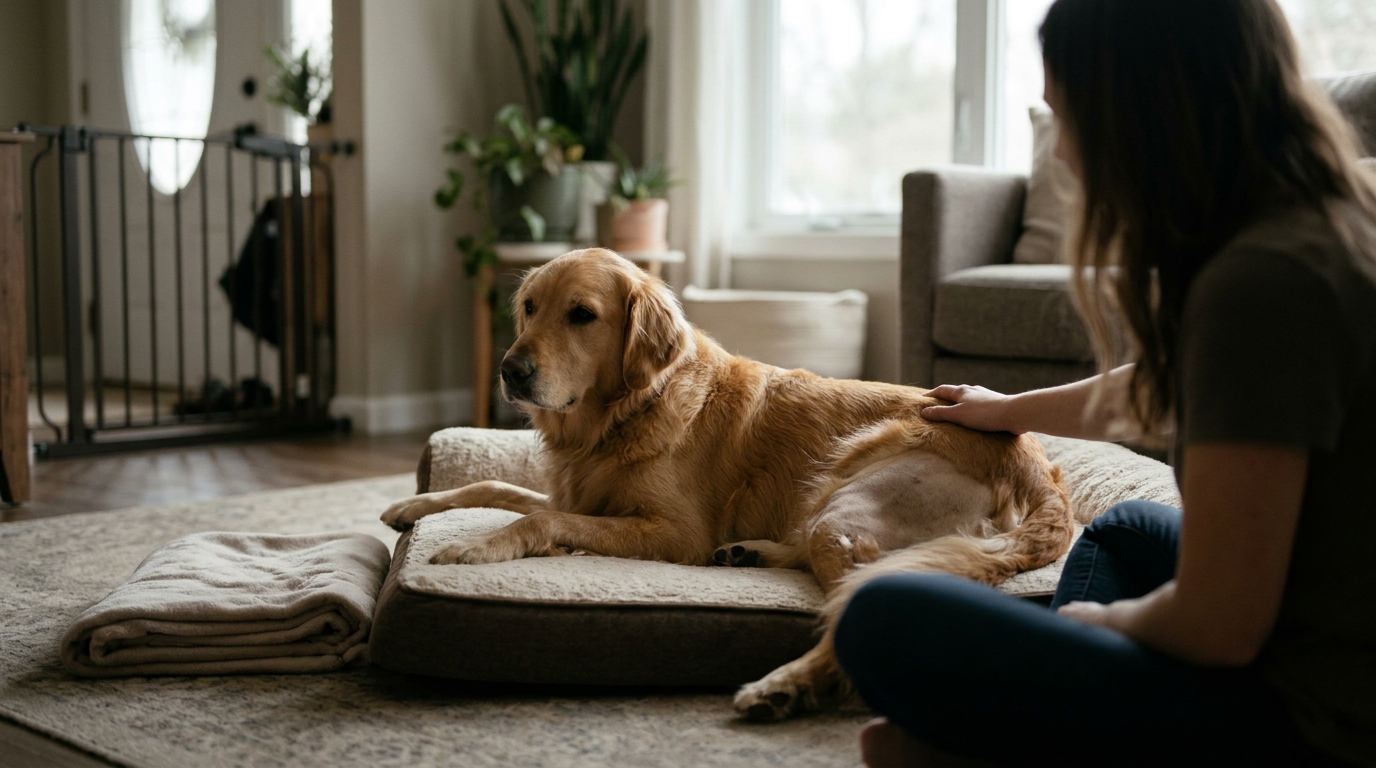
The initial phase of recovery is defined by strict confinement. For the first 10 to 14 days, your dog should be kept in a crate or a small, confined area to prevent uncontrolled movement. This period is crucial because the bone is healing and the surgical site is vulnerable. Unrestricted activity, such as running, jumping, or even enthusiastic leash walks, can disrupt the healing process and lead to complications.
During this time, you will likely administer prescribed pain medications and anti-inflammatory drugs. It is normal for your dog to appear lethargic or less interested in food for the first few days. Monitor the incision site daily for signs of infection, such as excessive redness, swelling, or discharge. At VSx, we provide detailed aftercare instructions that outline exactly how to manage these early stages. Our team emphasizes that patience during this quiet period is the foundation for a successful long-term recovery.
Weeks Three to Six: Gradual Mobilization
As the bone begins to heal, the focus shifts from strict rest to controlled mobilization. Around the two-week mark, your veterinarian will likely clear your dog for short, leash-restricted walks. These walks should be brief, typically 5 to 10 minutes, and performed on flat, non-slip surfaces. The goal is to encourage gentle movement without placing excessive stress on the joint. You must avoid stairs, slippery floors, and any activity that causes your dog to run or jump.
Physical therapy and rehabilitation often begin during this phase. Passive range-of-motion exercises help maintain joint flexibility and prevent muscle atrophy. Hydrotherapy, such as underwater treadmill sessions, can be an excellent way to build strength without weight-bearing stress. VSx services include advanced orthopedic care that supports these rehabilitation needs. Collaborative care between your primary veterinarian and the surgical team ensures that your dog’s progress is monitored closely. If your dog shows signs of pain or reluctance to use the leg, contact your surgeon immediately rather than pushing through the discomfort.
Weeks Seven to Twelve: Strengthening and Return to Normal
By the seventh week, most dogs are cleared for more extended leash walks. The restriction on activity gradually lifts, but full freedom is not granted until the 12-week mark. During this period, you can introduce low-impact activities like swimming or gentle play. The focus remains on rebuilding muscle mass in the hind legs, which often atrophy during the initial rest phase. Consistency in physical therapy is key to restoring strength and symmetry in movement.
At the 12-week recheck, your surgeon will evaluate the healing progress through physical examination and possibly radiographs. If the bone has healed appropriately, your dog can typically return to normal activity levels. However, this does not mean returning to high-impact sports immediately. A gradual reintroduction to running and jumping is recommended to prevent re-injury. VSx provides ongoing support to ensure your dog transitions back to an active life safely. Long-term management may include weight control and joint supplements to protect the knee for years to come.

Recognizing Signs of Complications
While most dogs recover well from TPLO surgery, complications can occur. It is vital to know the warning signs that require immediate veterinary attention. These include persistent limping that worsens after the first few weeks, swelling around the knee, fever, or a sudden refusal to bear weight on the affected leg. Infection is a rare but serious risk, so any signs of wound issues must be addressed promptly.
Hardware failure, such as a screw breaking or the bone shifting, is another potential complication. This is why follow-up appointments are non-negotiable. At VSx, our surgeons are committed to excellent clinical care and outcomes, which includes close monitoring during the recovery window. If you notice any unusual behavior or physical changes, do not wait for the next scheduled appointment. Early intervention can prevent minor issues from becoming major setbacks. Your surgical team is available to answer questions and provide guidance throughout this critical period.
Key Takeaways
- Strict confinement for the first 10 to 14 days is essential for bone healing.
- Pain management and monitoring for infection are priorities in the early weeks.
- Controlled, leash-restricted walks begin around week two to promote gentle movement.
- Physical therapy and hydrotherapy help rebuild muscle strength during weeks three to six.
- Full return to normal activity is typically cleared at the 12-week mark.
- Long-term joint health requires weight management and continued monitoring.
Frequently Asked Questions
How long does it take for a dog to fully recover from TPLO surgery?
Full recovery typically takes 8 to 12 weeks. While your dog may walk normally within a few weeks, the bone needs the full 12 weeks to heal completely before returning to high-impact activities like running or jumping.
Can my dog walk on the street after TPLO surgery?
Yes, but only on a leash and for short durations after the initial two-week confinement period. Walks should be on flat, non-slip surfaces. Avoid slippery floors, stairs, and off-leash environments until your surgeon clears your dog for full activity.
What is the most common complication after TPLO?
The most common complications are related to infection or hardware failure, though these are rare. Strict adherence to activity restrictions and post-operative care instructions significantly reduces the risk of these issues.
Do I need to use a cone after TPLO surgery?
Yes, your dog will likely need to wear an Elizabethan collar (cone) for the first 10 to 14 days to prevent licking or chewing the incision site. This is crucial to prevent infection and wound dehiscence.
How much does TPLO surgery cost?
Costs vary by location and specific case complexity. We recommend contacting our team for a specific estimate based on your dog’s needs.
Will my dog need physical therapy after TPLO?
Yes, physical therapy is highly recommended to rebuild muscle strength and restore joint function. Hydrotherapy and passive range-of-motion exercises are common components of the rehabilitation plan.
Partnering for a Successful Recovery
Navigating the recovery phase after TPLO surgery requires patience, diligence, and expert guidance. By following strict activity restrictions and engaging in consistent rehabilitation, you set your dog up for a long and active life. At VSx, our board-certified surgeons are dedicated to providing the advanced surgical care and post-operative support your pet deserves. We work collaboratively with referring veterinarians to ensure a seamless transition from surgery to full recovery. If you have questions about your dog’s specific recovery plan, our team is here to help. To schedule a consultation or learn more about our orthopedic services, contact VSx. Learn more: Veterinary Surgery Services amp.