
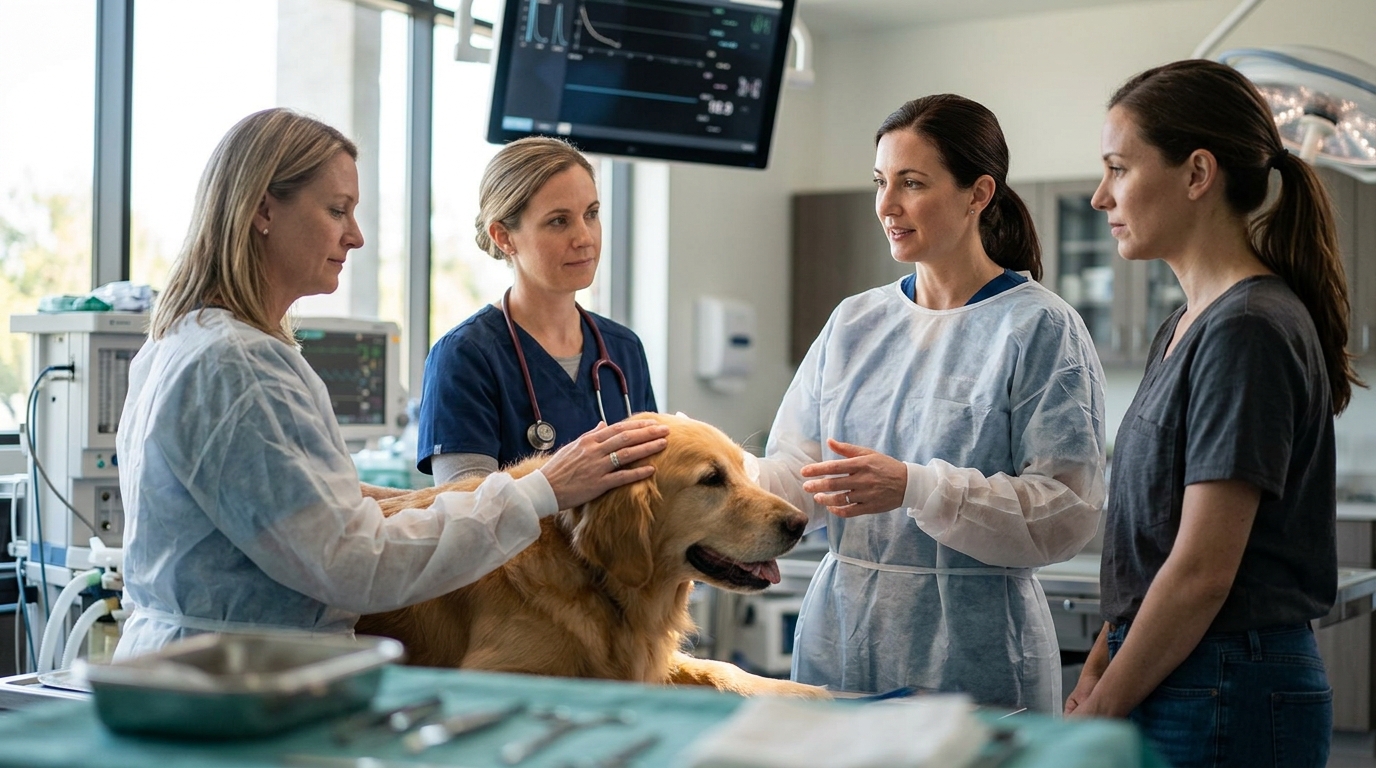
When your pet faces a complex medical issue, the path to recovery often depends on understanding who is best equipped to help. Many pet owners assume their primary veterinarian can handle all surgical needs, but the reality of veterinary medicine is far more specialized. According to the American College of Veterinary Surgeons, a board-certified surgeon has completed years of rigorous post-graduate training that goes far beyond standard veterinary school. This distinction is critical for ensuring your pet receives the highest standard of care, particularly for orthopedic, soft tissue, and oncological procedures.
Training Pathways and Certification
The most significant difference between a general practitioner and a specialist lies in the depth of their education. A regular vet, or general practitioner, completes a Doctor of Veterinary Medicine (DVM) degree. This provides a broad foundation in animal health, including medicine, surgery, and preventive care. However, their surgical training is often limited to routine procedures.
In contrast, a veterinary surgeon undergoes a much more intensive educational journey. To become a Diplomate of the American College of Veterinary Surgeons (ACVS), a veterinarian must complete an internship followed by a three to four year surgical residency. This process involves thousands of hours working alongside experienced surgeons. Only after passing rigorous certification exams can they use the title "board-certified." This level of expertise ensures that complex cases are handled by professionals who dedicate their entire careers to surgery.
At VSx Veterinary Surgery, every surgeon is board-certified with an average experience of 15 years. This commitment to specialized training allows us to manage cases that general practitioners cannot. For more details on our medical team, visit our Board-Certified Surgeons page.
Scope of Practice and Complexity
Understanding the scope of practice is essential for pet owners navigating medical decisions. A general veterinarian is an excellent resource for routine care, including vaccinations, dental cleanings, and common surgeries like spays and neuters. They are also skilled in diagnosing and managing chronic conditions such as diabetes or kidney disease.
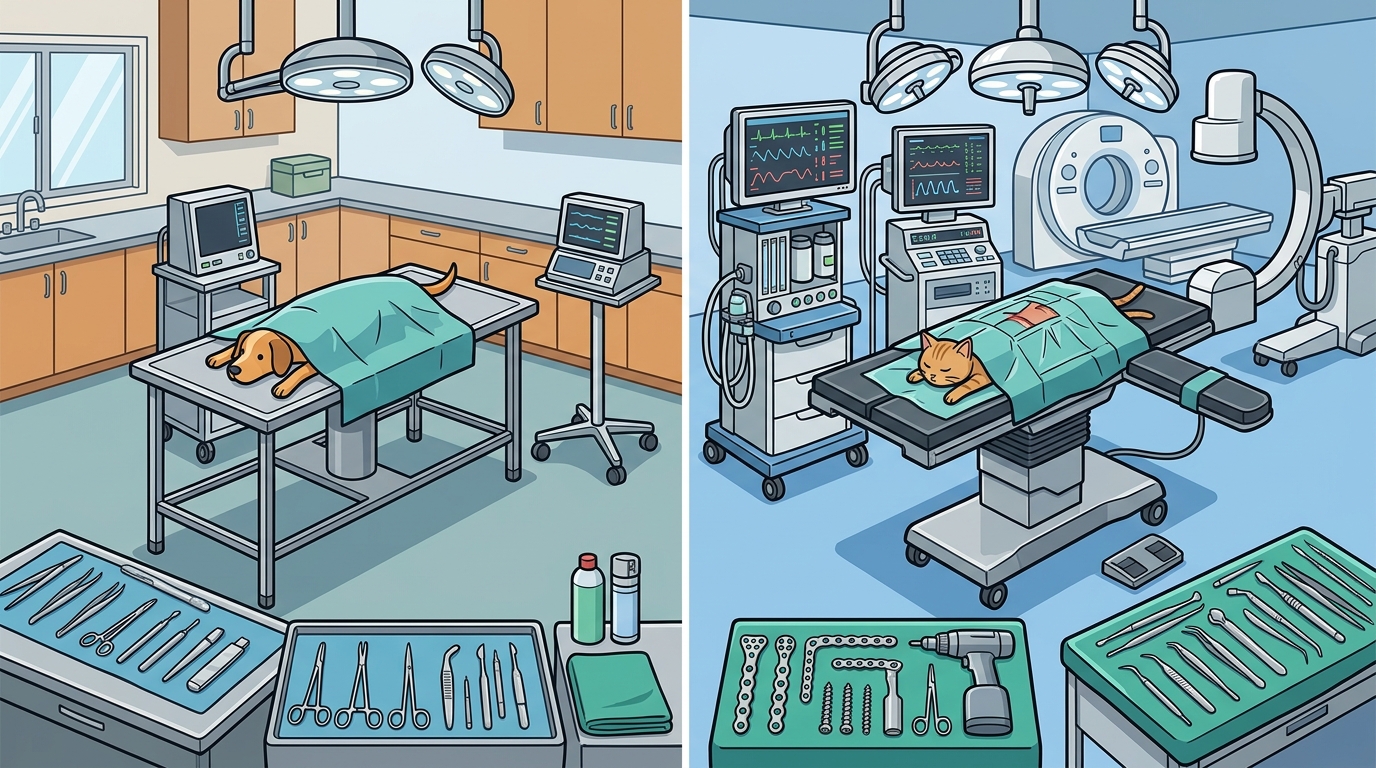
A veterinary surgeon, however, specializes in complex and delicate operations. Their scope includes advanced orthopedic repairs, neurologic surgeries, and oncological procedures. For example, while a general vet might perform a standard fracture repair, a specialist is trained in complex joint reconstructions like TPLO (Tibial Plateau Leveling Osteotomy) surgeries. These procedures require precision that only comes from years of focused surgical practice.
Orthopedic Surgery involves restoring mobility through precise bone and joint repairs. Soft Tissue Surgery covers a wide range of procedures, including tumor removals and reconstructive surgeries for internal organs. Oncological Surgery focuses on the specialized treatment of cancer in pets. For a full list of our specialized services, please review our Services & Pricing page.
Diagnostic Technology and Imaging
Advanced diagnostics are a cornerstone of specialized veterinary surgery. General practitioners often rely on standard digital X-rays and basic blood work. While these tools are effective for many conditions, complex cases require more detailed imaging to plan surgical interventions accurately.
Specialty centers like VSx utilize state-of-the-art diagnostic equipment, including outpatient CT scans. This technology allows surgeons to visualize complex anatomical structures in three dimensions without the need for hospitalization. Accurate pre-surgical planning reduces operative time and improves outcomes. Our Chicago location, for instance, is equipped with advanced imaging capabilities to support Dr. Marc Wosar and his team in delivering precise care.
Diagnostic Imaging at VSx includes comprehensive digital X-rays and advanced CT scanning. This ensures we have the full picture before any surgical intervention. You can learn more about our diagnostic capabilities on our Services & Pricing page.
Anesthesia and Pain Management
Anesthesia is a critical component of any surgical procedure. General practitioners are trained to manage anesthesia for routine surgeries, but complex cases pose higher risks. Veterinary surgeons specialize in expert anesthetic management, tailoring protocols to the individual patient's needs. This specialization ensures safety during lengthy or invasive procedures.
Pain management is equally important. Specialists are trained in advanced analgesic techniques that minimize discomfort and promote faster recovery. This focus on patient comfort is a hallmark of specialty care. At VSx, we prioritize clear communication with pet owners about pain management strategies, ensuring your pet is comfortable throughout their recovery.
When to Refer to a Specialist
Knowing when to refer your pet to a veterinary surgeon can significantly impact their quality of life. If your general practitioner identifies a condition that requires advanced surgical intervention, they will likely recommend a referral. Common reasons for referral include:
- Complex fractures that do not heal with standard treatment.
- Joint diseases requiring advanced surgical correction.
- Soft tissue masses that require specialized removal.
- Neurological issues affecting mobility or function.
Collaborative care is key. VSx works closely with referring general practice, emergency, and other specialist veterinarians. This partnership ensures continuity of care and that all parties are informed about the patient's progress. Dr. Andrew Bean, Medical Director & Partner at BLVD Vet Lakeview-Lincoln, notes that Dr. Wosar takes a thorough approach to diagnosis and treatment planning, ensuring everyone is well-informed.
If you are unsure whether your pet needs a specialist, contact our team for guidance. We are committed to expanding access to board-certified veterinary surgeons in Chicago, Indianapolis, and Nashville. Visit our Locations & Contact page to find the nearest facility.
Key Takeaways
- Training Depth: Board-certified surgeons complete 3-4 years of residency after veterinary school, far exceeding general practitioner training.
- Specialized Expertise: Surgeons focus exclusively on complex orthopedic, soft tissue, and oncological procedures.
- Advanced Technology: Specialty centers utilize outpatient CT scans and state-of-the-art imaging for precise diagnostics.
- Experience: VSx surgeons have an average of 15 years of specialized surgical experience.
- Collaborative Care: Specialists work closely with referring vets to ensure comprehensive patient management.
- Patient Safety: Expert anesthetic and pain management protocols are tailored for complex cases.
- Geographic Access: VSx operates in Chicago, Indianapolis, and Nashville, bringing specialty care to local communities.
Frequently Asked Questions
What is the main difference between a regular vet and a veterinary surgeon?
A regular vet provides general medical care and performs routine surgeries, while a veterinary surgeon completes additional years of specialized residency training to handle complex and delicate surgical cases.
How long does it take to become a board-certified veterinary surgeon?
After veterinary school, a surgeon must complete an internship and a three to four year surgical residency, followed by rigorous certification exams through the American College of Veterinary Surgeons.
Can a general veterinarian perform orthopedic surgery?
Some general veterinarians perform basic orthopedic procedures, but complex joint surgeries like TPLO require the advanced expertise and equipment found in specialty centers.
What is an outpatient CT scan for pets?
An outpatient CT scan is an advanced imaging technique that provides detailed 3D views of internal structures, allowing for precise surgical planning without the need for hospitalization.
How does VSx collaborate with general veterinarians?
VSx maintains strong partnerships with referring general practitioners, emergency clinics, and other specialists to ensure seamless and comprehensive care for every patient.
What types of surgeries does VSx specialize in?
VSx specializes in orthopedic surgery, soft tissue surgery, and oncological surgery, utilizing board-certified surgeons with extensive experience in these fields.
Why is board certification important for pet surgery?
Board certification ensures that a surgeon has met the highest standards of training and competence, providing pet owners with confidence in the quality of care their animal receives.
Contact VSx Veterinary Surgery
If your pet requires specialized surgical care, trust the experts at VSx. Our board-certified surgeons are dedicated to delivering the highest standard of surgical care and outcomes. Whether you are in Chicago, Indianapolis, or Nashville, we are here to support your pet's health journey.
Ready to schedule an appointment? Contact us today to learn more about our services and how we can help your pet.