

Cruciate ligament injuries are among the most common orthopedic emergencies in veterinary medicine, affecting millions of dogs annually. According to recent veterinary orthopedic data, the Tibial Plateau Leveling Osteotomy (TPLO) has emerged as the gold standard surgical intervention for stabilizing the stifle joint in large-breed dogs. This procedure fundamentally alters the biomechanics of the knee to prevent further damage, offering a reliable path to mobility and pain relief. Understanding the nuances of this surgery is essential for pet owners navigating this critical health decision. (Board Certified Veterinary Surgery)
What Is TPLO Surgery?
When a dog's cranial cruciate ligament (CCL) ruptures, the tibia shifts abnormally relative to the femur, causing pain, instability, and eventual arthritis. The TPLO procedure addresses this mechanical failure by rotating the tibial plateau to neutralize the shear force that causes the instability. This is not merely a repair of the ligament but a structural correction of the joint dynamics. (VSx Veterinary Surgery)
TPLO is a surgical procedure that cuts the tibia bone to rotate the tibial plateau, thereby stabilizing the knee joint without relying on the damaged ligament. This method has been validated by decades of orthopedic research as highly effective for restoring function in active dogs. The goal is to eliminate the need for the CCL to bear weight, allowing the joint to heal in a stable environment.
Why Choose Board-Certified Surgeons at VSx
Selecting the right surgical partner is as critical as the procedure itself. VSx operates on a model of surgeon-owned and led care, ensuring that clinical decisions are driven by medical excellence rather than volume metrics. Our network includes board-certified surgeons with an average of 15 years of specialized experience.
At VSx Veterinary Surgery, we specialize in high-complexity orthopedic cases that require precision and advanced diagnostic capabilities. Our Chicago and Indianapolis locations are equipped with state-of-the-art imaging technology, including outpatient CT scans, which allow for pre-surgical planning that minimizes intraoperative surprises. This level of diagnostic rigor ensures that every osteotomy cut is calculated for optimal stability.
Our surgeons are Diplomates of the American College of Veterinary Surgeons (ACVS). This designation signifies that they have completed a rigorous residency and passed comprehensive examinations. For pet owners in Chicago, Veterinary Surgery of Chicago offers immediate access to this elite tier of care. Similarly, our Indianapolis facility provides top-tier surgical services to the Indiana community.
The TPLO Procedure Explained
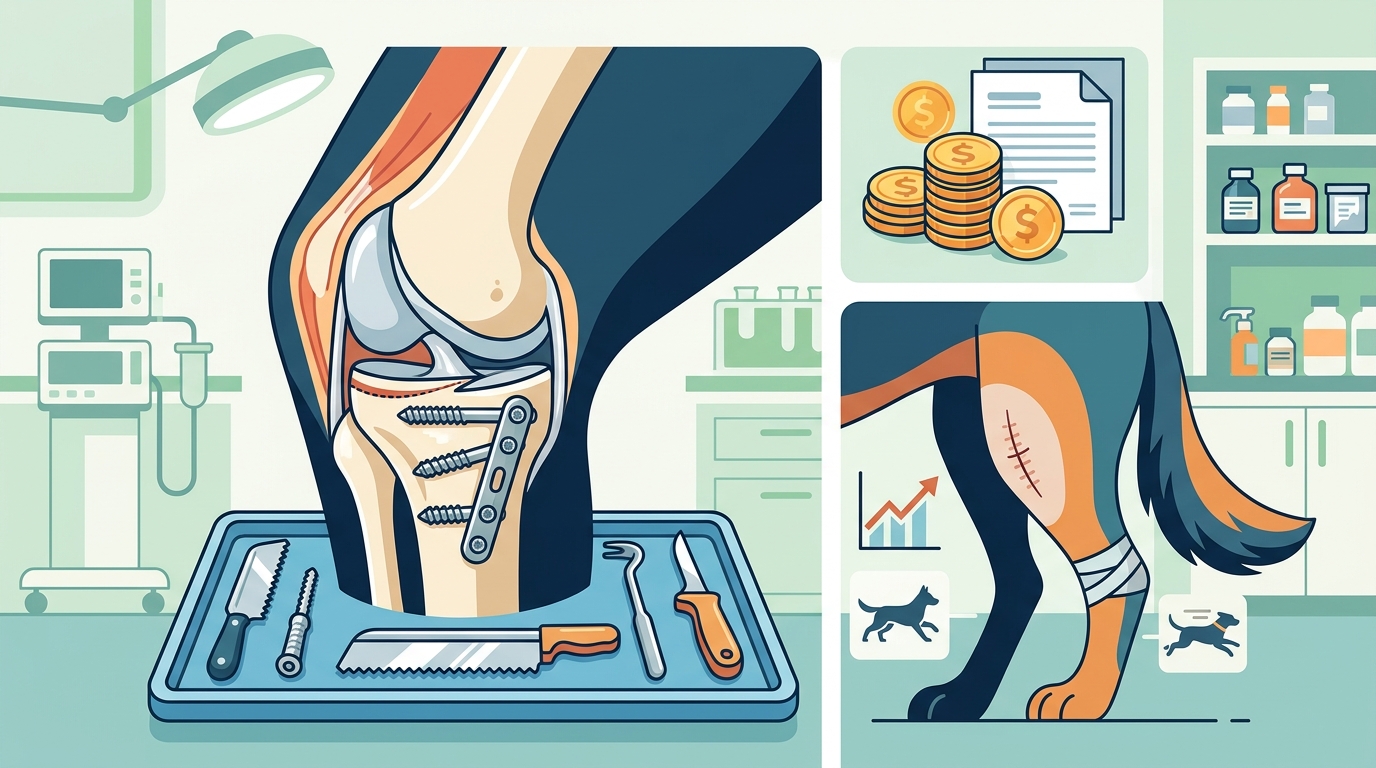
The surgery begins with a precise incision over the stifle joint. The surgeon then performs a tibial osteotomy, which is a controlled cut through the bone. Using specialized instruments, the tibial plateau is rotated to a specific angle, typically around 50 degrees, depending on the individual dog's anatomy. This rotation neutralizes the cranial tibial thrust.
Once the correct angle is achieved, the bone is secured with a specialized plate and screws. This hardware provides immediate stability, allowing the bone to heal in its new position. The procedure is typically performed as an outpatient service, meaning your dog can return home the same day, provided they are stable and pain is managed.
Diagnostic imaging is a critical component of the TPLO process. Before any incision is made, our team utilizes digital X-rays and CT scans to map the exact geometry of the tibia. This data-driven approach ensures that the surgical plan is tailored to the patient, reducing the risk of complications and improving long-term outcomes.
Recovery and Rehabilitation Timeline
Recovery from TPLO surgery is a structured process that requires strict adherence to activity restrictions. The first two weeks are critical for soft tissue healing. During this period, your dog must be confined to a small space, such as a crate or small room, to prevent any jumping or running.
After the initial healing phase, controlled leash walks are introduced. These walks should be short and frequent, avoiding off-leash exercise entirely for at least 12 weeks. Bone healing typically takes 8 to 12 weeks, but full functional recovery can take several months. Physical therapy plays a vital role in this phase, helping to restore muscle mass and joint range of motion.
At VSx, we provide detailed post-operative instructions and maintain open communication with referring veterinarians. Our team monitors the surgical site closely during follow-up visits to ensure the bone is healing correctly. For pet owners in Nashville, VSx Nashville offers similar comprehensive post-surgical support.
Cost and Value Considerations
The cost of TPLO surgery varies based on geographic location, the complexity of the case, and the specific services required. While the upfront investment is significant, it is important to consider the long-term value. TPLO surgery prevents the progression of osteoarthritis, which can lead to costly chronic pain management and reduced quality of life for your pet.
Our pricing model is transparent and designed to provide exceptional value for pet owners and referring veterinarians. We offer comprehensive care packages that include pre-surgical diagnostics, the surgery itself, and post-operative follow-up. For detailed pricing information, please visit our Services & Pricing page.
Insurance coverage for TPLO surgery is increasingly common. Many pet insurance policies now cover orthopedic procedures, though pre-authorization is often required. We recommend contacting your insurance provider directly to understand your specific coverage limits. Our administrative team at VSx can also assist with documentation to support your claim.
Key Takeaways
- TPLO is the gold standard for stabilizing the stifle joint in dogs with cranial cruciate ligament rupture.
- Board-certified surgeons at VSx have an average of 15 years of specialized experience in orthopedic surgery.
- Diagnostic imaging, including CT scans, is used to plan each surgery for maximum precision and safety.
- Recovery requires strict confinement for the first two weeks, followed by controlled leash walks for 8 to 12 weeks.
- VSx locations in Chicago, Indianapolis, and Nashville provide accessible, high-quality surgical care.
- Surgeon-owned model ensures that clinical decisions prioritize patient outcomes over volume.
- Long-term value of TPLO includes reduced risk of arthritis and improved quality of life for your pet.
Frequently Asked Questions
How long does TPLO surgery take?
The surgery typically takes between 60 to 90 minutes, depending on the complexity of the case and the specific anatomical requirements of the dog.
Is TPLO surgery painful for dogs?
Pain management is a priority at VSx. We use multimodal pain control strategies, including local anesthesia, systemic medications, and anti-inflammatories, to ensure your dog is comfortable throughout the recovery process.
Can both legs be operated on at the same time?
While it is technically possible, most surgeons recommend staging the surgeries weeks or months apart to allow for proper rehabilitation and weight-bearing on the first leg before operating on the second.
What is the success rate of TPLO?
TPLO has a high success rate, with the majority of dogs returning to normal activity levels. The procedure effectively stabilizes the joint in over 90% of cases when post-operative care instructions are followed.
Do I need a referral to see VSx?
VSx works closely with referring veterinarians. While you can contact us directly, a referral from your primary care vet ensures seamless communication and continuity of care for your pet.
How soon can my dog walk after surgery?
Most dogs begin bearing weight on the leg within days of surgery. However, controlled leash walks are only permitted after the initial soft tissue healing phase, typically around two weeks post-op.
What are the risks of TPLO surgery?
As with any surgery, risks include infection, implant failure, or non-union of the bone. However, these complications are rare when the procedure is performed by a board-certified surgeon using advanced techniques.
Schedule Your Consultation
If your dog has been diagnosed with a cranial cruciate ligament rupture, timely intervention is crucial for the best outcome. VSx is ready to provide the expert care your pet deserves. Contact our team today to schedule a consultation or learn more about our surgical services.
Book an Appointment at one of our Chicago, Indianapolis, or Nashville locations to discuss your pet's surgical needs with our board-certified specialists.