
How Does TPLO Surgery Fix a Torn Cruciate Ligament?
TPLO surgery fixes a torn cruciate ligament by changing the angle of the shin bone to stop the knee from sliding forward. This mechanical adjustment removes the need for the ligament to hold the joint in place. At VSx Veterinary Surgery, our board-certified surgeons perform this procedure to restore stability and comfort for dogs with CCL injuries.
The Biomechanics of the Canine Knee
To understand how TPLO works, you must first understand why the knee fails. The cranial cruciate ligament (CCL) is a major ligament inside the canine knee that prevents the tibia from sliding forward relative to the femur. Tears of the CCL are the most common injury affecting the knees of dogs. When this ligament tears, the tibia slides forward during weight-bearing, causing pain and instability.
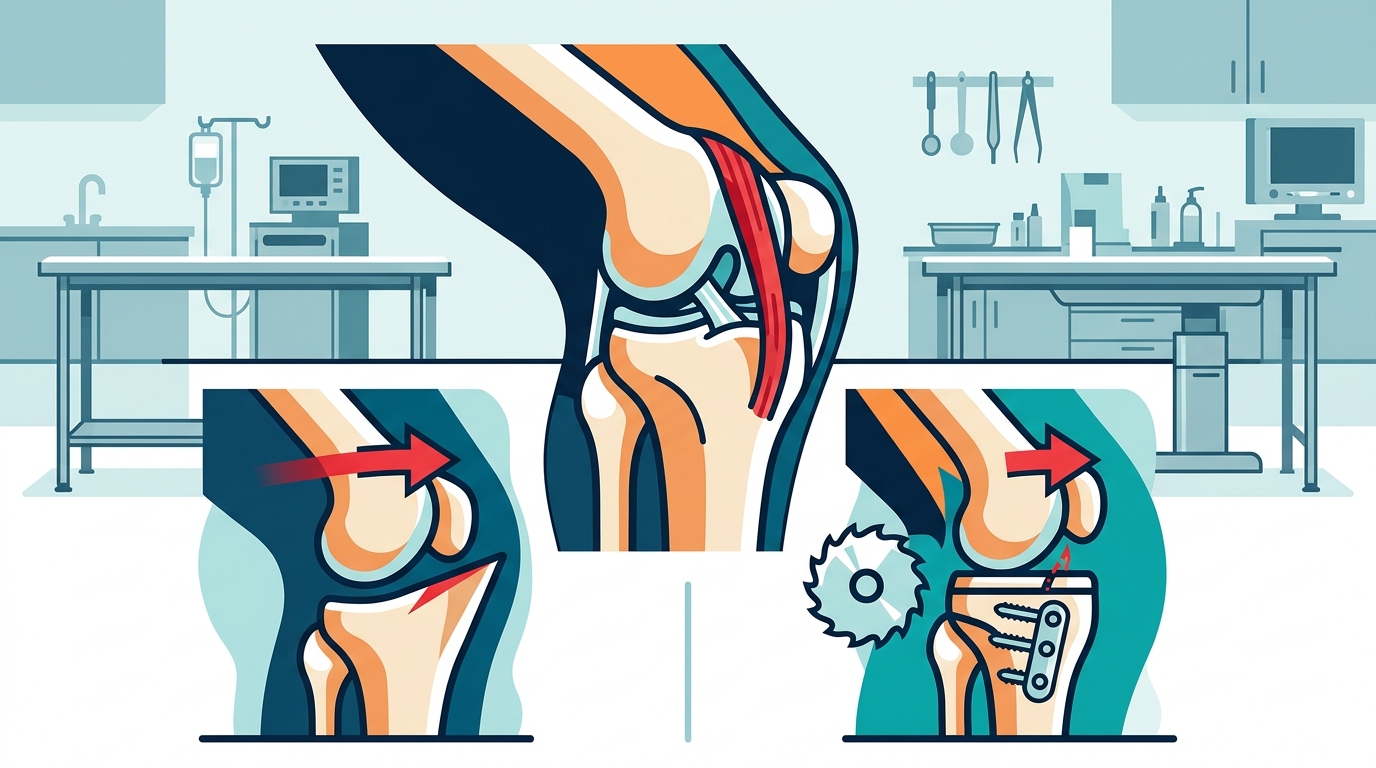
The dog's knee joint has a natural slope on the top of the tibia, known as the tibial plateau. In a healthy knee, the CCL acts as a checkrein to stop the tibia from sliding down this slope. Without the ligament, gravity and muscle forces pull the tibia forward. This constant sliding causes friction, pain, and further damage to the cartilage and meniscus.
How the TPLO Procedure Works
A Tibial Plateau Leveling Osteotomy (TPLO) is a surgical procedure that corrects the standing angle of the top of the tibia to eliminate forward instability. The surgeon makes a precise cut in the top of the tibia, known as an osteotomy. This cut allows the surgeon to rotate a segment of the bone. By rotating the segment, the surgeon levels the tibial plateau, effectively removing the slope that causes the tibia to slide.
Once the bone is rotated to the correct angle, it is secured in place with a specially designed metal plate and screws. This hardware holds the bone firmly while it heals. The key to the TPLO's success is that it does not rely on the torn ligament. Instead, it uses the dog's own muscle forces and the new geometry of the bone to keep the knee stable. This makes the knee functional even though the CCL is gone.
Addressing Concurrent Injuries
During the TPLO surgery, the surgeon also explores the stifle joint to check for other damage. It is common for dogs with CCL tears to also have a torn meniscus. The meniscus is a C-shaped piece of cartilage that acts as a shock absorber in the knee. If the meniscus is torn, it can cause persistent pain and lameness even after the ligament is addressed.
Because the surgeon opens the joint during the TPLO, they can repair or remove damaged meniscal tissue at the same time. This comprehensive approach ensures that all sources of pain and instability are treated in a single surgery. Addressing these concurrent injuries is critical for a successful recovery and long-term joint health.
Recovery and Long-Term Stability
Recovery from TPLO surgery typically takes 8 to 12 weeks. During this time, the bone heals around the metal plate and screws. The dog must restrict activity to allow the bone to fuse properly. This means no running, jumping, or unassisted stairs. Short, controlled leash walks are usually the only permitted activity during the initial healing phase.
Once the bone has healed, the dog can gradually return to normal activity. The leveled tibial plateau provides long-term stability for the knee. Many dogs return to full activity levels, including running and playing. The metal hardware usually remains in the bone permanently, as it is well-tolerated and provides ongoing support. Regular follow-up appointments with your veterinarian are essential to monitor healing and joint function.
Why Choose a Board-Certified Surgeon
Choosing the right surgeon is critical for the success of a TPLO. A board-certified veterinary surgeon is a veterinarian who has completed years of specialized training in surgery. At VSx, our surgeons are Diplomates of the American College of Veterinary Surgeons (ACVS). This certification ensures they have the advanced skills and experience needed to perform complex orthopedic procedures like the TPLO.
Board-certified surgeons perform these surgeries daily, which allows them to refine their technique and achieve consistent results. They also have access to advanced imaging and surgical tools that enhance precision. At VSx Veterinary Surgery, our team is committed to providing the highest standard of care for your pet's orthopedic needs.
Key Takeaways
- TPLO surgery fixes a torn CCL by leveling the tibial plateau to prevent the tibia from sliding forward.
- The procedure does not rely on the torn ligament but uses bone geometry and muscle forces for stability.
- Surgeons can repair concurrent meniscal tears during the same surgery.
- Recovery takes 8 to 12 weeks, with strict activity restriction required for bone healing.
- Board-certified surgeons have the specialized training and experience to perform this complex procedure.
- The metal plate and screws usually remain in the bone permanently to provide long-term support.
Frequently Asked Questions
Does TPLO surgery replace the torn ligament?
No, TPLO surgery does not replace the torn ligament. Instead, it changes the angle of the bone to make the ligament unnecessary for stability. The knee becomes stable through the new geometry of the tibial plateau.
How long does the bone take to heal after TPLO?
The bone typically takes 8 to 12 weeks to heal fully. During this time, the dog must restrict activity to allow the bone to fuse around the metal hardware.
Will my dog need the metal plate removed later?
Can TPLO be performed on cats?
Yes, TPLO can be performed on cats with CCL tears. The procedure is similar to that in dogs, but the hardware is smaller to accommodate the cat's anatomy.
What happens if the meniscus is torn during the surgery?
If the meniscus is torn, the surgeon can repair or remove the damaged tissue during the same surgery. This is a common part of the TPLO procedure and helps ensure a successful recovery.
Is TPLO better than other surgical options?
TPLO is considered the gold standard for treating CCL tears in dogs. It provides excellent long-term stability and is suitable for dogs of all sizes. Other options, such as extracapsular repair, may be considered for smaller dogs, but TPLO is generally preferred for larger breeds.
Next Steps for Your Pet
If your dog is showing signs of a torn cruciate ligament, such as lameness or reluctance to bear weight, it is important to seek veterinary care. Your primary veterinarian can evaluate your pet and determine if a referral to a specialist is needed. At VSx Veterinary Surgery, our board-certified surgeons are ready to help your pet regain mobility and comfort. To schedule a consultation, contact our Chicago team or reach out to our Indianapolis location.