

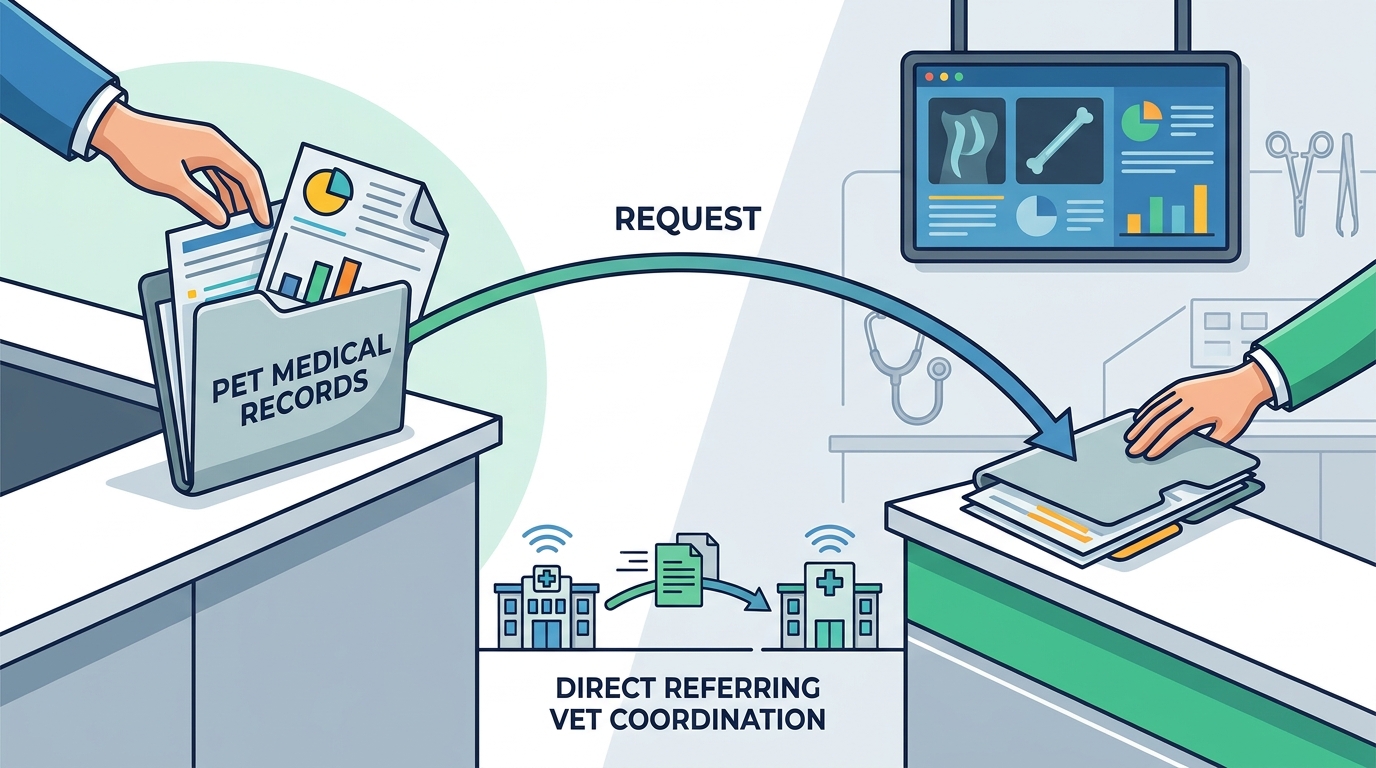
Transferring your pet's medical records for a surgical second opinion involves requesting a complete medical file from your current veterinarian and submitting it to the new surgeon. This process ensures the specialist has full context on your pet's history, imaging, and current condition. At VSx Veterinary Surgery, our team coordinates directly with referring veterinarians to streamline this handoff, ensuring no critical data is lost during the transition.
Understanding the Medical Records Request
A veterinary medical record is a comprehensive legal document that details your pet's health history, including diagnoses, treatments, medications, and surgical notes. When seeking a second opinion on a complex case, such as an orthopedic injury or soft tissue mass, the receiving surgeon needs this entire picture. Without it, the specialist may have to repeat expensive diagnostic tests, delaying treatment. You should ask your current clinic for a 'complete medical record' rather than just a summary, as summaries often omit critical details like specific imaging findings or anesthesia notes.
Preparing for the Referral Handoff
Before requesting records, confirm with the new surgeon if they require a formal referral from your primary veterinarian. Many specialty practices, including board-certified veterinary surgeons at VSx, prefer a direct vet-to-vet referral to maintain continuity of care. This approach allows the specialist to ask specific questions of the primary doctor. If you are acting as the intermediary, ensure you have written consent from your current clinic to release records to the new facility. This consent is a standard legal requirement to protect patient privacy.
What to Include in the Transfer Package
Facilitating the Digital Transfer Process
Modern veterinary practices increasingly use digital platforms to share records securely. When contacting VSx Chicago or other locations, ask if they accept electronic health record (EHR) transfers. This method is faster and reduces the risk of data loss compared to physical mail. If digital transfer is not possible, request that your current clinic send records via secure fax or encrypted email. Always verify that the receiving facility has confirmed receipt of the files before your consultation appointment. This simple step prevents last-minute delays on the day of your visit.
Coordinating with the Receiving Surgeon
Once the records are in transit, maintain open communication with both your primary veterinarian and the specialist. The surgeon may request additional information or clarification on specific findings. At VSx Indianapolis, our team is committed to collaborative care and will proactively reach out if any gaps in the medical history are identified. This collaborative approach ensures that the second opinion is based on a thorough evaluation. It also allows the specialist to provide a detailed treatment plan that you can discuss with your primary doctor.
Key Takeaways
- Request a complete medical record, not just a summary, to ensure the specialist has all necessary context.
- Confirm if a formal vet-to-vet referral is required by the receiving specialty practice.
- Include digital imaging files, pathology reports, and pre-anesthetic bloodwork in the transfer package.
- Use secure digital transfer methods when available to speed up the process and reduce errors.
- Verify that the receiving facility has confirmed receipt of all records before your appointment.
- Maintain open communication between your primary vet and the specialist to clarify any gaps in the history.
Frequently Asked Questions
How long does it take to transfer veterinary medical records?
Most veterinary clinics can process a records request within a few days. Digital transfers are often immediate, while physical mail may take several business days. It is best to request records at least one week before your scheduled consultation to allow for processing time.
Do I need to pay for my pet's medical records?
Many veterinary practices charge a small administrative fee for copying and sending records. This fee typically covers the cost of labor and materials. Check with your current clinic for their specific policy, as fees vary by practice.
Can I send the records myself to the new surgeon?
Yes, you can send records directly if you have them in hand. However, a direct vet-to-vet referral is often preferred by specialists as it allows for direct communication between the doctors. This can lead to a more accurate and efficient evaluation.
What if my current vet refuses to release the records?
Veterinarians are generally required to release medical records to the pet owner or another licensed veterinarian upon request. If you encounter resistance, you can contact your state's veterinary medical board for guidance. In most cases, a polite but firm request citing your right to access the records resolves the issue.
Should I bring the original records to the consultation?
It is wise to bring a copy of the records with you to the consultation, just in case. However, the primary goal is to ensure the specialist has the records in their system before the appointment. This allows them to review the files in advance and prepare a more informed opinion.
Next Steps for Pet Owners
Transferring medical records is a critical step in ensuring your pet receives the best possible surgical care. By following these steps, you can facilitate a smooth transition between your primary veterinarian and a specialty surgeon. If you are considering a second opinion, reach out to VSx Veterinary Surgery to discuss your pet's case. Our team is dedicated to providing advanced surgical care and will guide you through the referral process with clarity and compassion.