
Home Recovery Setup for Dog Knee Surgery
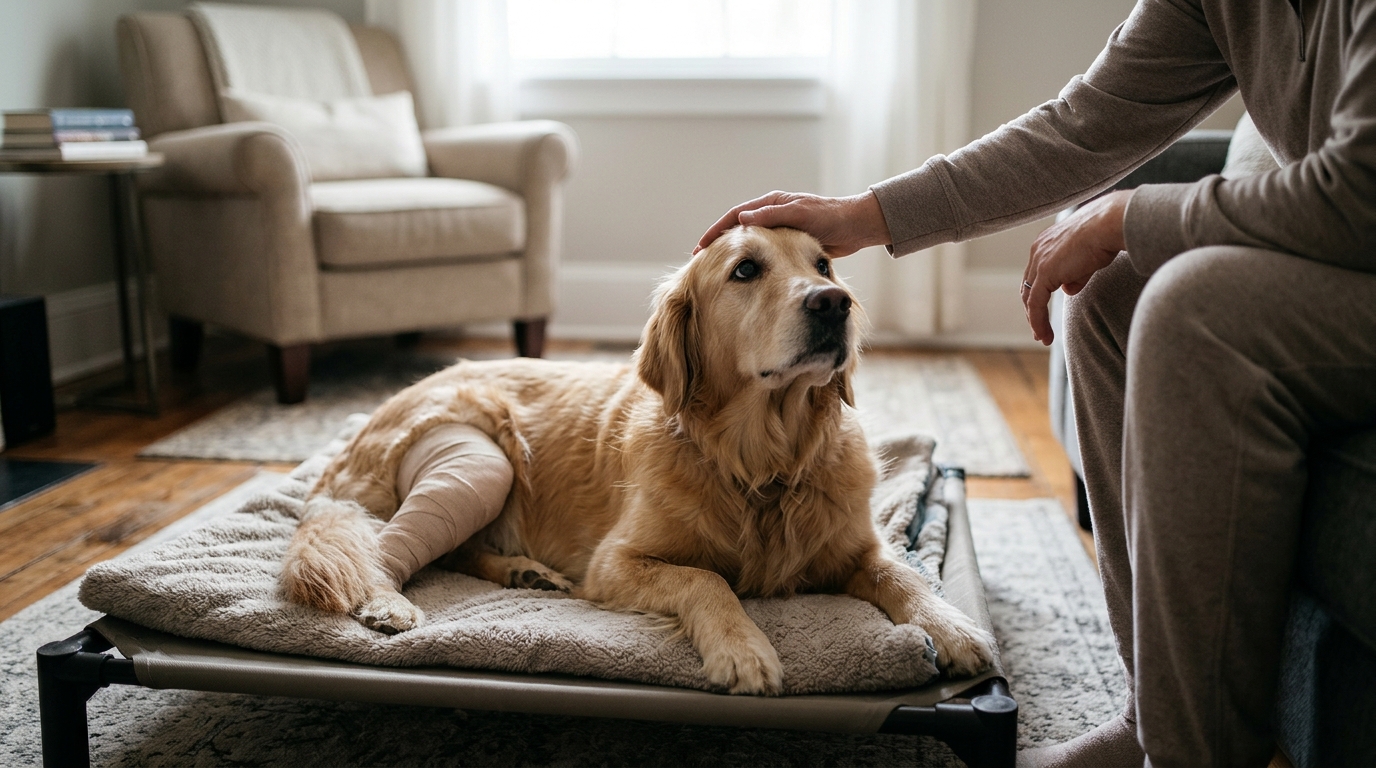
Prepare your home by creating a confined, non-slip resting area, removing obstacles, and managing stairs before your dog returns from knee surgery. This setup protects the surgical site, reduces pain, and supports a smoother healing process. VSx Veterinary Surgery emphasizes that a well-prepared environment is critical for post-operative success.
Create a Safe, Confined Zone
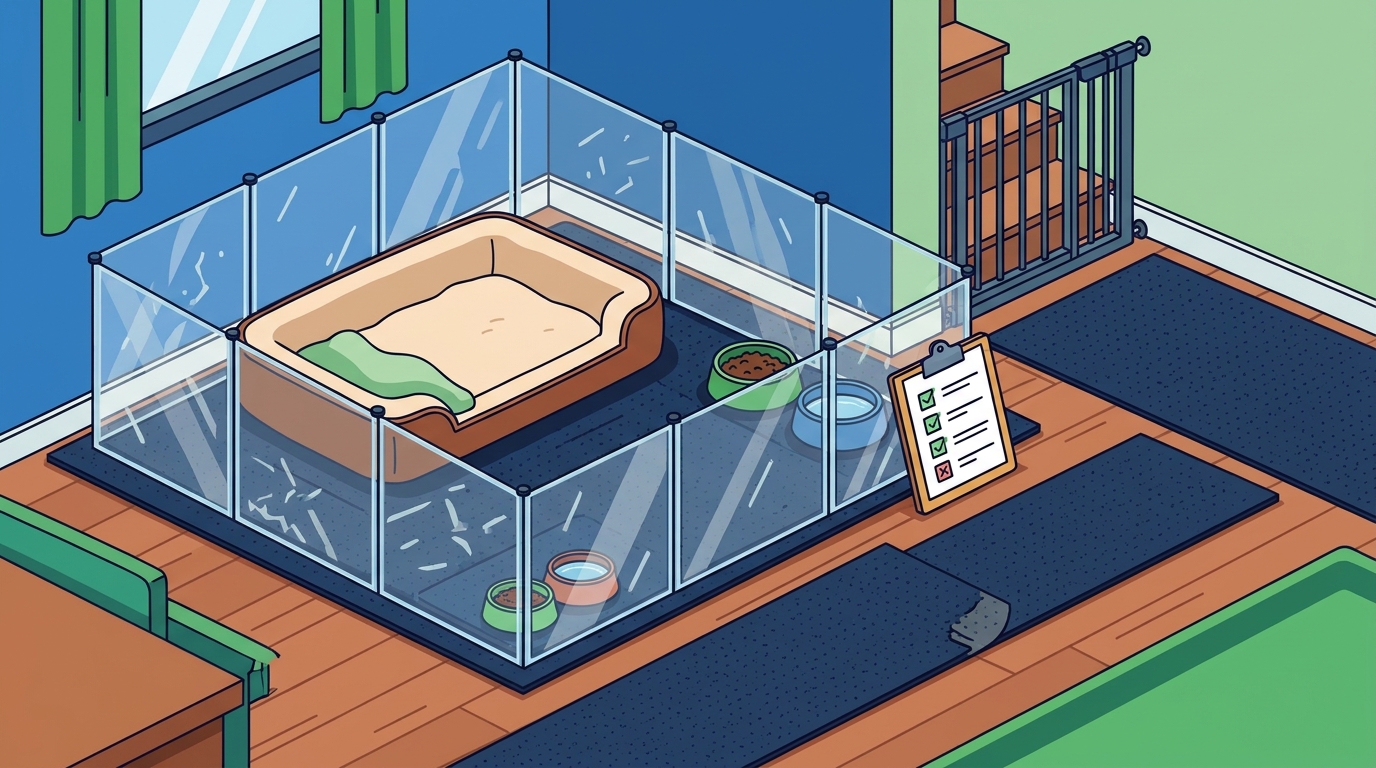
A designated recovery area is a confined space that limits your dog's movement to prevent accidental injury to the surgical site. After knee surgery, such as a TPLO or fracture repair, uncontrolled running or jumping can compromise the repair. Choose a room with a single entry point, or use baby gates to create a pen. This restriction is not punishment; it is a medical necessity to allow the bone and soft tissue to heal properly.
Ensure the floor in this zone is non-slip. Hardwood, tile, and laminate floors are dangerous for recovering dogs because they lack traction. A dog attempting to stand on a slick surface may slip, causing a fall that could displace a surgical implant or tear healing tissue. Place a large, non-slip rubber mat or a thick rug with a non-slip backing in the center of the zone. This provides the traction needed for your dog to stand up safely without straining the operated leg.
Manage Mobility and Stairs
Stair management is a critical component of home preparation that prevents falls and excessive strain on the healing joint. If your home has multiple floors, you must restrict your dog to a single level. Use baby gates at the top and bottom of staircases to create a physical barrier. Do not rely on verbal commands alone, as pain medications can make dogs disoriented or less responsive. A physical barrier is the only reliable way to keep a recovering dog off the stairs.
If your dog must access a different floor for any reason, use a ramp or a carrier. Ramps should be wide enough for the dog to walk comfortably and have a textured surface to prevent slipping. For smaller dogs, a carrier is often safer and less stressful. Avoid carrying a dog with a fresh knee surgery unless absolutely necessary, as the weight and awkward positioning can cause pain. Plan your daily routine to keep your dog on the ground floor for the first few weeks of recovery.
Gather Comfort and Hygiene Supplies
Comfort supplies are items that reduce stress and maintain hygiene during the recovery period. Gather these items before your dog comes home to avoid last-minute trips to the store. You will need a comfortable, elevated bed or a crate with soft padding. An elevated bed can help reduce swelling in the operated leg by allowing fluid to drain away from the joint. Ensure the bed is large enough for your dog to stretch out comfortably, as lying in a curled position for extended periods can cause stiffness.
Hygiene is equally important. Keep a supply of clean towels, a soft brush, and any prescribed medications or supplements ready. If your dog has a cone or bandage, ensure you have the correct size and that it fits snugly without restricting breathing. Have a plan for feeding and water, as some dogs may need their bowls elevated to avoid bending down. Preparing these supplies in advance reduces stress for both you and your pet, creating a calmer environment that supports healing.
Monitor Recovery and Activity
Active monitoring is the practice of observing your dog's behavior, appetite, and mobility to detect complications early. After surgery, your dog may be sedated or in pain, which can mask signs of distress. Watch for changes in breathing, heart rate, or the ability to stand. If your dog refuses to eat, vomits, or shows signs of severe pain despite medication, contact your veterinarian immediately. Early detection of complications can prevent more serious issues.
Track your dog's activity levels and weight-bearing on the operated leg. While some limping is normal, a complete refusal to put weight on the leg or a sudden increase in swelling may indicate a problem. Keep a simple log of your dog's behavior, appetite, and any changes in the surgical site. This information is valuable when you speak with your veterinary team. VSx Veterinary Surgery encourages owners to maintain open communication with their care team, providing updates on progress and any concerns that arise during the recovery period.
Key Takeaways
- Create a confined, non-slip zone to prevent falls and protect the surgical site.
- Restrict access to stairs using physical barriers like baby gates or ramps.
- Gather comfort supplies, including an elevated bed and hygiene items, before discharge.
- Monitor your dog's behavior, appetite, and mobility for signs of complications.
- Maintain open communication with your veterinary team to report any changes in recovery.
- Keep your dog on a single floor for the first few weeks to minimize strain.
Frequently Asked Questions
How long should I keep my dog confined after knee surgery?
Confinement is typically required for 4 to 6 weeks, depending on the specific procedure and your veterinarian's recommendations. This period allows the bone and soft tissue to heal sufficiently to withstand normal activity. Follow the specific instructions provided by your surgical team.
Can my dog use the bathroom in the recovery zone?
It is best to keep the recovery zone separate from the bathroom area. If your dog must relieve themselves in the zone, use puppy pads or a litter box to maintain hygiene. Ensure the area is easy to clean to prevent infection.
What if my dog tries to lick the surgical site?
Use a cone, bandage, or recovery suit to prevent licking. Licking can introduce bacteria and delay healing. If your dog is determined to remove the cone, consult your veterinarian for alternative options.
Should I use pain medication at home?
Yes, administer pain medication exactly as prescribed by your veterinarian. Pain management is crucial for comfort and mobility. Do not adjust the dosage without consulting your veterinary team.
When can my dog start walking again?
Short, leash-controlled walks are usually allowed after the first few days, but strenuous activity should be avoided for several weeks. Follow the specific activity restrictions provided by your surgeon.
How do I know if my dog is in too much pain?
Next Steps for Your Pet's Recovery
Preparing your home is a vital step in ensuring a successful recovery for your dog after knee surgery. By creating a safe, confined environment and managing mobility, you can help your pet heal with minimal stress. VSx Veterinary Surgery is committed to providing advanced surgical care and supporting you through every stage of the recovery process. To discuss your pet's specific needs and prepare for discharge, contact our Chicago team or reach out to our Indianapolis surgeons. Our board-certified veterinary surgeons are ready to guide you and your pet toward a healthy recovery.