
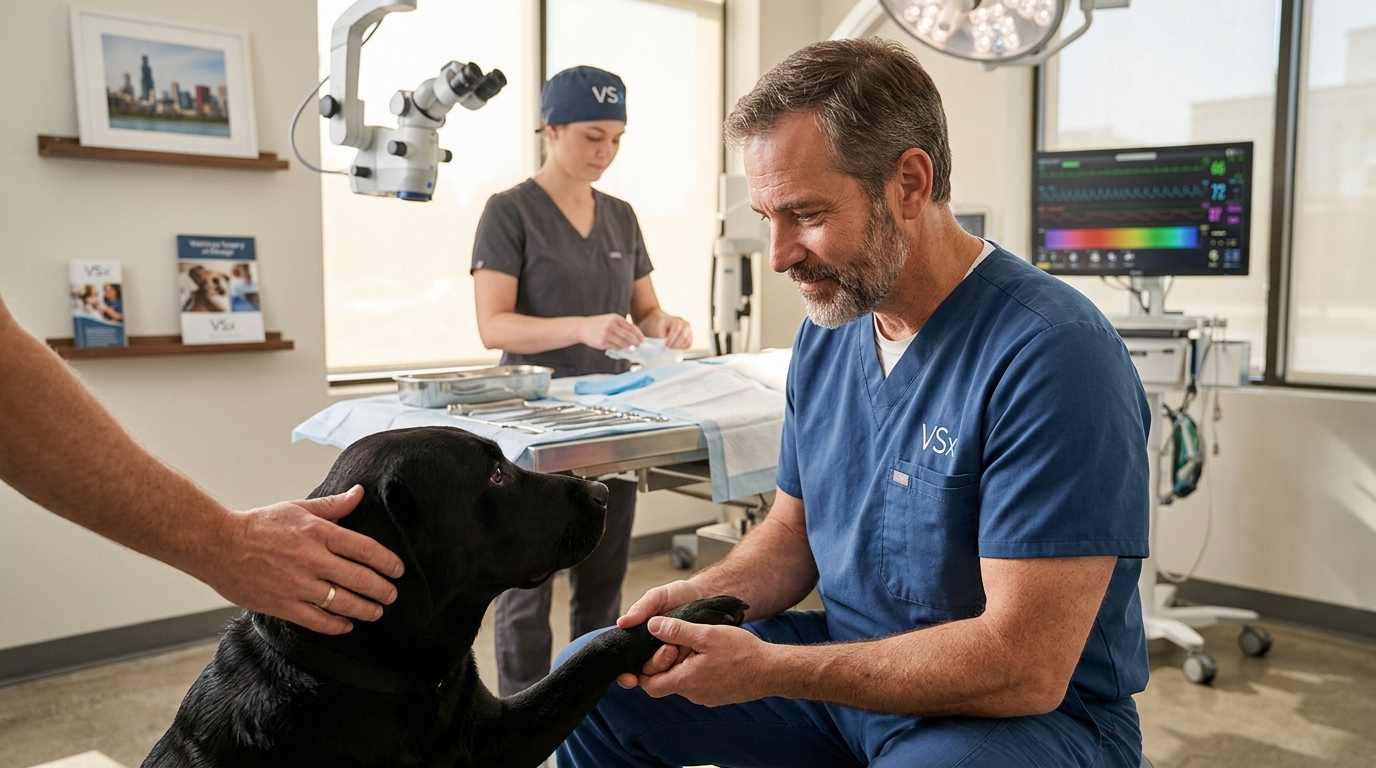
Canine cruciate ligament disease is one of the most common orthopedic conditions affecting dogs, with estimates suggesting that up to 10% of the population may experience a tear in their lifetime. According to recent veterinary orthopedic studies, the Tibial Plateau Leveling Osteotomy (TPLO) has emerged as the gold standard surgical intervention for medium to large breed dogs. This procedure stabilizes the knee joint by altering the biomechanics of the tibia, effectively neutralizing the shear forces that cause instability. Understanding the step-by-step process, from initial diagnosis to post-operative rehabilitation, is critical for pet owners seeking the best outcomes for their companions.
Diagnosis and Pre-Surgical Evaluation
The journey to TPLO surgery begins with a thorough clinical examination. Veterinarians typically identify cruciate ligament tears through a physical test known as the cranial drawer test. This maneuver detects abnormal forward movement of the tibia relative to the femur, indicating ligament insufficiency. While general practitioners can diagnose the condition, referral to a specialist is often recommended for complex cases or when advanced imaging is required.
Before any surgical intervention, a comprehensive pre-surgical workup is essential. This includes blood work to assess overall health and anesthesia risk, as well as diagnostic imaging. Diagnostic imaging services, including digital X-rays and outpatient CT scans, provide a detailed view of the bone structure and joint alignment. These images are crucial for planning the osteotomy, ensuring that the tibial plateau angle is calculated with precision. At VSx, we emphasize that accurate pre-operative planning is the foundation of a successful surgical outcome.
The TPLO Surgical Procedure Explained
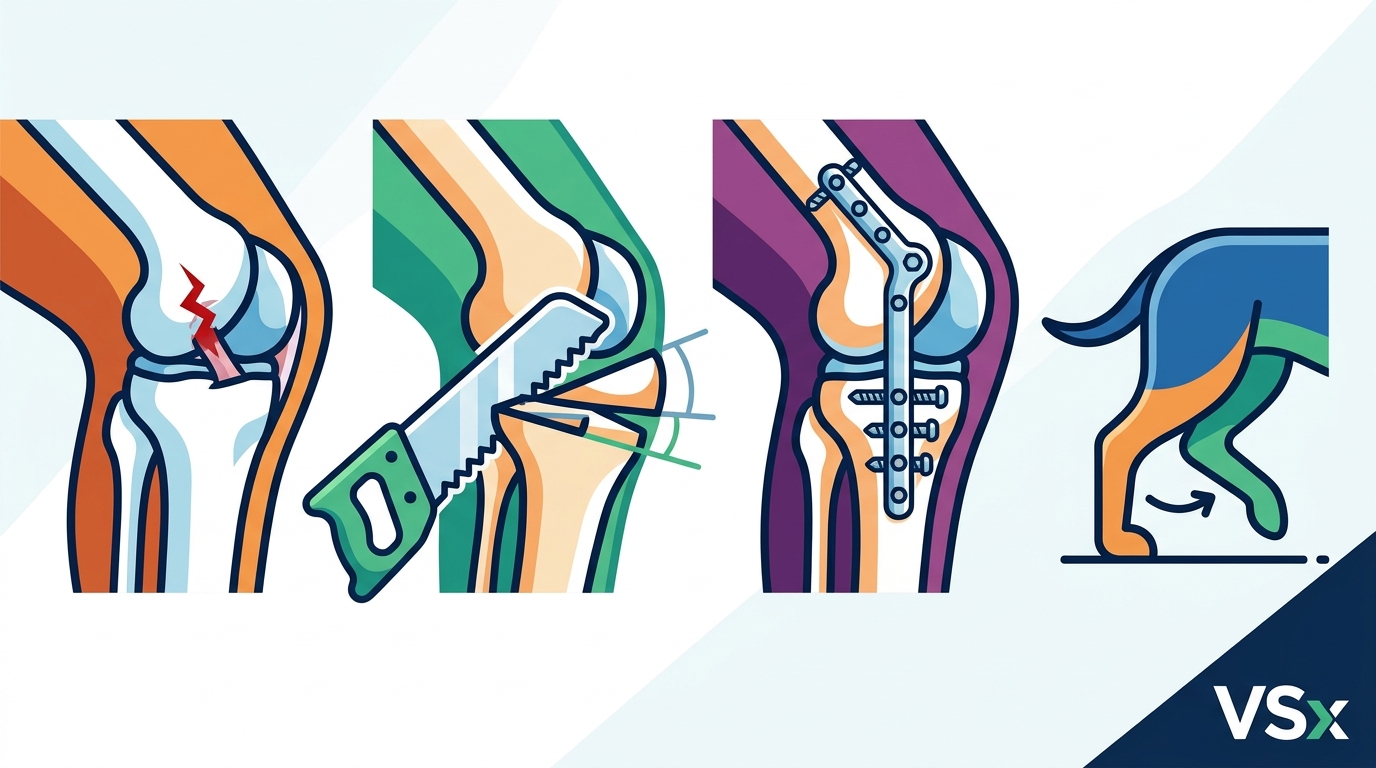
Tibial Plateau Leveling Osteotomy is a biomechanical solution rather than a repair of the torn ligament itself. The procedure involves cutting the tibia and rotating the proximal fragment to reduce the tibial plateau angle from approximately 30 degrees to near zero. This change eliminates the cranial tibial thrust, the force that causes the knee to slip during weight-bearing. The cut is then stabilized with a specialized plate and screws, allowing the bone to heal in its new position.
Step 1: Anesthesia and Positioning
The surgery begins with general anesthesia, administered by a dedicated veterinary anesthesiologist. The dog is positioned to allow optimal access to the stifle joint. Sterile technique is maintained throughout to prevent infection, a critical factor in orthopedic surgeries involving implants.
Step 2: The Osteotomy
Using a specialized oscillating saw, the surgeon creates a precise cut in the tibia. This step requires immense skill and experience. The proximal fragment is then rotated to achieve the target tibial plateau angle. The exact angle is calculated based on the dog's weight, breed, and pre-operative measurements. This customization ensures that the joint is stabilized without over-constraining the knee.
Step 3: Stabilization and Closure
Once the correct angle is achieved, a titanium plate is applied to the tibia to hold the bone fragments in place. Screws are inserted through the plate into the bone, providing rigid fixation. The surgical site is then closed in layers, with sutures placed in the muscle, subcutaneous tissue, and skin. The entire procedure typically takes between 60 to 90 minutes, depending on the complexity of the case.
Post-Operative Care and Rehabilitation
Recovery from TPLO surgery is a gradual process that requires strict adherence to veterinary instructions. The first two weeks are critical for incision healing and pain management. Dogs are typically prescribed non-steroidal anti-inflammatory drugs (NSAIDs) and other analgesics to ensure comfort. It is vital to keep the surgical site clean and dry to prevent infection.
After the initial healing phase, controlled exercise becomes the cornerstone of rehabilitation. Leash walks are encouraged, but off-leash activity, running, jumping, and playing are strictly prohibited for at least 8 to 12 weeks. Physical therapy, including hydrotherapy or laser therapy, can accelerate recovery and restore muscle mass. Our surgical teams work closely with referring veterinarians to monitor progress and adjust rehabilitation plans as needed. Most dogs show significant improvement in mobility within the first month, with full recovery taking several months.
Why Board-Certified Surgeons Matter
Choosing a board-certified veterinary surgeon is one of the most important decisions a pet owner can make. A board-certified surgeon has completed a rigorous residency program and passed a comprehensive examination administered by the American College of Veterinary Surgeons (ACVS). This certification ensures that the surgeon has the highest level of training and expertise in orthopedic and soft tissue procedures.
At VSx, our surgeons are not only board-certified but also bring an average of 15 years of experience to every case. Our team of experts includes specialists like Dr. Marc Wosar in Chicago and Dr. Brian Martin in Indianapolis, who have performed thousands of successful TPLO surgeries. This level of experience translates to faster surgery times, fewer complications, and better long-term outcomes for your pet. Surgeon-owned and led practices like VSx prioritize patient care and clinical excellence over volume, ensuring that each case receives the attention it deserves.
TPLO vs. Other Surgical Options
While TPLO is the gold standard, other surgical options exist for canine cruciate ligament tears. Understanding the differences can help pet owners make informed decisions. The following table compares TPLO with other common procedures.
| Procedure | Mechanism of Action | Best For | Recovery Time |
|---|---|---|---|
| TPLO | Neutralizes cranial tibial thrust by altering tibial plateau angle. | Medium to large breeds, active dogs. | 8-12 weeks for full healing. |
| TTT (Tibial Tuberosity Translation) | Advances the tibial tuberosity to change force vectors. | Large breeds, heavier dogs. | 8-12 weeks for full healing. |
| Lateral Suture | Uses a synthetic suture to mimic the cruciate ligament. | Small breeds, less active dogs. | 4-6 weeks for full healing. |
| Extra-Capsular Repair | Similar to lateral suture but with different placement. | Small to medium breeds. | 4-6 weeks for full healing. |
TPLO is generally preferred for active, medium to large breed dogs because it addresses the underlying biomechanical cause of instability. Lateral suture techniques are less invasive but may not provide sufficient stability for larger, more active dogs. Our orthopedic team evaluates each patient individually to recommend the most appropriate surgical approach.
Key Takeaways for Pet Owners
- TPLO is the gold standard for stabilizing the canine stifle joint in medium to large breeds, offering high success rates and rapid return to function.
- Board-certified surgeons have completed rigorous training and possess an average of 15 years of experience, ensuring the highest standard of care.
- Pre-surgical planning using digital X-rays and CT scans is critical for accurate tibial plateau angle calculation and optimal surgical outcomes.
- Post-operative rehabilitation is essential for recovery, involving controlled leash walks and gradual return to activity over 8-12 weeks.
- VSx locations in Chicago, Indianapolis, and Nashville provide specialized orthopedic care with state-of-the-art diagnostic and surgical equipment.
- Surgeon-owned practices like VSx prioritize clinical excellence and patient outcomes over volume, fostering trust with referring veterinarians.
- Early intervention can prevent further joint damage, arthritis, and muscle atrophy, leading to better long-term joint health for your pet.
Frequently Asked Questions
How long does TPLO surgery take?
The TPLO procedure typically takes between 60 to 90 minutes, depending on the complexity of the case and the surgeon's experience. This includes anesthesia induction, the osteotomy, stabilization, and closure.
What is the recovery time for TPLO surgery?
Full recovery from TPLO surgery usually takes 8 to 12 weeks. During this time, strict exercise restriction is necessary, followed by a gradual return to normal activity under veterinary guidance.
Is TPLO covered by pet insurance?
Many pet insurance plans cover TPLO surgery, but coverage varies by policy. It is recommended to check with your insurance provider before scheduling the procedure to understand your coverage limits and deductibles.
What are the risks associated with TPLO surgery?
As with any surgery, risks include infection, implant failure, and anesthesia complications. However, these risks are minimized by choosing a board-certified surgeon and following pre- and post-operative care instructions meticulously.
Can both knees be operated on at the same time?
While it is technically possible to perform TPLO on both knees simultaneously, most surgeons recommend staging the surgeries several weeks apart. This allows the dog to recover from one side before undergoing the second procedure, reducing stress and complications.
How do I find a board-certified veterinary surgeon?
You can find board-certified surgeons through the American College of Veterinary Surgeons (ACVS) directory or by asking your primary care veterinarian for a referral. Practices like VSx specialize in these advanced procedures.
What is the cost of TPLO surgery?
The cost of TPLO surgery varies by location and complexity, typically ranging from $3,000 to $5,000 per knee. This includes pre-surgical diagnostics, the surgery itself, anesthesia, and post-operative care. Contact VSx for detailed pricing information.
Schedule Your Consultation Today
If your dog is suffering from a cruciate ligament tear, timely intervention is crucial for their long-term mobility and comfort. VSx offers specialized orthopedic care with board-certified surgeons in Chicago, Indianapolis, and Nashville. Our team is dedicated to providing the highest standard of surgical care and outcomes. Contact us today to schedule a consultation and learn more about how we can help your pet recover.