
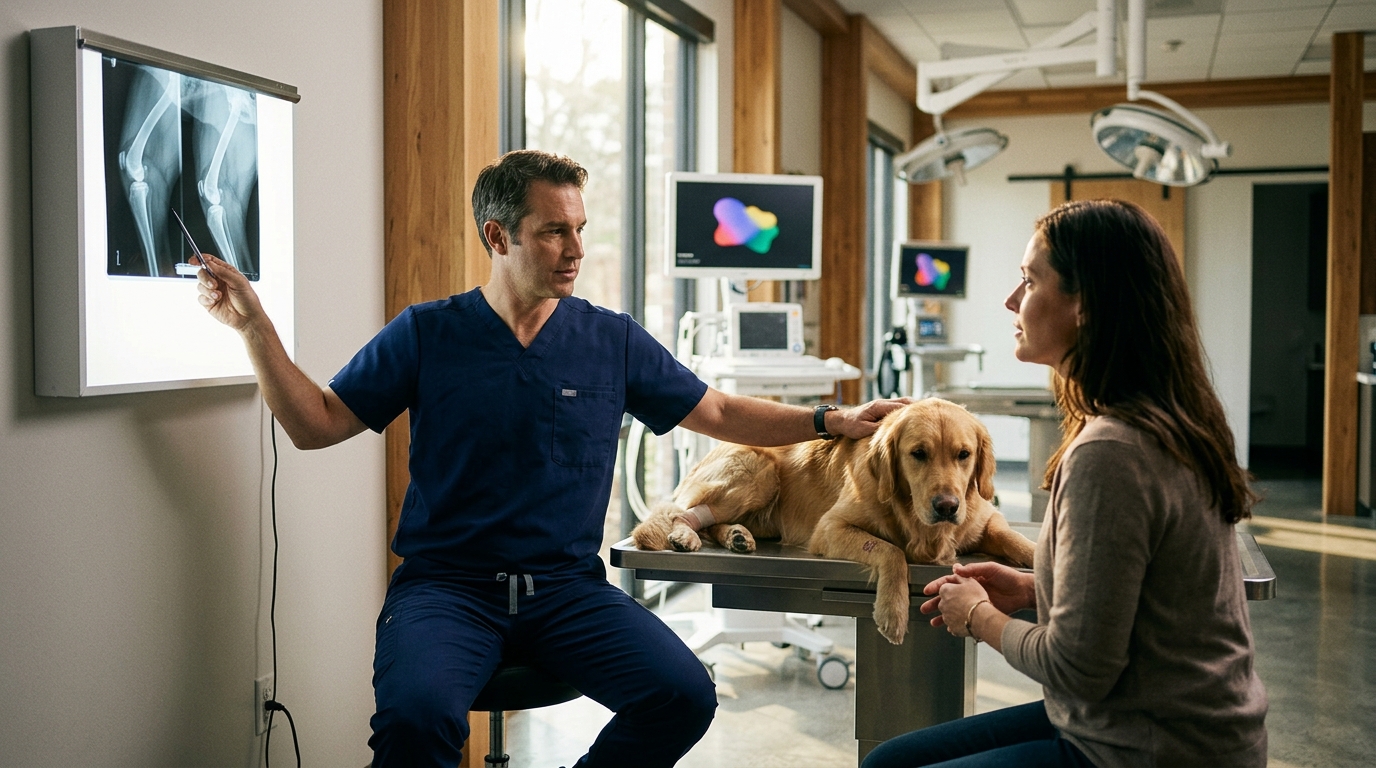
Specialty veterinary surgery has evolved into a highly precise discipline where the distinction between bone repair and internal organ management dictates the entire treatment pathway. According to recent industry data, the demand for board-certified veterinary surgeons has grown significantly, with many pet owners now seeking specialized care for complex conditions that general practitioners cannot manage. This shift highlights the critical importance of understanding which surgical category your pet requires to ensure the best possible outcome. (Board Certified Veterinary Surgery)
Understanding Orthopedic Surgery
Orthopedic surgery focuses on the musculoskeletal system, which includes bones, joints, ligaments, tendons, and muscles. At VSx, this specialty is dedicated to restoring mobility and alleviating pain for pets suffering from structural abnormalities or traumatic injuries. The goal is always to return the animal to a functional, pain-free life. (FAQs mdash VSx Veterinary)
Orthopedic Surgery is the branch of veterinary medicine that deals with the correction of deformities or functional impairments of the skeletal system. This field requires immense precision and specialized hardware, such as plates, screws, and pins, to stabilize fractures or correct joint dysplasia.
Common Orthopedic Procedures
One of the most frequent reasons pet owners seek a board-certified surgeon is for cranial cruciate ligament (CCL) rupture, which is functionally similar to an anterior cruciate ligament (ACL) tear in humans. VSx specializes in TPLO (Tibial Plateau Leveling Osteotomy) surgeries, which have become the gold standard for treating this condition in dogs.
Other common orthopedic interventions include:
- Fracture Repairs: Complex breaks in long bones or joints that require internal fixation.
- Elbow and Hip Dysplasia: Corrective surgeries to manage developmental joint issues.
- Nail Bed Tumors: Surgical removal of growths affecting the digits.
Our surgeons at VSx Chicago and VSx Indianapolis utilize state-of-the-art equipment to ensure that every orthopedic procedure is performed with maximum accuracy. The average experience of our surgeons is 15 years, providing a level of expertise that significantly reduces complication rates.
Understanding Soft Tissue Surgery
While orthopedic surgery addresses the skeleton, soft tissue surgery involves the internal organs and surrounding structures. This category encompasses a wide range of procedures, from routine mass removals to complex reconstructive surgeries. The complexity here lies not in bone stabilization, but in navigating delicate tissues, managing bleeding, and ensuring organ function post-operation.
Soft Tissue Surgery is defined as the surgical management of non-skeletal structures, including the skin, muscles, nerves, blood vessels, and internal organs. This field is critical for treating cancers, obstructions, and traumatic injuries to the abdomen or chest.
Oncological and Reconstructive Focus
Oncological Surgery is a specialized subset of soft tissue surgery that focuses on the removal of tumors and cancers. At VSx, our team is trained to perform wide excisions to ensure clear margins, which is vital for preventing recurrence. This is particularly important for mast cell tumors, sarcomas, and other common canine and feline cancers.
Other soft tissue procedures include:
- Bladder and Kidney Stones: Surgical removal of uroliths that cannot be passed naturally.
- Foreign Body Removal: Extracting objects swallowed by pets that cause intestinal blockages.
- Reconstructive Surgery: Repairing wounds or defects resulting from trauma or previous surgeries.
Our surgeons are committed to delivering exceptional value for patients, pet owners, and referring veterinarians by providing clear communication and compassionate care throughout the recovery process.
Key Differences in Approach
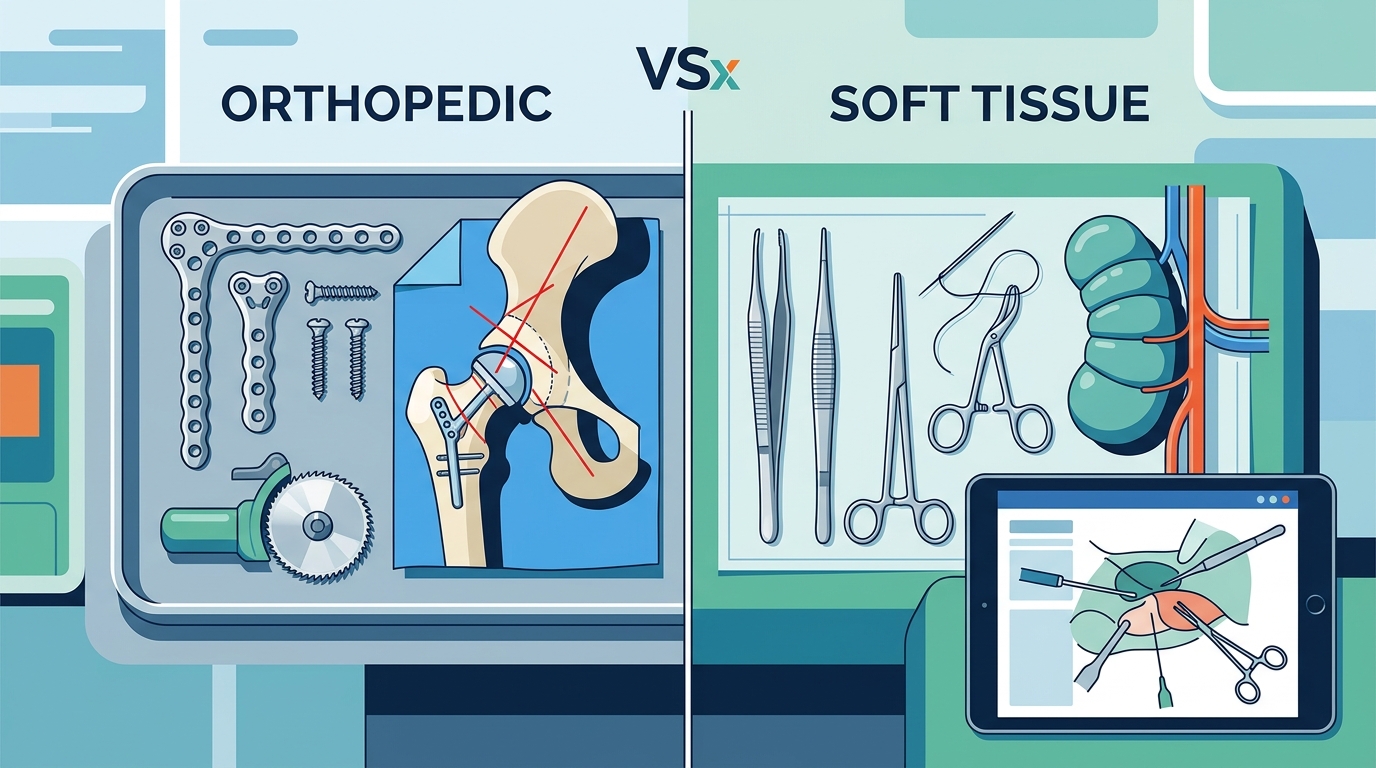
Understanding the distinction between these two fields helps pet owners prepare for the surgical journey. The primary difference lies in the anatomical focus and the tools required.
Orthopedic procedures often require specialized imaging, such as CT scans, to plan the exact angle for osteotomies or fracture repairs. In contrast, soft tissue surgeries rely heavily on pre-operative blood work and ultrasound to assess organ health and tumor staging.
Recovery protocols also differ. Orthopedic recovery typically involves strict confinement and physical therapy to ensure bones heal correctly. Soft tissue recovery focuses more on wound care, pain management, and monitoring for internal complications like infection or leakage.
Service Comparison Matrix
The following table summarizes the core differences between orthopedic and soft tissue surgery to help you make an informed decision.
| Feature | Orthopedic Surgery | Soft Tissue Surgery |
|---|---|---|
| Primary Focus | Bones, joints, ligaments, and muscles. | Internal organs, skin, and nerves. |
| Common Conditions | TPLO, fractures, dysplasia. | Tumors, bladder stones, foreign bodies. |
| Diagnostic Tools | Digital X-ray, Outpatient CT Scans. | Ultrasound, blood work, CT Scans. |
| Recovery Focus | Restricted movement, physical therapy. | Wound care, pain management. |
| VSx Expertise | Board-certified specialists with 15+ years avg experience. | Specialized oncological and reconstructive training. |
The Role of Advanced Diagnostics
At VSx, we believe that accurate diagnosis is the foundation of successful surgery. Our commitment to expanding access to board-certified veterinary surgeons includes providing state-of-the-art diagnostic capabilities.
Diagnostic Imaging is a critical component of our workflow. We offer comprehensive imaging services, including digital X-ray, to ensure we have the full picture before surgery. For complex cases, our Outpatient CT Scans allow us to provide quick, accurate diagnoses without the need for hospitalization.
This technological advantage is particularly valuable in orthopedic surgery, where 3D visualization of bone structures is essential for planning osteotomies. In soft tissue surgery, CT scans help determine the extent of tumor invasion into surrounding tissues, ensuring that our surgeons can plan the most effective excision.
Key Takeaways
- Board-Certified Expertise: Every surgeon at VSx is board-certified with an average experience of 15 years, ensuring the highest standard of surgical care.
- Orthopedic Specialization: VSx offers advanced TPLO surgeries and fracture repairs to restore mobility and function.
- Soft Tissue Mastery: Our team specializes in oncological surgery, tumor removals, and reconstructive procedures.
- Advanced Technology: We utilize state-of-the-art diagnostic & surgical equipment, including outpatient CT scans.
- Collaborative Care: We work closely with referring general practice, emergency & other specialist veterinarians.
- Surgeon-Owned Model: VSx is founded on the principal that the quality of a practice is dependent on present, independent ownership.
- Multiple Locations: With locations in Chicago, Indianapolis, and Nashville, we are expanding access to specialty care.
Frequently Asked Questions
What is the difference between a general veterinarian and a board-certified surgeon?
A general veterinarian is trained to perform routine procedures like spays, neuters, and minor mass removals. A board-certified surgeon has completed an internship and a 3–4 year surgical residency, along with rigorous certification through the American College of Veterinary Surgeons (ACVS). This specialized training allows them to handle complex orthopedic and soft tissue cases with greater precision and safety.
When should I seek a referral to VSx?
You should seek a referral if your pet has a complex fracture, joint instability (like CCL rupture), a suspicious mass, or an internal obstruction. Our surgeons are equipped to handle cases that require advanced diagnostics and specialized surgical techniques beyond the scope of general practice.
Does VSx offer outpatient CT scans?
Yes, VSx offers advanced CT scanning technology that allows us to provide quick, accurate diagnoses for complex cases without the need for hospitalization. This is particularly useful for planning orthopedic surgeries and staging tumors.
How do I prepare my pet for surgery?
Preparation typically involves a pre-surgical blood panel to ensure your pet is healthy enough for anesthesia. Your referring veterinarian or VSx team will provide specific instructions regarding fasting and medication adjustments. Clear communication is a core value at VSx, so we ensure you are well-informed every step of the way.
What is the recovery time for a TPLO surgery?
Recovery from a TPLO surgery typically involves several weeks of strict confinement followed by gradual physical therapy. Most dogs show significant improvement within 3 to 4 months. Our surgeons provide detailed post-operative care instructions to ensure the best outcomes.
Are your surgeons board-certified?
Yes, all surgeons at VSx are Diplomates of the ACVS or DACVS, meaning they are board-certified veterinary surgeons. This certification ensures they have met the highest standards of training and expertise in their field.
What services does VSx offer in addition to surgery?
In addition to orthopedic and soft tissue surgery, VSx offers comprehensive diagnostic imaging, including digital X-rays and outpatient CT scans. We also provide oncological surgery for pets with cancer.
Contact VSx
If you are facing a complex surgical decision for your pet, do not hesitate to reach out to our team. Whether you need an orthopedic evaluation or a soft tissue consultation, our board-certified surgeons are ready to provide the specialized care your pet deserves.
Visit our Services & Pricing page to learn more about our offerings. You can also view our locations in Chicago, Indianapolis, and Nashville. To schedule an appointment, please contact VSx Chicago or VSx Indianapolis directly. We look forward to being your trusted surgery partner.