
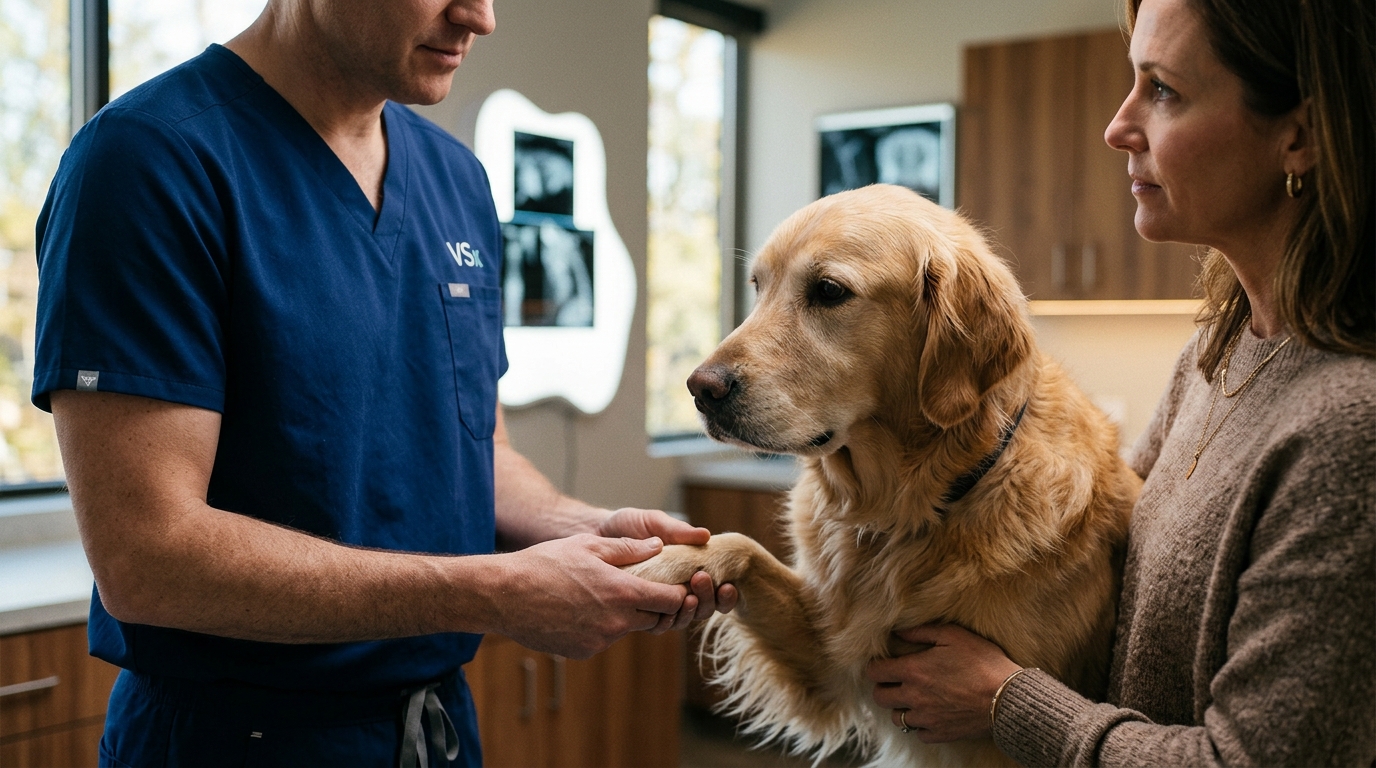
Choosing the right surgical care for your pet is one of the most critical decisions a pet owner can make. While many general practitioners are skilled at routine procedures, complex cases often require a higher level of specialized expertise. According to the American College of Veterinary Surgeons (ACVS), board-certified surgeons undergo years of rigorous post-graduate training that goes far beyond veterinary school. This distinction is not just about credentials; it is about the safety, precision, and long-term outcomes for your animal companion. (Board Certified Veterinary Surgery)
What Does Board-Certified Mean?
Understanding the difference between a general veterinarian and a specialist begins with the definition of the title itself. A board-certified veterinary surgeon is a veterinarian who has completed an internship and a three to four year surgical residency. This extensive training is followed by thousands of hours working alongside experienced surgeons and a rigorous certification process through the American College of Veterinary Surgeons (ACVS). (Board Certified Veterinary Surgery)
Only after passing these rigorous exams can a veterinarian be called a Diplomate of the ACVS. This title signifies that the surgeon has dedicated their entire career to surgery, from the simplest procedures to the most advanced and delicate operations. In contrast, a general veterinarian focuses on broad-spectrum care, including wellness exams, vaccinations, and routine surgeries like spays and neuters. (VSx Veterinary Surgery)
At VSx, we believe that the quality of a practice is dependent on present, independent ownership. Our surgeons are not just employees; they are partners who bring decades of combined experience to every case. This model ensures that the highest standard of surgical care is maintained without compromise.
Scope of Practice: General vs. Specialist
The primary difference lies in the complexity of the cases each provider handles. General practitioners are excellent for routine health maintenance and minor surgical interventions. However, when a condition becomes complex, the margin for error shrinks significantly. This is where the specialized focus of a board-certified surgeon becomes invaluable.
Our team at VSx specializes in orthopedic and advanced soft tissue procedures. These are not routine tasks. They require a deep understanding of anatomy, biomechanics, and pain management that is developed over years of daily practice. For example, a fractured femur in a large breed dog requires precise alignment and stabilization to ensure proper healing and mobility. A general vet may refer such a case because they recognize the limits of their own scope.
Referring to a specialist like VSx does not mean your general vet is inadequate. It means they are advocating for the best possible outcome for your pet. We work collaboratively with referring general practice, emergency, and other specialist veterinarians to ensure seamless care. This collaborative approach is a cornerstone of our mission to be the most trusted partner of specialty veterinary surgery.
Orthopedic and Neurologic Complexities
Orthopedic surgery is one of the most common reasons for referral to a board-certified surgeon. Conditions such as cranial cruciate ligament (CCL) tears, hip dysplasia, and complex fractures require specialized techniques like TPLO (Tibial Plateau Leveling Osteotomy) or total knee replacement. These procedures are not merely about fixing a break; they are about restoring function and quality of life.
Neurologic cases are equally complex. Spinal cord injuries, intervertebral disc disease, and tumors affecting the nervous system require precise diagnostic imaging and delicate surgical intervention. A delay in specialized care can lead to permanent paralysis or loss of function. Our surgeons are trained to navigate these delicate structures with precision that general practitioners typically do not perform daily.
At our Chicago location, led by Dr. Marc Wosar, we handle a high volume of these complex orthopedic cases. Dr. Wosar has over 20 years of experience in this field. His expertise ensures that pets receive the most advanced surgical solutions available. Similarly, our Indianapolis team, led by Dr. Brian Martin, brings more than 15 years of specialized experience to patients throughout Indiana.
Technology and Diagnostic Precision
Modern veterinary surgery relies heavily on advanced technology. At VSx, we utilize state-of-the-art diagnostic and surgical equipment to ensure accurate diagnoses and safer procedures. This includes digital X-ray, advanced monitoring systems, and outpatient CT scans.
Outpatient CT scans are a game-changer for complex cases. They allow us to provide quick, accurate diagnoses for conditions like nasal tumors, spinal issues, and complex fractures without the need for hospitalization. This technology provides a three-dimensional view of the anatomy, which is crucial for surgical planning. General practices rarely have access to this level of diagnostic imaging.
The integration of these technologies into our daily workflow allows us to offer exceptional value for patients, pet owners, and referring veterinarians. We can diagnose and treat complex conditions efficiently, reducing the time your pet spends under anesthesia and accelerating the recovery process.
Comparative Analysis of Care Models
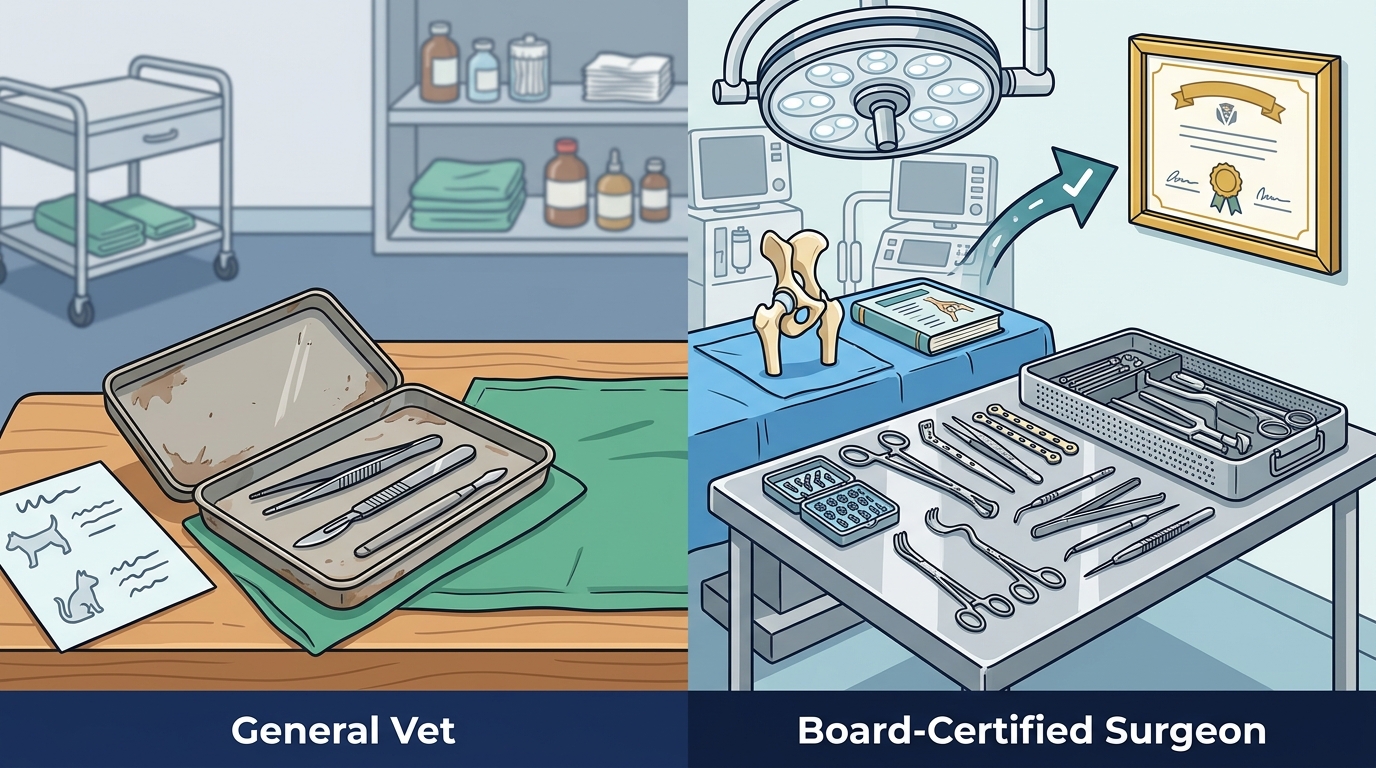
To help you understand the differences, here is a comparison of the key aspects of general veterinary care versus specialty surgical care.
| Feature | General Veterinarian | Board-Certified Surgeon (VSx) |
|---|---|---|
| Training | Veterinary School + Internship | Residency + ACVS Certification |
| Focus | Broad-spectrum wellness and routine surgery | Exclusive focus on complex surgery |
| Orthopedic Expertise | Basic fracture repair | Advanced TPLO, fracture repair, joint replacement |
| Diagnostic Imaging | Digital X-ray | Digital X-ray + Outpatient CT Scans |
| Pain Management | Standard protocols | Expert anesthetic and pain management |
This table highlights the depth of specialization that VSx provides. While general vets are essential for your pet's overall health, the specialized focus of a board-certified surgeon is unmatched for complex surgical needs.
Key Takeaways
- Specialized Training: Board-certified surgeons complete a 3-4 year residency and rigorous ACVS certification, far exceeding general vet training.
- Experience: Every surgeon at VSx has an average experience of 15 years, ensuring high proficiency in complex cases.
- Advanced Technology: We offer outpatient CT scans and state-of-the-art diagnostic tools not typically found in general practices.
- Collaborative Care: We work closely with referring veterinarians to ensure seamless communication and care continuity.
- Surgeon Ownership: VSx is surgeon-owned and led, prioritizing clinical excellence over commercial metrics.
- Locations: We serve communities in Chicago, Indianapolis, and Nashville with dedicated surgical centers.
- Outcomes: Specialized care leads to better functional outcomes for orthopedic and soft tissue surgeries.
Frequently Asked Questions
When should I refer my pet to a board-certified surgeon?
You should refer your pet when they have a complex orthopedic injury, a soft tissue mass requiring specialized removal, or a neurologic condition. Your general vet will likely make this referral if they determine the case is beyond the scope of routine practice.
What is the difference between a DACVS and a general vet?
A DACVS (Diplomate of the American College of Veterinary Surgeons) has completed extensive post-graduate residency training and passed rigorous board exams. A general vet has a veterinary degree but has not completed this specialized surgical residency.
Does VSx accept referrals from out-of-state?
While we primarily serve Chicago, Indianapolis, and Nashville, we can discuss specific cases. Our team is dedicated to providing exceptional value and care to pet owners in our regions.
What types of surgeries do you perform?
We specialize in orthopedic surgery, soft tissue surgery, and oncological surgery. This includes TPLO, fracture repair, tumor removal, and reconstructive procedures.
How do I book an appointment?
You can book an appointment through our website or by contacting our Chicago or Indianapolis locations directly. Referrals from veterinarians are also welcome.
Is anesthesia safe for older pets?
Our team provides expert anesthetic and pain management tailored to each patient's needs. We monitor vital signs closely throughout the procedure to ensure safety.
What is the recovery time for a TPLO?
Recovery varies by individual, but most pets show significant improvement within weeks. We provide detailed post-operative care instructions to ensure the best outcome.
Contact VSx for Specialized Care
If your pet is facing a complex surgical challenge, do not settle for less than the best. VSx is committed to expanding access to board-certified veterinary surgeons and delivering the highest standard of surgical care. Whether you are in Chicago or Indianapolis, our team is ready to provide the specialized attention your pet deserves.
Contact our Chicago or Indianapolis locations today to schedule a consultation or discuss a referral. We look forward to being your trusted surgery partner.