
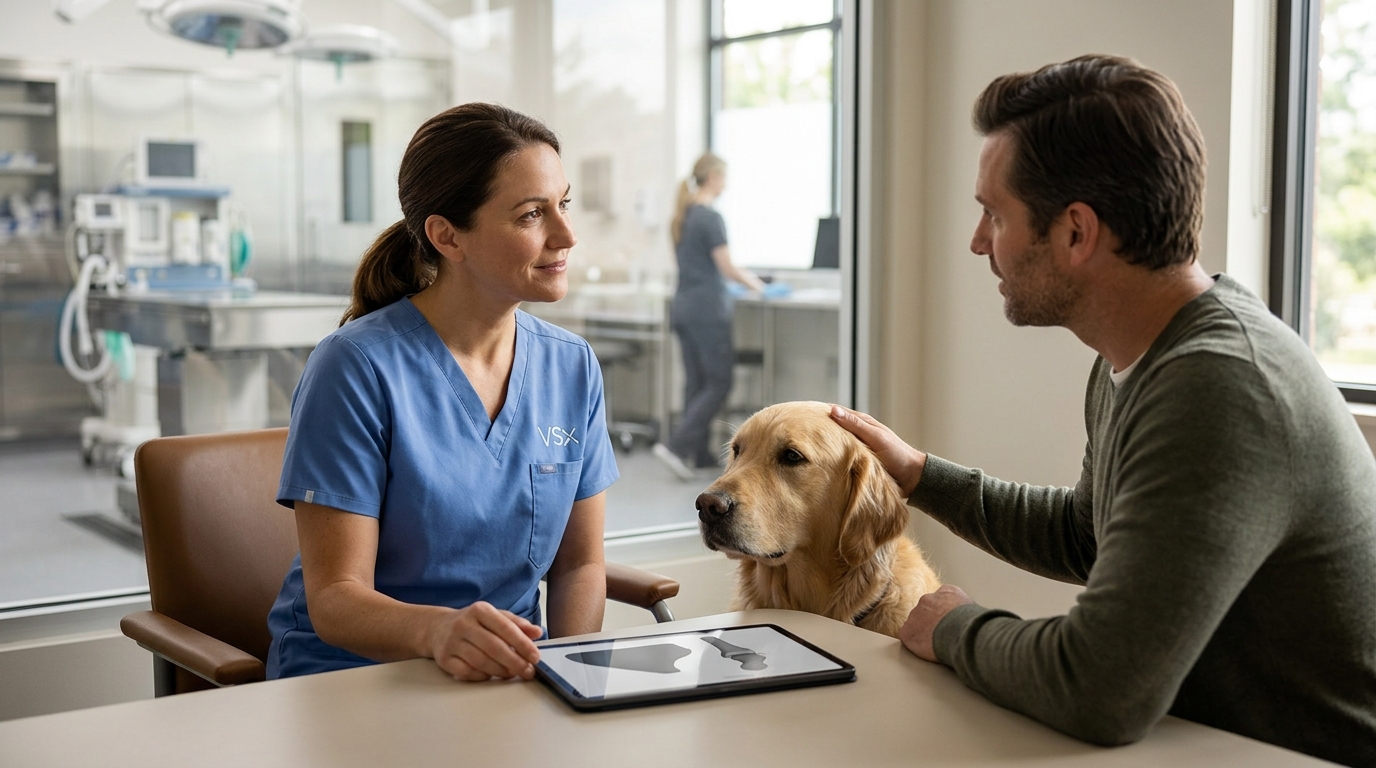
Choosing the right surgical care for your pet is one of the most critical decisions a pet owner can make. While many general practitioners are skilled at routine procedures, complex cases require a different level of expertise. According to the American College of Veterinary Surgeons, board-certified surgeons undergo years of specialized residency training that goes far beyond veterinary school. This distinction matters immensely when your pet faces orthopedic injuries, soft tissue masses, or oncological challenges. Understanding the gap between general practice and specialty surgery ensures your animal receives the highest standard of care. (Board Certified Veterinary Surgery)
Understanding the Difference in Training
The primary distinction between a general veterinarian and a board-certified surgeon lies in the depth and duration of their surgical education. A board-certified veterinary surgeon is a veterinarian who has completed an internship and a rigorous three to four year surgical residency. This extensive training involves thousands of hours working alongside experienced mentors in complex cases. (FAQs mdash VSx Veterinary)
In contrast, general veterinarians receive foundational surgical training during veterinary school. They are fully qualified to perform routine procedures such as spays, neuters, and simple mass removals. However, the practice of mentoring veterinarians in advanced surgical techniques is increasingly limited due to high appointment loads and the rise of low-cost spay and neuter clinics. This shift has created a greater need for specialized referral centers. (VSx Veterinary Surgery)
Only after completing their residency and passing a rigorous certification exam can a veterinarian become a Diplomate of the American College of Veterinary Surgeons (ACVS). This title signifies that the surgeon has met the highest national standards for surgical competence. At VSx, every surgeon holds this board certification, ensuring that your pet is treated by a true specialist. (Board Certified Veterinary Surgeons)
Scope of Practice and Complexity
General practitioners excel at maintaining overall pet health through vaccinations, dental cleanings, and routine checkups. When surgery is required, they often handle straightforward cases with excellent outcomes. However, complex conditions often exceed the scope of general practice. These conditions include:
- Orthopedic Surgery: Procedures like TPLO (Tibial Plateau Leveling Osteotomy) for cruciate ligament tears or advanced fracture repairs require precise bone alignment and specialized hardware.
- Soft Tissue Surgery: Complex tumor removals, reconstructive surgeries, and gastrointestinal interventions demand advanced tissue handling skills.
- Oncological Surgery: Cancer management often requires wide margins and specialized techniques to ensure complete removal while preserving function.
- Neurological Surgery: Spinal cord decompression and other neurological interventions carry high risks and require specialized diagnostic imaging.
Board-certified surgeons devote their entire careers to these complex procedures. They perform surgery every single day, maintaining a high level of proficiency that general practitioners may not have the volume to sustain. This daily focus translates to faster recovery times and better functional outcomes for pets.
Diagnostic Advantages of Specialty Centers
Accurate diagnosis is the cornerstone of successful surgery. Specialty centers like VSx are equipped with state-of-the-art diagnostic tools that are not always available in general practices. These tools allow surgeons to visualize complex anatomy with precision before making a single incision.
One of the most significant advantages is access to outpatient CT scans. Computed Tomography provides detailed three-dimensional images of bones, soft tissues, and blood vessels. This technology allows surgeons to plan complex orthopedic and oncological procedures with unprecedented accuracy. It also helps in identifying the extent of disease spread, which is crucial for staging cancer.
Additionally, specialty centers offer comprehensive digital X-ray services. These high-resolution images provide immediate feedback during diagnostic evaluations. The combination of advanced imaging and surgical expertise ensures that the treatment plan is tailored specifically to the patient's unique anatomy and condition.
Anesthesia and Pain Management Protocols
Surgical safety relies heavily on expert anesthetic management. Board-certified surgeons work with dedicated teams of veterinary technicians and anesthesiologists who specialize in monitoring patients during complex procedures. This specialized focus allows for tighter control over vital signs and physiological parameters.
Pain management is another critical area where specialty care differs. Advanced surgical techniques often result in less tissue trauma and postoperative pain. Furthermore, board-certified surgeons utilize multimodal pain management protocols that combine different classes of medications to ensure comfort. This approach not only improves the patient's immediate experience but also supports faster rehabilitation.
At VSx, the commitment to exceptional outcomes includes rigorous monitoring of anesthetic depth and pain levels. This attention to detail minimizes complications and ensures that pets recover with minimal distress. The collaborative care model also means that general practitioners are kept in the loop, ensuring continuity of care from diagnosis through recovery.

Cost, Value, and Referral Process
One common concern for pet owners is the cost of specialty surgery. While the upfront cost of seeing a board-certified surgeon may be higher than a general practitioner, the value proposition often favors specialty care for complex cases. This is due to several factors:
- Reduced Complications: Expertise reduces the risk of surgical errors, which can lead to costly revisions or prolonged hospitalization.
- Faster Recovery: Advanced techniques and pain management often lead to quicker returns to normal activity.
- Accurate Diagnosis: Avoiding unnecessary or incorrect treatments saves time and money in the long run.
The referral process is designed to be seamless. Your general veterinarian will evaluate your pet and determine if a referral is necessary. If so, they will communicate directly with the specialty center to share medical records and discuss the case. This collaboration ensures that the surgeon has all the information needed to provide the best care.
VSx offers transparent pricing and flexible scheduling to accommodate urgent needs. With locations in Chicago, Indianapolis, and Nashville, access to board-certified veterinary surgeons is more convenient than ever. Each location is led by experienced surgeons who are committed to expanding access to high-quality specialty care.
Key Takeaways
- Board-certified surgeons complete a 3-4 year residency after veterinary school, totaling thousands of hours of specialized training.
- General veterinarians are skilled in routine procedures but may refer complex orthopedic, soft tissue, or oncological cases to specialists.
- Specialty centers like VSx offer advanced diagnostic tools, including outpatient CT scans, which are critical for precise surgical planning.
- VSx Chicago, located in North Center, opened in 2024 and is led by Dr. Marc Wosar, a surgeon with over 20 years of experience.
- VSx Indianapolis, opened in 2026, serves patients throughout Indiana and is led by Dr. Brian Martin, a board-certified surgeon with 15 years of experience.
- Every surgeon at VSx is board-certified with an average of 15 years of experience, ensuring a high standard of surgical care.
- Collaborative care between general practitioners and specialists ensures continuity and comprehensive support for pet owners.
Frequently Asked Questions
What is the difference between a general vet and a board-certified surgeon?
A general veterinarian provides comprehensive primary care and performs routine surgeries. A board-certified surgeon has completed additional years of specialized residency training and certification through the ACVS, focusing exclusively on complex surgical procedures.
When should I refer my pet to a specialist?
You should consider referral for complex orthopedic injuries, soft tissue masses, cancer, or neurological issues. Your general vet will likely recommend a referral if the case requires advanced diagnostics or specialized surgical techniques.
Does VSx accept referrals from any veterinarian?
Yes, VSx welcomes referrals from all general practitioners, emergency clinics, and other specialists. We collaborate closely with referring veterinarians to ensure seamless care for your pet.
What services does VSx offer?
VSx offers orthopedic surgery, soft tissue surgery, oncological surgery, diagnostic imaging, and outpatient CT scans. All services are provided by board-certified surgeons.
How do I book an appointment at VSx?
You can book an appointment online through our website or by contacting our Chicago, Indianapolis, or Nashville locations directly. Our team will guide you through the referral process.
Are your surgeons board-certified?
Yes, every surgeon at VSx is board-certified by the American College of Veterinary Surgeons (ACVS) or holds equivalent high-level certification. This ensures the highest standard of surgical expertise.
What is the cost of specialty surgery?
Costs vary based on the procedure and complexity. However, the value of specialized care often outweighs the initial cost due to better outcomes and reduced risk of complications. We provide transparent pricing during the consultation.
Schedule Your Consultation Today
Do not wait to get the specialized care your pet deserves. Whether you are in Chicago, Indianapolis, or Nashville, VSx is ready to provide expert surgical solutions. Contact us today to discuss your pet's needs and schedule a consultation with one of our board-certified surgeons. Visit vsxvet.com to learn more about our services and locations.