

Choosing the right surgical care for your pet is one of the most stressful decisions a pet owner faces. According to recent industry data, approximately 30% of pets require some form of surgical intervention during their lifetime, yet many owners delay or misdirect care due to confusion about referral pathways. This delay can significantly impact recovery times and long-term health outcomes. Understanding the distinct roles of general practitioners and board-certified surgeons is essential for ensuring your animal receives the highest standard of medical attention. (Board Certified Veterinary Surgery)
Mistake 1: Assuming General Practitioners Handle Complex Cases
Many pet owners believe that their trusted general veterinarian can manage all surgical needs, from routine spays and neuters to complex orthopedic repairs. While general practitioners are skilled in common procedures, they are not equipped for advanced surgical interventions. Complex cases require specialized training that goes far beyond standard veterinary school curricula.
General vets often operate in high-volume environments where time is limited. They may lack the specific tools or the dedicated surgical team required for delicate procedures. When a case exceeds their scope, they must refer you to a specialist anyway. This back-and-forth delays critical treatment. By recognizing the limits of general practice early, you avoid unnecessary waiting periods and ensure your pet gets expert care immediately.
Overlooking the Value of Board Certification
Not all surgeons are created equal. A common error is accepting any surgeon without verifying their credentials. Board certification is a rigorous process that distinguishes true specialists from generalists who perform surgery. Board-certified veterinary surgeons have completed an internship and a three to four year surgical residency.
This path requires thousands of hours working alongside experienced mentors and passing a rigorous certification exam through the American College of Veterinary Surgeons (ACVS). Only those who achieve this status are called Diplomates of the ACVS. At VSx, every surgeon is board-certified with an average experience of 15 years. This level of expertise ensures that your pet is in the hands of someone who performs these specific procedures daily, not occasionally.
Ignoring the Importance of Specialized Diagnostic Imaging
Accurate diagnosis is the foundation of successful surgery. A frequent mistake is choosing a facility that lacks advanced diagnostic capabilities. General clinics typically rely on standard digital X-rays. While useful, X-rays often fail to reveal the full complexity of soft tissue injuries, spinal issues, or tumor margins.
Specialized centers like VSx offer outpatient CT scans and comprehensive imaging services. Outpatient CT scans allow for quick, accurate diagnoses for complex cases without the need for hospitalization. This technology provides a three-dimensional view of the problem, allowing surgeons to plan precise incisions and predict outcomes with greater confidence. Without this data, surgeons are essentially operating blind, which increases the risk of complications.
Delaying Referrals for Orthopedic Issues
Orthopedic conditions, such as cruciate ligament tears or hip dysplasia, are common in dogs. Owners often try physical therapy or pain management for weeks before seeking surgical help. This delay can lead to muscle atrophy, joint instability, and secondary arthritis. Early intervention is critical for orthopedic recovery and long-term mobility.
Orthopedic surgery requires specialized techniques, such as TPLO (Tibial Plateau Leveling Osteotomy) or advanced fracture repairs. These procedures demand precision that general practitioners may not possess. By referring to a specialist early, you give your pet the best chance at restoring full function. VSx Chicago and VSx Indianapolis specialize in these high-precision orthopedic procedures, ensuring optimal structural outcomes.
Failing to Verify Surgeon Experience and Volume
Experience matters in surgery. A common mistake is choosing a facility based on proximity or cost alone, without considering the surgeon's volume of specific procedures. High-volume surgeons refine their techniques through repetition. They develop a deeper understanding of anatomical variations and potential complications.
VSx is surgeon-owned and led, founded on the principle that quality depends on independent ownership. This model attracts top-tier talent. Our surgeons, such as Dr. Marc Wosar in Chicago and Dr. Brian Martin in Indianapolis, bring decades of combined experience. They are not just surgeons; they are partners in your pet's long-term health. Verifying this experience before booking ensures you are not gambling with your pet's mobility or life.
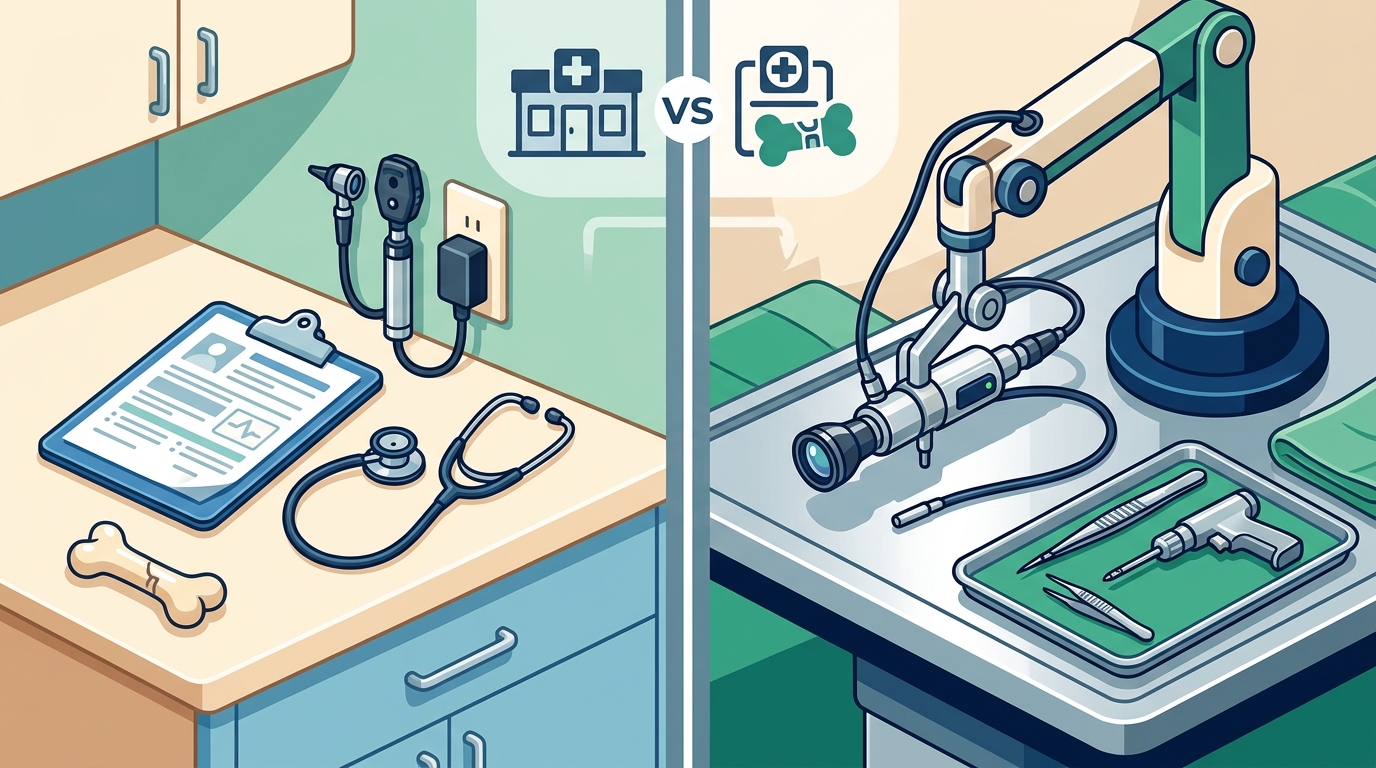
Comparison: General Practice vs. Surgical Specialty
| Feature | General Veterinarian | Board-Certified Surgical Specialist |
|---|---|---|
| Training | Veterinary School + Standard Internship | 3-4 Year Surgical Residency + ACVS Certification |
| Focus | General Health, Preventive Care, Common Surgeries | Complex Orthopedic, Soft Tissue, and Oncological Cases |
| Diagnostic Tools | Digital X-Ray, Basic Ultrasound | Outpatient CT Scans, Advanced Imaging, MRI |
| Experience Level | Varies, often lower volume of complex cases | Average 15+ years, high volume of specific procedures |
| Patient Volume | High, limited time per patient | Controlled, allowing for detailed communication |
Key Takeaways
- Board Certification is Non-Negotiable: Look for the DACVS-SA credential, indicating Diplomate status from the American College of Veterinary Surgeons.
- Experience Counts: VSx surgeons have an average of 15 years of experience, ensuring high proficiency in complex cases.
- Advanced Imaging Saves Lives: Outpatient CT scans provide critical data that standard X-rays miss, leading to better surgical planning.
- Specialized Facilities Matter: Surgery-only centers like VSx focus entirely on surgical excellence, unlike general clinics with mixed priorities.
- Early Referral is Key: Delaying care for orthopedic or oncological issues can reduce recovery options and quality of life.
- Surgeon Ownership Model: VSx is surgeon-owned, aligning incentives with patient outcomes rather than volume.
- Communication is Vital: Specialists provide detailed explanations and treatment plans, ensuring you are fully informed.
Frequently Asked Questions
What is the difference between a general vet and a surgical specialist?
A general veterinarian provides comprehensive care for routine health needs and common procedures. A surgical specialist has completed additional residency training and board certification to handle complex, high-risk surgeries that generalists cannot perform.
When should I refer my pet to a veterinary surgeon?
You should refer your pet when they have a complex orthopedic injury, a suspected tumor, a spinal issue, or any condition requiring advanced imaging or specialized surgical techniques. Your general vet can help identify when a referral is necessary.
What does DACVS-SA mean?
DACVS-SA stands for Diplomate of the American College of Veterinary Surgeons, Small Animal. It is the highest level of certification for veterinary surgeons specializing in small animals.
Does VSx offer outpatient CT scans?
Yes, VSx offers advanced outpatient CT scanning technology. This allows for accurate diagnosis of complex cases without the need for hospitalization, speeding up the treatment process.
How do I know if my pet needs orthopedic surgery?
If your pet is limping, has difficulty rising, or shows signs of pain after an injury, consult your vet immediately. Early diagnosis by a specialist can prevent further joint damage and improve surgical outcomes.
Are board-certified surgeons more expensive?
Specialized care often costs more than general practice due to the advanced training and technology involved. However, the precision and reduced risk of complications often lead to better long-term value and fewer repeat procedures.
What services does VSx Chicago offer?
VSx Chicago offers board-certified orthopedic surgery, soft tissue surgery, oncological surgery, and diagnostic imaging including CT scans. Located in North Center, it serves the greater Chicago area.
Schedule Your Consultation
Do not wait for your pet's condition to worsen. Trust the experts who dedicate their careers to surgical excellence. Whether you are in Chicago, Indianapolis, or Nashville, VSx is ready to provide the highest standard of care. Contact VSx Veterinary Surgery today to schedule a consultation with a board-certified surgeon. Your pet deserves the best chance at a healthy, active life.