
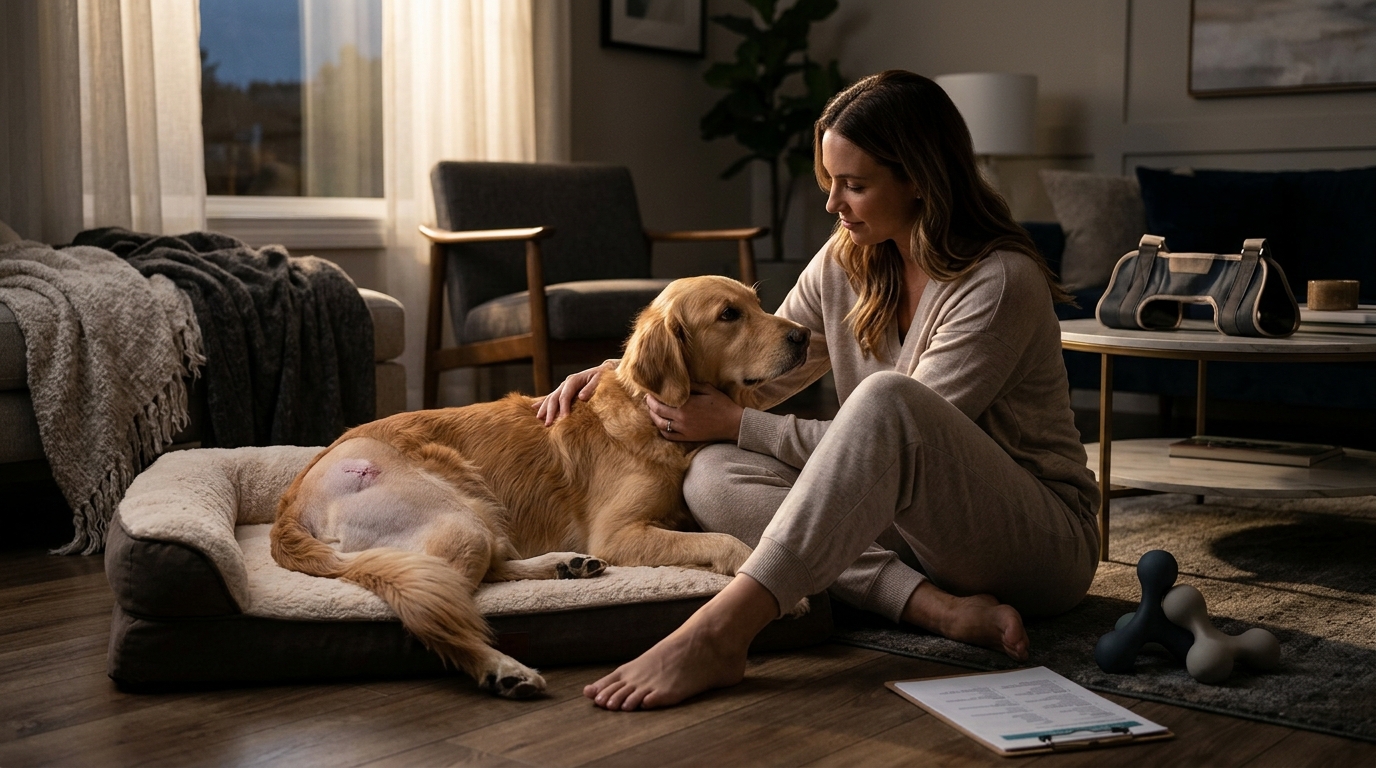
Cruciate ligament injuries are among the most prevalent orthopedic emergencies in veterinary medicine, affecting millions of dogs annually. According to recent veterinary orthopedic data, the Tibial Plateau Leveling Osteotomy (TPLO) procedure has become the gold standard for stabilizing the stifle joint in medium to large breeds. However, the success of this complex surgery relies heavily on precise surgical technique and rigorous post-operative management. Even minor deviations in surgical planning or home care can lead to complications that compromise your dog's mobility and long-term joint health. Understanding these potential pitfalls is the first step in ensuring a successful recovery for your pet.
Understanding TPLO and Its Critical Role
Before diving into potential mistakes, it is essential to define the procedure. TPLO is a surgical procedure that involves cutting the tibia and rotating it to neutralize the shear forces that cause cranial tibial translation. Unlike traditional knee braces or other stabilization methods, TPLO addresses the root mechanical cause of cruciate ligament failure. This procedure is particularly effective for dogs with cranial cruciate ligament (CCL) rupture, a condition that causes pain, instability, and eventual arthritis if left untreated.
The goal of TPLO is to create a stable knee joint without relying on the damaged ligament. By altering the angle of the tibial plateau, the surgeon eliminates the forward sliding motion that occurs when the dog puts weight on the leg. This allows the joint to heal in a stable environment, significantly reducing the risk of further damage. However, the complexity of this procedure means that precision is non-negotiable. Any deviation from the ideal surgical protocol can lead to suboptimal outcomes.
Common Surgical Planning Errors
The success of a TPLO begins long before the first incision. Surgical planning errors are among the most critical mistakes that can occur, often leading to poor long-term function. These errors are typically rooted in inaccurate measurements or inappropriate patient selection.
Inaccurate Tibial Plateau Angle Measurement
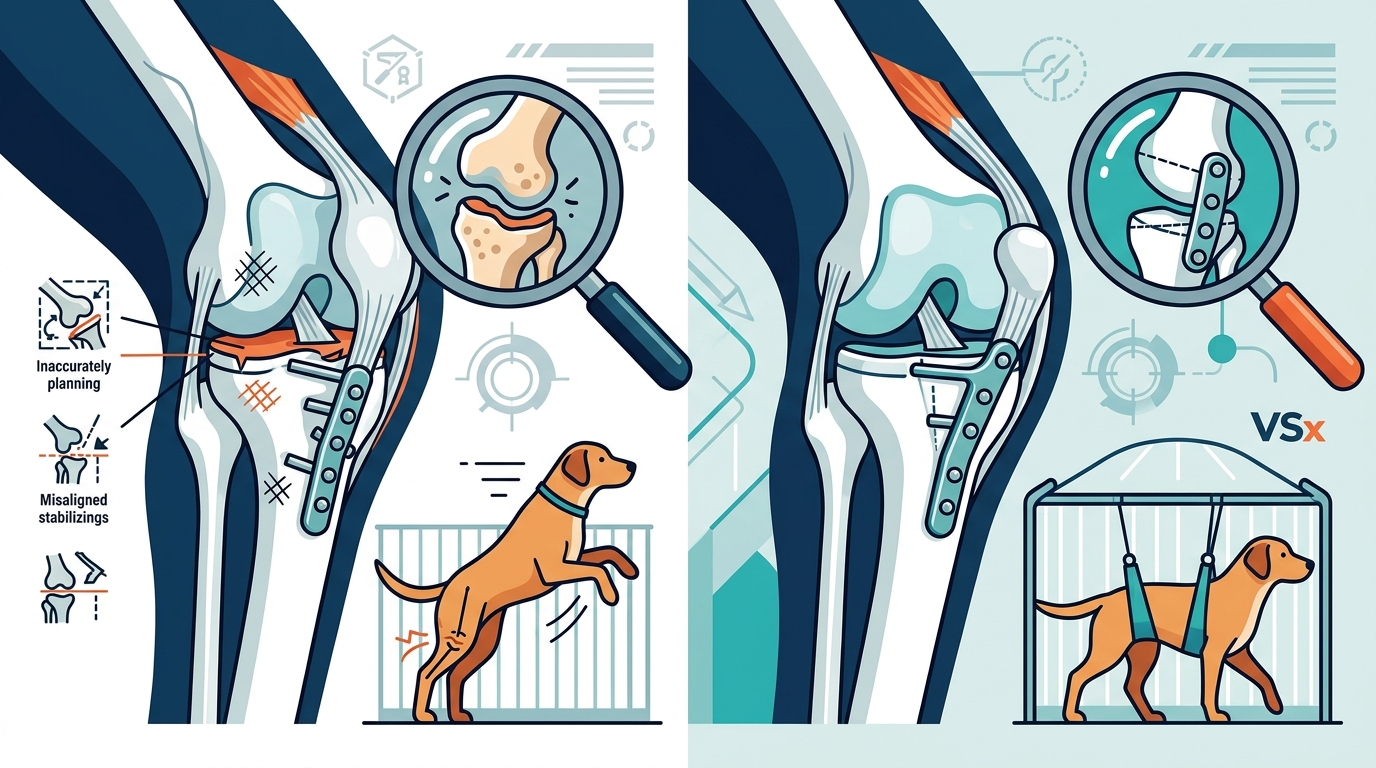
One of the most frequent technical errors is the miscalculation of the tibial plateau angle (TPA). The TPA determines the degree of rotation required for the osteotomy. If the angle is measured incorrectly, the surgeon may rotate the bone too much or too little. Over-rotation can lead to excessive tension on the surrounding soft tissues, while under-rotation may fail to fully stabilize the joint. This precision requires advanced diagnostic imaging and experienced hands. At VSx Veterinary Surgery, we utilize state-of-the-art diagnostic imaging to ensure every measurement is exact before proceeding with the osteotomy.
Improper Implant Selection and Placement
The choice of implant, typically a bone plate and screws, is crucial for maintaining stability during the healing process. Using an implant that is too small for the dog's bone density can lead to hardware failure. Conversely, an implant that is too large may cause unnecessary soft tissue irritation. Furthermore, improper placement of the plate can compromise the blood supply to the bone, delaying healing. Our board-certified surgeons carefully select implants based on the dog's weight, bone quality, and specific anatomical needs to ensure optimal fixation.
Failure to Address Concurrent Pathologies
Dogs with cruciate ligament injuries often have concurrent meniscal tears or other soft tissue abnormalities. A common mistake is focusing solely on the tibial plateau while ignoring these associated injuries. If a torn meniscus is not addressed during the TPLO, it can cause persistent pain and lameness even after the bone has healed. Comprehensive pre-surgical evaluation, including physical manipulation and advanced imaging, is essential to identify and treat all contributing factors to joint instability.
Post-Operative Care Mistakes
Once the surgery is complete, the responsibility shifts to the pet owner. Post-operative care is where many well-meaning owners inadvertently hinder their dog's recovery. The first few weeks are critical for bone healing and soft tissue recovery.
Overexertion and Premature Activity
The most common and dangerous mistake is allowing the dog to be too active too soon. Owners often feel guilty about keeping their pet confined and may allow short bursts of play or off-leash running. This premature activity can disrupt the healing bone, loosen the hardware, or cause swelling that delays recovery. Strict leash walking for short bathroom breaks only is the standard protocol for the first 8 to 12 weeks. Any deviation from this strict confinement can result in catastrophic failure of the surgical repair.
Inadequate Pain Management
Pain is not just uncomfortable; it is detrimental to recovery. Dogs that are in pain often refuse to use the affected leg, leading to muscle atrophy in the unaffected limbs. This imbalance can cause secondary orthopedic issues. Ensuring your dog receives prescribed pain medication on schedule is vital. If your dog appears to be in pain despite medication, contact your veterinary surgeon immediately. Do not attempt to adjust dosages without professional guidance.
Neglecting Incision Site Monitoring
Post-surgical infections are rare but serious complications. Owners must monitor the incision site daily for signs of redness, swelling, discharge, or opening. Early detection of infection allows for prompt treatment with antibiotics, preventing the spread of bacteria to the bone or hardware. At VSx Chicago, we provide detailed post-operative instructions and are available for follow-up consultations to address any concerns during the healing process.
Rehabilitation and Physical Therapy Gaps
Rehabilitation is a cornerstone of TPLO success, yet it is often overlooked or misunderstood. Physical therapy helps restore range of motion, rebuild muscle mass, and improve proprioception (joint position sense).
Skipping Professional Physical Therapy
While home exercises are important, professional physical therapy provides targeted interventions that owners cannot replicate. Techniques such as underwater treadmill therapy, laser therapy, and manual massage can significantly accelerate recovery and reduce scar tissue formation. Dogs that undergo professional rehabilitation often return to full function faster and with better long-term outcomes than those who rely solely on home care.
Inconsistent Home Exercise Regimen
Home exercises, such as balance board work and controlled stretching, must be performed consistently and correctly. Inconsistent practice leads to uneven muscle development and prolonged recovery times. Owners should work closely with their veterinary team to establish a realistic and progressive exercise plan. As your dog heals, the intensity and duration of exercises will gradually increase, but this progression must be guided by professional assessment.
Selecting the Right Board-Certified Surgeon
The expertise of the surgical team is the single most significant factor in avoiding TPLO mistakes. General practitioners may refer complex cases to specialists, but the level of specialization matters immensely.
Experience with Complex Orthopedic Cases
TPLO is a specialized procedure that requires extensive training and experience. Board-certified veterinary surgeons, such as those at VSx, have completed rigorous residency programs and certification processes through the American College of Veterinary Surgeons (ACVS). This specialized training ensures they have the technical skills and decision-making capabilities to handle complex cases and unexpected intraoperative findings.
Access to Advanced Diagnostic Technology
Accurate diagnosis and surgical planning rely on advanced imaging technology. Facilities equipped with digital X-ray and outpatient CT scans can provide detailed 3D models of the joint, allowing for precise pre-surgical planning. This technology enables surgeons to visualize the anatomy in three dimensions, reducing the risk of measurement errors and improving the overall accuracy of the procedure.
Collaborative Care Model
Effective TPLO outcomes depend on seamless collaboration between the surgeon, the referring veterinarian, and the physical therapist. A collaborative care model ensures that all aspects of the dog's health are addressed, from pre-surgical diagnostics to post-operative rehabilitation. VSx locations in Chicago, Indianapolis, and Nashville are designed to facilitate this collaborative approach, providing comprehensive support for both pets and their owners.
Key Takeaways
- TPLO is a specialized orthopedic procedure that neutralizes shear forces to stabilize the stifle joint, requiring precise surgical execution.
- Accurate tibial plateau angle measurement is critical to avoid over- or under-rotation, which can compromise joint stability.
- Strict confinement and leash walking are mandatory for the first 8-12 weeks to prevent hardware failure and ensure bone healing.
- Professional physical therapy significantly improves long-term outcomes by restoring muscle mass and joint function.
- Board-certified surgeons possess specialized training and experience that general practitioners typically lack for complex cases.
- Advanced diagnostic imaging, including CT scans, allows for precise pre-surgical planning and reduces technical errors.
- Collaborative care between surgeons, referring vets, and therapists ensures comprehensive management of the patient's recovery.
Frequently Asked Questions
How long does it take for a dog to recover from TPLO surgery?
Full recovery from TPLO surgery typically takes 8 to 12 weeks for bone healing, but complete functional recovery can take up to 6 months. Strict adherence to post-operative restrictions is essential during this period to ensure proper healing.
What is the success rate of TPLO surgery in dogs?
TPLO has a high success rate, with most dogs returning to full function and activity levels. Studies indicate that over 90% of dogs achieve excellent to good outcomes when the procedure is performed by an experienced surgeon and followed by proper rehabilitation.
Can a general veterinarian perform TPLO surgery?
While some general practitioners may be trained in TPLO, board-certified veterinary surgeons have specialized residency training and extensive experience with complex orthopedic cases. For optimal outcomes, especially in large or active breeds, consulting a specialist is recommended.
What are the signs of complications after TPLO surgery?
Signs of complications include persistent lameness, swelling, heat at the incision site, discharge, or signs of pain such as whining or reluctance to move. If you notice any of these symptoms, contact your veterinary surgeon immediately.
Is physical therapy necessary after TPLO?
Yes, physical therapy is highly recommended. It helps restore range of motion, rebuild muscle mass, and improve proprioception. Dogs that undergo professional rehabilitation often have faster and more complete recoveries than those who do not.
How much does TPLO surgery cost?
The cost of TPLO surgery varies based on location, the complexity of the case, and the specific services required. It typically includes pre-surgical diagnostics, the surgery itself, anesthesia, hospitalization, and follow-up care. Contact VSx Veterinary Surgery for a detailed estimate tailored to your pet's needs.
What is the difference between TPLO and TTA?
Both TPLO (Tibial Plateau Leveling Osteotomy) and TTA (Tibial Tuberosity Advancement) are surgical options for cruciate ligament injuries. TPLO involves rotating the tibial plateau, while TTA involves advancing the tibial tuberosity. The choice between the two depends on the dog's anatomy, the surgeon's expertise, and specific clinical factors.
Secure Your Dog's Future Mobility Today
TPLO surgery is a life-changing procedure for dogs with cruciate ligament injuries, but its success depends on expert surgical care and diligent post-operative management. By avoiding common mistakes and choosing a trusted partner in specialty veterinary surgery, you can ensure the best possible outcome for your pet. Our board-certified surgeons at VSx Veterinary Surgery are dedicated to providing the highest standard of care, from initial consultation to final recovery. Schedule a consultation with our team today to discuss your dog's orthopedic needs and take the first step toward a pain-free future.