
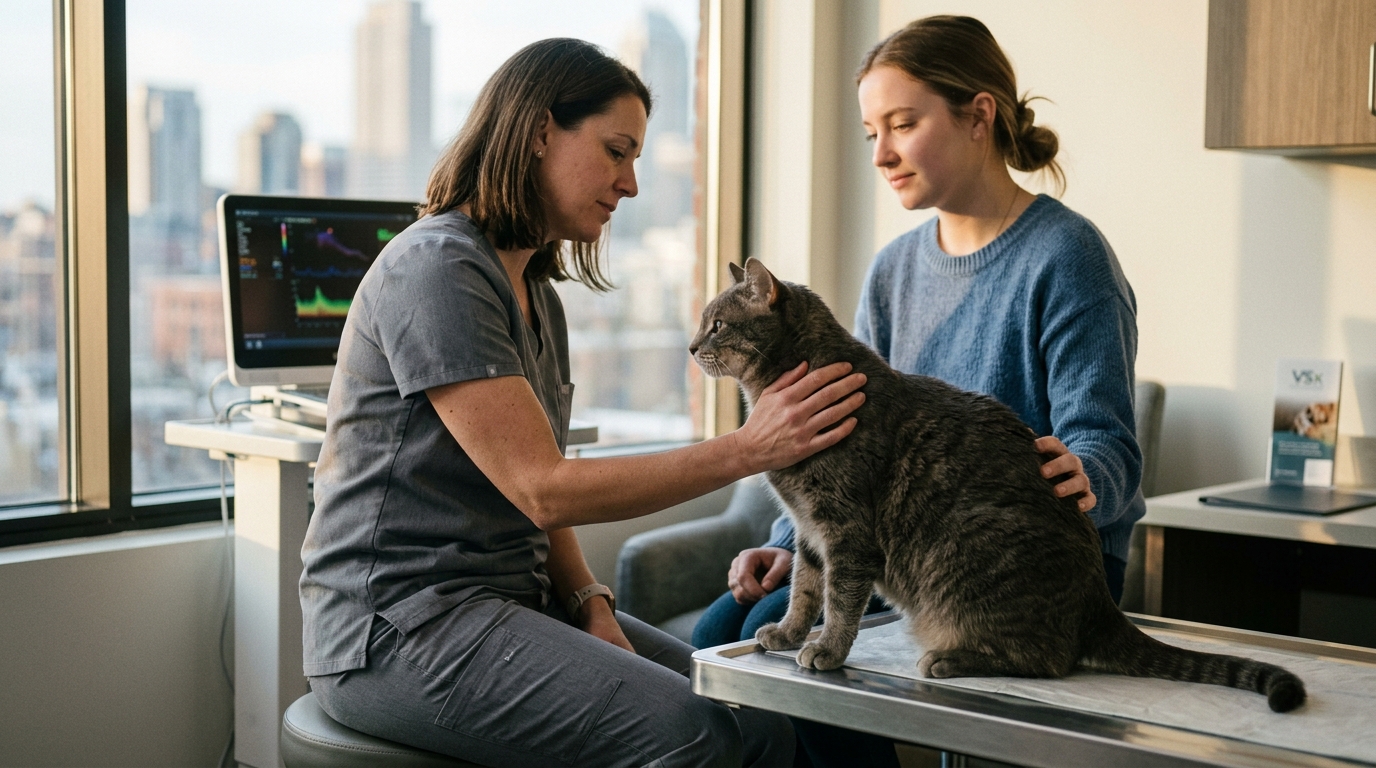
Recurring urinary blockages in cats represent a critical medical emergency that demands immediate and informed decision-making from pet owners. According to recent veterinary data, approximately 1% to 3% of all male cats will experience a urinary blockage at some point in their lives, with a significant portion of those cases becoming recurrent. When a cat faces this life-threatening condition, the choice between long-term medical management and surgical intervention is not merely a clinical preference but a vital determinant of the animal's quality of life and longevity. Understanding the nuances of each approach allows referring veterinarians and pet owners to align treatment with the specific physiological and behavioral needs of the patient. (Board Certified Veterinary Surgery)
Understanding Feline Lower Urinary Tract Disease
Feline Lower Urinary Tract Disease (FLUTD) is a complex syndrome that encompasses a variety of conditions affecting the bladder and urethra. The most common form is Feline Idiopathic Cystitis (FIC), which is characterized by inflammation of the bladder wall without an identifiable cause such as infection or stones. This condition is often exacerbated by stress, environmental changes, or dietary factors. When the bladder becomes inflamed, the urethra can spasm or become obstructed by inflammatory plugs, leading to a complete blockage. This is a medical emergency that can cause kidney failure and death within 24 to 48 hours if untreated. (Board Certified Veterinary Surgery)
For cats that experience recurring episodes, the underlying pathology often involves chronic inflammation or the formation of uroliths (stones). These stones can be composed of struvite or calcium oxalate, each requiring different management protocols. Struvite stones can sometimes be dissolved through dietary modification, while calcium oxalate stones cannot and typically require surgical removal. The decision to pursue medical management or surgery hinges on the specific type of uroliths present, the frequency of blockages, and the cat's overall health status.
Medical Management Strategies
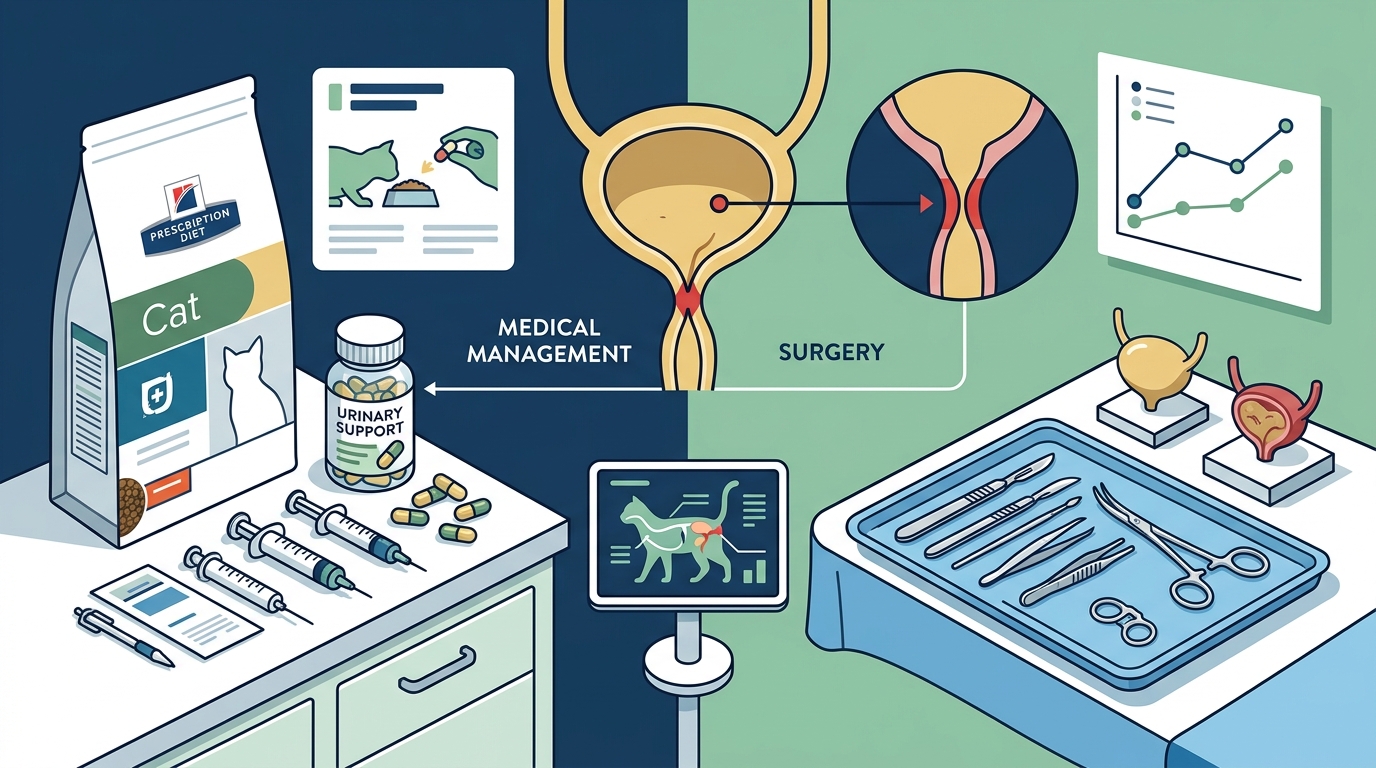
Medical management is often the first line of defense for cats with recurrent urinary issues, particularly when the underlying cause is inflammatory rather than obstructive stones. This approach focuses on preventing stone formation, reducing bladder inflammation, and managing stress. It is a non-invasive strategy that aims to maintain the cat's natural urinary tract anatomy while addressing the root causes of the disease.
Dietary Modifications
Diet plays a pivotal role in the medical management of FLUTD. Prescription urinary diets are formulated to control the pH of the urine, which can help dissolve struvite stones or prevent their formation. These diets are also designed to increase water intake, thereby diluting the urine and reducing the concentration of minerals that contribute to stone formation. For cats with calcium oxalate stones, specific diets are used to prevent further growth, although they cannot dissolve existing stones.
Stress Reduction and Environmental Enrichment
Since stress is a major trigger for Feline Idiopathic Cystitis, environmental management is a critical component of medical care. This includes providing multiple litter boxes, ensuring access to fresh water through fountains, and creating safe, quiet spaces for the cat to retreat. Pheromone diffusers and anxiety-reducing supplements may also be recommended to help calm the cat and reduce the likelihood of stress-induced inflammation.
Pharmacological Interventions
In some cases, veterinarians may prescribe medications to manage symptoms and prevent recurrence. These can include anti-inflammatory drugs to reduce bladder swelling, muscle relaxants to help the urethra relax during urination, and analgesics to manage pain. While these medications do not cure the underlying condition, they can significantly improve the cat's comfort and reduce the frequency of acute episodes.
Surgical Intervention Options
Surgical intervention is typically recommended for cats that have recurrent blockages, large or numerous uroliths, or conditions that do not respond to medical management. The primary surgical option for male cats with recurrent urethral obstructions is a perineal urethrostomy (PU). This procedure involves removing the narrow portion of the urethra and creating a new opening for urine to exit the body, bypassing the area where blockages typically occur.
Perineal Urethrostomy (PU)
A perineal urethrostomy is a specialized procedure that is highly effective in preventing future urethral blockages in male cats. By widening the urethral opening, the surgery allows for easier passage of urine and any small debris that might form. This procedure is often performed by board-certified veterinary surgeons who specialize in orthopedic and soft tissue procedures, ensuring the highest standard of surgical care and outcomes. The recovery period requires careful monitoring to ensure proper healing and prevent complications such as infection or stricture formation.
Bladder Stone Removal
In cases where uroliths are located in the bladder rather than the urethra, surgical removal may be necessary. This can be achieved through a cystotomy, a procedure where the bladder is opened to remove the stones. While this does not prevent future stone formation, it provides immediate relief from obstruction and allows for further analysis of the stone composition to guide long-term management.
Comparing Treatment Outcomes
Choosing between medical management and surgery requires a careful evaluation of the risks and benefits associated with each approach. Both strategies have their place in the treatment of recurrent feline urinary blockages, and the decision should be made on a case-by-case basis.
Recurrence Rates
Medical management can be highly effective in reducing the frequency of blockages, particularly when the underlying cause is inflammatory. However, for cats with a history of recurrent stone formation, medical management alone may not be sufficient to prevent future episodes. Surgical intervention, such as a perineal urethrostomy, significantly reduces the risk of urethral blockages by eliminating the narrow segment of the urethra where obstructions typically occur. Studies indicate that the recurrence rate of urethral blockages after PU is substantially lower compared to medical management alone in cats with recurrent urolithiasis.
Quality of Life Impact
The impact on quality of life is a crucial consideration for both the cat and the owner. Medical management requires ongoing dietary changes, environmental modifications, and potentially daily medications, which can be burdensome for some owners. However, it avoids the risks associated with surgery and anesthesia. On the other hand, surgical intervention offers a more permanent solution for recurrent blockages, potentially reducing the need for constant monitoring and emergency visits. Post-surgical care involves a period of restricted activity and careful monitoring, but most cats recover well and return to normal activity levels within a few weeks.
| Treatment Modality | Primary Goal | Best For | Long-Term Commitment |
|---|---|---|---|
| Medical Management | Prevent stone formation and reduce inflammation | Cats with FIC or small, dissolvable stones | High (Diet, environment, meds) |
| Perineal Urethrostomy | Prevent urethral obstruction | Cats with recurrent urethral blockages | Low (Post-op care only) |
| Cystotomy | Remove bladder stones | Cats with large or numerous bladder stones | Medium (Dietary follow-up) |
Key Takeaways
- Recurring urinary blockages in male cats are a serious condition that requires prompt veterinary attention and a clear treatment plan.
- Medical management focuses on dietary changes, stress reduction, and medication to prevent inflammation and stone formation.
- Surgical options like perineal urethrostomy offer a permanent solution for recurrent urethral blockages by bypassing the narrow urethral segment.
- The choice between medical and surgical treatment depends on the type of uroliths, frequency of blockages, and the cat's overall health.
- Board-certified veterinary surgeons provide specialized expertise in complex soft tissue and orthopedic procedures, ensuring optimal surgical outcomes.
- Environmental enrichment and stress management are critical components of medical management for Feline Idiopathic Cystitis.
- Regular follow-up with a veterinarian is essential to monitor the cat's progress and adjust the treatment plan as needed.
Frequently Asked Questions
What is the difference between Feline Idiopathic Cystitis and urinary stones?
Feline Idiopathic Cystitis (FIC) is inflammation of the bladder without a known cause, often linked to stress. Urinary stones are mineral deposits that form in the bladder or urethra, which can cause obstruction and require different management strategies.
Can urinary stones be dissolved with diet?
Struvite stones can often be dissolved with specific prescription diets, but calcium oxalate stones cannot and typically require surgical removal.
How long is the recovery time after a perineal urethrostomy?
Recovery from a perineal urethrostomy typically takes about two to three weeks, during which the cat needs restricted activity and careful monitoring of the surgical site.
Is surgery always necessary for recurrent blockages?
Surgery is not always necessary, but it is often recommended for cats with frequent blockages or large stones that do not respond to medical management.
What are the risks associated with perineal urethrostomy?
Risks include infection, stricture formation at the surgical site, and in rare cases, incontinence. However, these risks are minimized when the procedure is performed by experienced, board-certified surgeons.
How can I prevent urinary blockages in my cat?
Prevention involves maintaining a healthy weight, encouraging water intake, reducing stress, and following veterinary recommendations for diet and medication.
When should I seek emergency care for my cat?
Seek emergency care immediately if your cat is straining to urinate, producing little to no urine, or showing signs of pain or lethargy, as these are signs of a potential blockage.
Next Steps
If your cat is experiencing recurring urinary issues, it is crucial to consult with a specialist who can provide a comprehensive evaluation and tailored treatment plan. At VSx, our board-certified surgeons are dedicated to providing the highest standard of surgical care and outcomes for pets with complex conditions. We invite you to explore our services and learn more about how we can help your pet. For those in the Chicago area, you can visit our Chicago location or our Indianapolis location for expert care. To schedule an appointment, please contact us directly and take the first step toward your pet's long-term health and well-being.