

Seeking a second opinion for complex veterinary surgery is a critical step in ensuring the best outcome for your pet. According to recent industry data, approximately 30% of pet owners who seek specialist care report higher satisfaction rates when they consult with board-certified surgeons before proceeding with major procedures. This statistic highlights the growing trend toward specialized care in veterinary medicine. The decision to pursue a second opinion involves weighing the immediate financial costs against the long-term health benefits and potential savings from avoiding unnecessary or incorrect treatments. This guide explores the financial and medical implications of consulting with specialists like those at VSx to help you make the most informed choice for your companion.
Understanding the Direct Costs of Second Opinions
The most immediate concern for many pet owners is the financial impact of a second opinion. Unlike human healthcare, veterinary services are typically paid out-of-pocket, making cost transparency vital. A consultation with a board-certified veterinary surgeon involves specialized fees that reflect the advanced training and infrastructure required for complex cases.
At facilities like VSx Services & Pricing, the cost structure is designed to provide exceptional value for patients, pet owners, and referring veterinarians. While the upfront cost of a specialist consultation may appear higher than a general practitioner visit, it often prevents costly errors down the line. For instance, an incorrect initial diagnosis can lead to unnecessary surgeries or prolonged recovery times, which significantly increase total veterinary bills.
When analyzing the cost-benefit ratio, consider the following components:
- Consultation Fees: Initial evaluations by board-certified surgeons often include a thorough review of existing records and imaging.
- Diagnostic Imaging: Advanced imaging, such as outpatient CT scans, provides detailed views that standard X-rays may miss, ensuring accurate treatment planning.
- Surgical Quotes: A second opinion often includes a revised surgical quote that may be more competitive or comprehensive than the first.
By investing in a precise diagnosis early, pet owners can avoid the financial drain of repeated emergency visits or corrective surgeries. The locations and contact information for VSx facilities in Chicago, Indianapolis, and Nashville is readily available to help you plan your visit efficiently.
Medical Benefits of Specialist Consultation
Beyond financial considerations, the medical benefits of a second opinion are profound. Veterinary surgery has evolved significantly, with board-certified surgeons dedicating their careers to mastering complex procedures. This specialization ensures that your pet receives care that is both safe and effective.
One of the primary advantages of consulting a specialist is the access to board-certified veterinary surgeons who have completed rigorous training, including internships and multi-year residencies. These professionals are equipped to handle intricate orthopedic and soft tissue cases that general practitioners may refer out anyway. By seeking a second opinion, you are essentially ensuring that your pet is in the hands of an expert who performs these procedures daily.
Furthermore, specialist centers like VSx focus exclusively on surgery. This focused approach allows for streamlined workflows, reduced stress for the animal, and faster recovery times. The collaborative care model, which involves close communication between the specialist and the referring general practitioner, ensures that your pet’s overall health is monitored throughout the surgical process.
The Role of Advanced Diagnostics
Accurate diagnosis is the cornerstone of successful veterinary surgery. Misdiagnosis can lead to inappropriate treatment plans, which not only harm the pet but also incur unnecessary costs. Advanced diagnostic tools play a crucial role in mitigating these risks.
At VSx, the integration of state-of-the-art diagnostic equipment is a key differentiator. For example, outpatient CT scans allow for quick and accurate diagnoses of complex cases without the need for hospitalization. This technology provides three-dimensional images that are essential for planning orthopedic surgeries, such as TPLO (Tibial Plateau Leveling Osteotomy), and soft tissue procedures.
When you seek a second opinion, you are often gaining access to these advanced technologies that may not be available in a general practice setting. The data shows that precise imaging reduces surgical complications and improves long-term outcomes. This is particularly important for conditions like cruciate ligament tears, where the angle of the tibia must be precisely calculated to restore mobility.
Additionally, comprehensive imaging services, including digital X-rays, ensure that the surgical team has the full picture before making any incisions. This level of detail is critical for oncological surgeries, where the margins of tumor removal must be exact to prevent recurrence.
Evaluating Surgeon Expertise and Experience
The expertise of the surgeon is perhaps the most significant factor in the cost-benefit analysis of a second opinion. Board-certified veterinary surgeons undergo years of specialized training to earn their credentials. This training includes thousands of hours working alongside experienced surgeons and passing rigorous certification exams.
At VSx, every surgeon is board-certified with an average experience of 15 years. This high level of experience translates to greater confidence in handling complex cases. For instance, Dr. Marc Wosar, who leads the Chicago facility, has over 20 years of experience in veterinary surgery. His expertise ensures that patients receive care that is both innovative and reliable.
When evaluating a surgeon, consider the following questions:
- Is the surgeon board-certified by the American College of Veterinary Surgeons (ACVS)?
- How many similar procedures has the surgeon performed?
- Does the surgeon utilize modern techniques and equipment?
- Is there a collaborative relationship with the referring veterinarian?
By choosing a surgeon with extensive experience, you are investing in the best chance for a positive outcome. The board-certified surgeons at VSx are dedicated to delivering the highest standard of surgical care and outcomes. Their commitment to excellence is reflected in the high satisfaction rates of both pet owners and referring veterinarians.
Comparing General Practice vs. Specialty Care
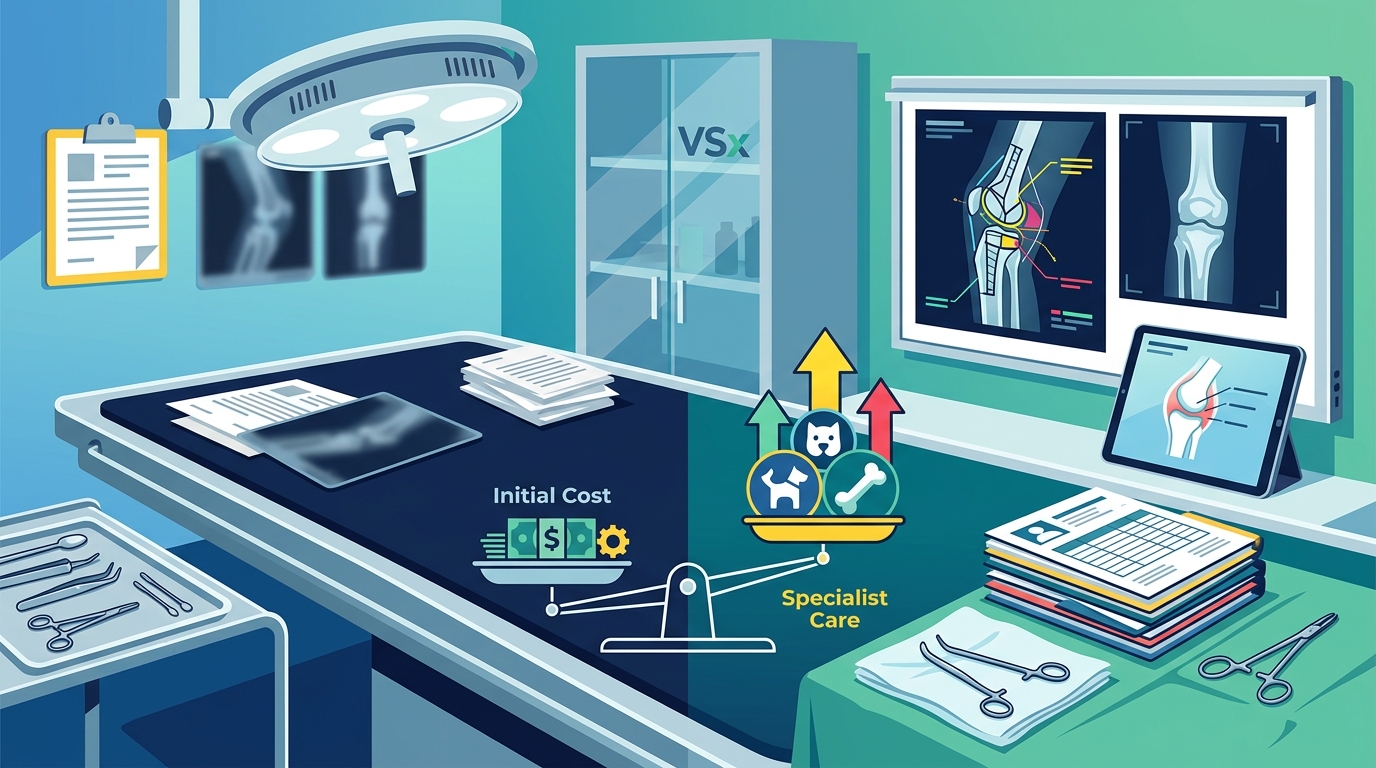
Understanding the differences between general practice and specialty care is essential for making an informed decision. While general practitioners are skilled in routine procedures, they may refer complex cases to specialists for good reason. The comparison below highlights the key distinctions.
| Feature | General Practice | Specialty Care (e.g., VSx) |
|---|---|---|
| Focus | Comprehensive primary care | Exclusive focus on surgery |
| Surgeon Training | Standard veterinary degree | Board-certified with residency |
| Equipment | Standard diagnostic tools | Advanced imaging (CT, digital X-ray) |
| Complex Cases | Often referred out | Specialized management |
| Cost Structure | Lower upfront cost | Higher upfront, potential long-term savings |
This comparison illustrates that while general practice offers accessibility, specialty care provides depth and precision. For complex orthopedic or soft tissue surgeries, the benefits of specialist care often outweigh the initial costs. The our story page at VSx details the mission to be the most trusted partner in specialty veterinary surgery.
Key Takeaways
- Financial Prudence: A second opinion can prevent costly errors by ensuring accurate diagnosis and treatment planning.
- Specialist Expertise: Board-certified surgeons have an average of 15 years of experience, ensuring high-quality care.
- Advanced Technology: Access to outpatient CT scans and digital X-rays improves diagnostic accuracy.
- Collaborative Care: Specialists work closely with referring veterinarians to ensure seamless care continuity.
- Focus on Surgery: Surgery-only centers like VSx offer streamlined workflows and reduced stress for patients.
- Geographic Access: VSx operates in Chicago, Indianapolis, and Nashville, providing regional access to top-tier care.
- Pet Satisfaction: Pet owners report higher satisfaction when consulting specialists for complex procedures.
Frequently Asked Questions
Is a second opinion necessary for all veterinary surgeries?
While not always necessary for routine procedures, a second opinion is highly recommended for complex orthopedic, soft tissue, or oncological surgeries. It ensures that you are aware of all treatment options and the expertise of the surgeon.
How much does a second opinion cost at VSx?
The cost varies based on the complexity of the case and the diagnostic tests required. VSx provides transparent pricing and exceptional value for patients, pet owners, and referring veterinarians. You can view more details on the services and pricing page.
What is the difference between a general veterinarian and a board-certified surgeon?
A board-certified surgeon has completed additional years of specialized training, including a residency and rigorous certification through the American College of Veterinary Surgeons (ACVS). This expertise is crucial for complex cases.
Does VSx accept referrals from general practitioners?
Yes, VSx collaborates closely with referring general practice, emergency, and other specialist veterinarians. This collaborative care model ensures that your pet receives comprehensive support throughout their surgical journey.
What types of surgeries does VSx perform?
VSx specializes in orthopedic surgery, soft tissue surgery, and oncological surgery. They also offer diagnostic imaging services, including outpatient CT scans, to support accurate diagnosis and treatment planning.
How do I schedule a consultation?
You can schedule a consultation by contacting the VSx location nearest to you. The locations and contact page provides phone numbers and addresses for Chicago, Indianapolis, and Nashville.
Are the surgeons at VSx board-certified?
Yes, every surgeon at VSx is board-certified with an average experience of 15 years. This ensures that your pet is in the hands of highly qualified professionals.
What should I bring to a second opinion appointment?
Bring all relevant medical records, including previous imaging, lab results, and notes from your general veterinarian. This information helps the specialist make an informed assessment.
Take the Next Step for Your Pet’s Health
Investing in a second opinion is an investment in your pet’s future. By consulting with board-certified surgeons at VSx, you gain access to advanced diagnostics, expert care, and a collaborative approach that prioritizes your pet’s well-being. Whether you are in Chicago, Indianapolis, or Nashville, VSx is ready to provide the specialized care your pet deserves.
Do not wait until it is too late. Contact VSx today to schedule a consultation and discover the difference that expert veterinary surgery can make. Visit vsxvet.com to learn more about our services and locations.