

Veterinary Surgery Costs vs. Quality: Why Board-Certified Care Matters
When your pet requires surgery, the financial implications can be as stressful as the medical procedure itself. Recent industry data indicates that specialty veterinary care costs have risen by approximately 15% over the last five years, driven by advancements in diagnostic technology and specialized staffing. Understanding the true cost of veterinary surgery requires looking beyond the initial price tag to evaluate the long-term health outcomes and the expertise of the surgical team. This guide breaks down the financial realities of pet surgery, comparing general practice options against specialized board-certified care to help you make the best decision for your companion. (Board Certified Veterinary Surgery)
Understanding the Factors Behind Veterinary Surgery Costs
The cost of veterinary surgery is not a flat rate. It is a composite of several variable components that reflect the complexity of the procedure and the resources required. At specialized centers like VSx, pricing is structured to account for the high level of technical precision and the extensive pre-operative workup necessary for safe outcomes.
Key cost drivers include the type of anesthesia used, the duration of the surgery, and the specific equipment required. For instance, orthopedic procedures often involve specialized implants and longer operating times, which naturally increase the base cost. Additionally, the geographic location of the facility plays a role, with urban centers like Chicago and Indianapolis maintaining higher operational overheads that are reflected in service fees.
It is also important to consider the post-operative care requirements. Pets undergoing complex surgeries may require extended monitoring, pain management protocols, and follow-up imaging. These elements are critical for recovery but are often overlooked when comparing initial quotes. A transparent pricing model, such as those provided by VSx Services & Pricing, ensures that pet owners understand every component of the bill before consent is given.
General Practice vs. Board-Certified Surgeons
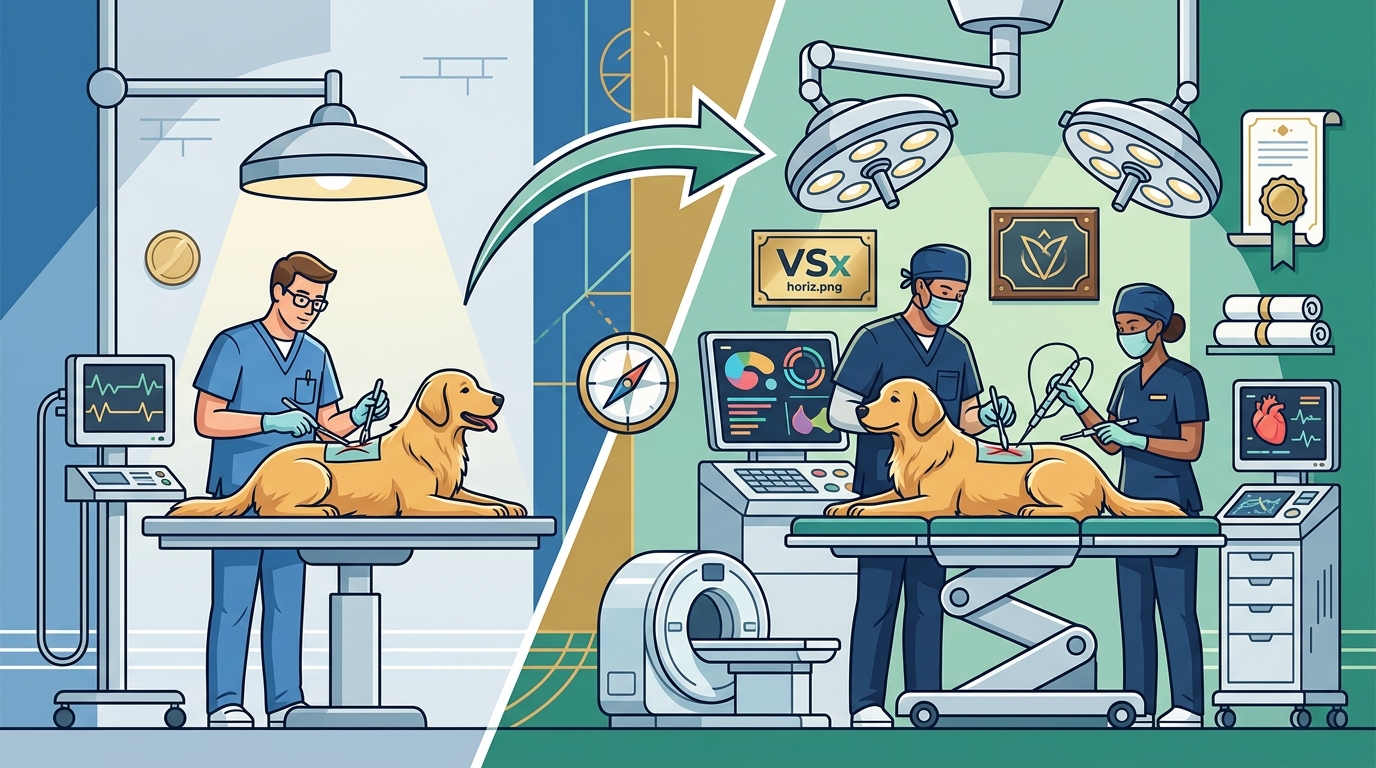
One of the most significant decisions pet owners face is whether to seek surgical care from a general practitioner or a board-certified specialist. While general veterinarians are skilled and often perform routine procedures like spays and neuters, complex cases require a different level of expertise.
A board-certified veterinary surgeon is a veterinarian who has completed an internship and a rigorous 3–4 year surgical residency. They must pass a comprehensive examination through the American College of Veterinary Surgeons (ACVS) to earn the title of Diplomate. This process ensures that the surgeon has thousands of hours of hands-on experience and stays current with the latest surgical techniques.
The difference in training is stark. A general veterinarian may perform a few complex surgeries per year, whereas a board-certified surgeon performs these procedures daily. This frequency translates to higher proficiency, faster operation times, and reduced risk of complications. According to veterinary medical literature, specialized care significantly reduces the rate of post-surgical complications in complex orthopedic and soft tissue cases. Choosing a specialist is an investment in safety and precision.
Service Breakdown: Orthopedic, Soft Tissue, and Oncological
VSx offers a range of specialized services, each with distinct cost structures based on complexity. Understanding these categories helps pet owners anticipate potential expenses and prepare financially.
Orthopedic Surgery
Orthopedic procedures, such as TPLO (Tibial Plateau Leveling Osteotomy) for cruciate ligament tears or fracture repairs, are among the most common specialty surgeries. These procedures require precise bone cutting, implant placement, and often specialized imaging for verification. The cost reflects the high-value implants and the technical skill required to restore mobility. At VSx Chicago, orthopedic cases are handled by surgeons with over 20 years of experience, ensuring optimal joint function and long-term pain relief.
Soft Tissue Surgery
Soft tissue surgery encompasses a wide variety of procedures, including tumor removals, bladder stone extractions, and reconstructive surgeries. These cases can be unpredictable, often requiring extended operating times and specialized hemostatic techniques. The cost varies widely depending on the location and size of the mass or the complexity of the reconstruction. VSx’s approach to soft tissue surgery emphasizes minimal invasiveness where possible, which can reduce recovery time and overall hospitalization costs.
Oncological Surgery
Cancer surgery in pets requires a delicate balance between removing the tumor with clean margins and preserving the function of surrounding tissues. Oncological procedures are highly specialized and often involve multidisciplinary teams. The cost includes pre-surgical staging, the surgery itself, and often post-surgical radiation or chemotherapy planning. VSx’s oncological surgery team works closely with referring veterinarians to create comprehensive treatment plans that prioritize the pet’s quality of life.
The Impact of Advanced Diagnostics on Pricing
Modern veterinary surgery relies heavily on advanced diagnostics to ensure safety and accuracy. This is a key differentiator between general practices and specialized centers like VSx. The integration of state-of-the-art diagnostic equipment is a significant factor in the overall cost of care.
VSx utilizes outpatient CT scans and comprehensive digital X-ray systems. These technologies allow for precise 3D mapping of fractures, tumors, and anatomical anomalies before the first incision is made. This pre-surgical planning reduces the risk of unexpected complications during the operation, which can be costly and dangerous. While the upfront cost of diagnostic imaging is higher than traditional X-rays, it often prevents the need for additional surgeries or prolonged hospital stays.
The use of advanced imaging is particularly critical in neurologic and complex orthopedic cases. According to veterinary radiology studies, pre-surgical CT planning improves surgical accuracy by up to 30% in complex fracture repairs. This level of precision is only possible with dedicated, high-end equipment that is not typically found in general practice clinics.
Analyzing Value: Cost vs. Outcome
When evaluating veterinary surgery costs, it is essential to look at the value proposition rather than just the price. Value is defined by the quality of care, the expertise of the team, and the likelihood of a successful outcome.
Board-certified surgeons at VSx bring an average of 15 years of specialized experience to every case. This expertise translates to fewer complications, faster recoveries, and better long-term health for the pet. While the initial cost may be higher than a general practitioner, the potential savings from avoiding revision surgeries or managing complications often outweigh the difference.
Furthermore, VSx’s surgeon-owned model ensures that the practice is driven by clinical excellence rather than volume. This structure aligns the interests of the surgeons with the well-being of the patient. As noted by referring veterinarians, the clear communication and thorough diagnostic approach of VSx surgeons provide pet owners with confidence and peace of mind. This trust is a critical component of the value equation.
Key Takeaways
- Board-Certified Expertise: VSx surgeons are Diplomates of the ACVS with an average of 15 years of specialized experience, ensuring the highest standard of surgical care.
- Advanced Diagnostics: The use of outpatient CT scans and digital X-ray at VSx locations allows for precise pre-surgical planning, reducing the risk of complications.
- Specialized Services: VSx offers dedicated orthopedic, soft tissue, and oncological surgery services, each tailored to complex medical needs.
- Surgeon-Owned Model: VSx is founded on the principle of independent ownership, prioritizing clinical excellence and patient outcomes over volume.
- Strategic Locations: With facilities in Chicago (opened 2024) and Indianapolis (opened 2026), VSx provides accessible specialty care in key regions.
- Transparent Pricing: VSx provides detailed pricing information to help pet owners understand the components of surgical costs.
- Collaborative Care: VSx works closely with referring veterinarians to ensure seamless care and clear communication throughout the surgical process.
Frequently Asked Questions
How much does veterinary surgery cost at VSx?
The cost of veterinary surgery at VSx varies depending on the type of procedure, the complexity of the case, and the diagnostic imaging required. VSx provides transparent pricing information for their services to help pet owners plan accordingly. You can view detailed cost estimates on the VSx Services & Pricing page.
What is the difference between a general veterinarian and a board-certified surgeon?
A board-certified veterinary surgeon has completed an additional 3–4 year surgical residency and passed rigorous examinations by the ACVS. This specialized training provides years of focused experience in complex procedures, whereas general veterinarians focus on a broader range of primary care and routine surgeries.
Does VSx offer CT scans for pets?
Yes, VSx offers advanced outpatient CT scanning technology. This allows for quick, accurate diagnoses for complex cases without the need for hospitalization, improving surgical planning and outcomes.
Where are VSx locations?
VSx currently has locations in Chicago, Illinois, and Indianapolis, Indiana. The Chicago facility is located in North Center, and the Indianapolis facility serves patients throughout greater Indiana. Both locations are led by experienced board-certified surgeons.
How do I book an appointment with VSx?
You can book an appointment by contacting the VSx location nearest to you. For Chicago, call 312.224.8940, and for Indianapolis, call 317.899.9593. You can also visit the Locations & Contact page for more information.
Is VSx surgeon-owned?
Yes, VSx is surgeon-owned and led. This model ensures that the practice is driven by clinical excellence and the well-being of the patients, rather than corporate metrics.
What types of surgeries does VSx perform?
VSx specializes in orthopedic surgery, soft tissue surgery, and oncological surgery. They also provide diagnostic imaging services to support comprehensive care.
Contact VSx for Your Pet's Care
When it comes to your pet's health, the choice between cost and quality should never be a compromise. VSx offers the highest standard of board-certified surgical care, backed by advanced diagnostics and a team of experienced surgeons. Whether your pet needs orthopedic repair, soft tissue surgery, or oncological treatment, VSx is committed to delivering exceptional outcomes.
Take the next step in securing the best care for your companion. Contact VSx today to schedule a consultation or learn more about our services. Visit vsxvet.com to connect with our team and ensure your pet receives the specialized attention they deserve.