
Cruciate ligament injuries are among the most common orthopedic emergencies in dogs, affecting millions of pets annually. According to recent veterinary orthopedic data, over 3 million dogs are diagnosed with cranial cruciate ligament (CCL) rupture each year in the United States alone. When conservative management fails, surgical intervention becomes the gold standard for restoring mobility and preventing arthritis. Two of the most prevalent procedures are Tibial Plateau Leveling Osteotomy (TPLO) and Tibial Tuberosity Advancement (TTA). Understanding the mechanical differences, recovery timelines, and long-term outcomes of these surgeries is critical for pet owners and referring veterinarians alike. (Board Certified Veterinary Surgery)
Understanding the CCL Injury
The cranial cruciate ligament (CCL) in dogs serves a function similar to the anterior cruciate ligament (ACL) in humans. It stabilizes the knee joint by preventing the tibia from sliding forward relative to the femur. When this ligament ruptures, the knee becomes unstable, leading to pain, lameness, and rapid onset of osteoarthritis. Unlike humans, dogs rarely have a complete rupture; instead, they often suffer from degeneration that leads to partial or full tears. This degeneration is frequently linked to genetics, conformation, obesity, and age. Without surgical correction, the joint continues to grind, causing chronic pain and reduced quality of life. At VSx Veterinary Surgery, we emphasize that early stabilization is key to preserving joint health.
The TPLO Procedure Explained
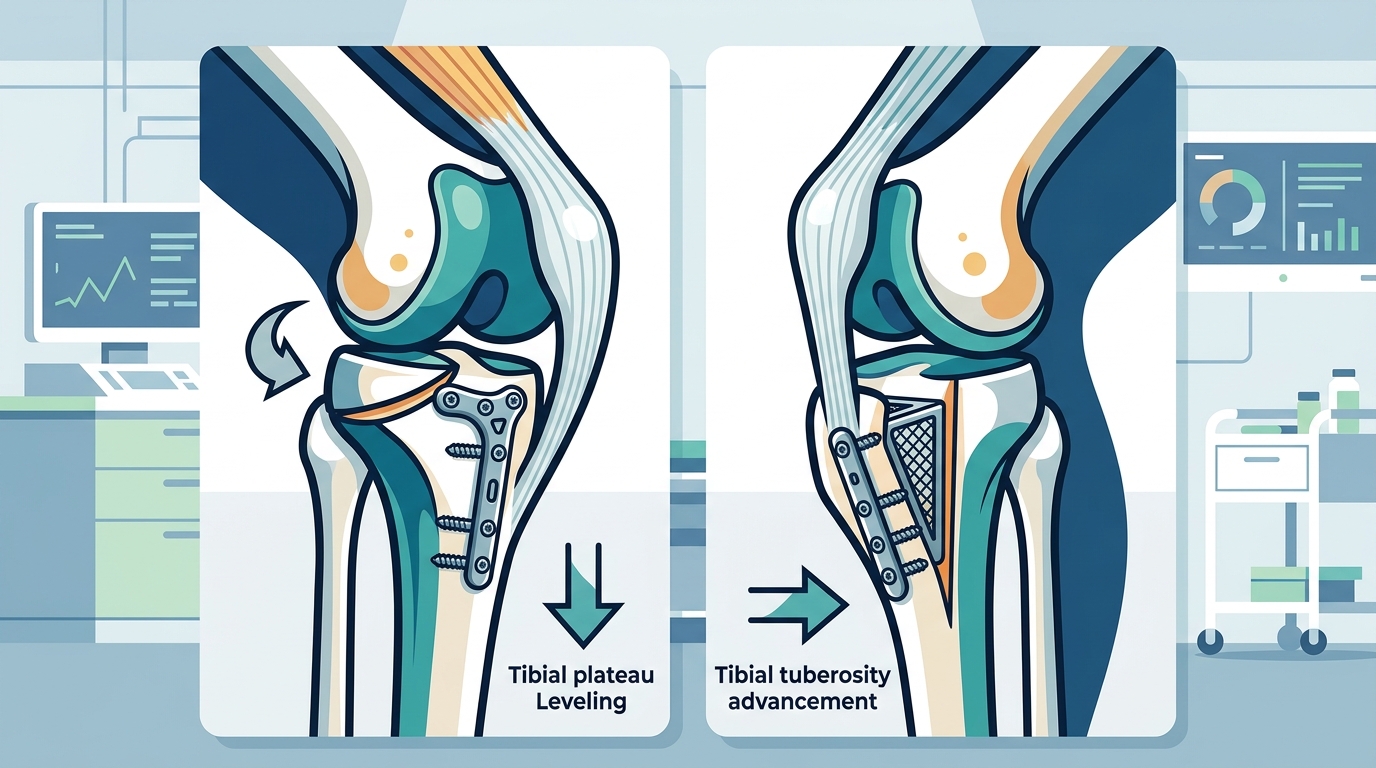
Tibial Plateau Leveling Osteotomy (TPLO) is currently one of the most widely performed surgical techniques for CCL repair. The procedure involves cutting the tibial plateau at a precise angle and rotating it to change the slope of the joint surface. This geometric alteration neutralizes the cranial drawer force, which is the primary cause of instability, without needing the ligament itself. The bone is then stabilized with a plate and screws. TPLO is particularly effective for medium to large breed dogs with a steep tibial plateau angle. The goal is to create a stable knee where the tibia and femur move in harmony during weight-bearing activities. For more details on our orthopedic capabilities, visit our orthopedic surgery services page. (FAQs mdash VSx Veterinary)
Advantages of TPLO
TPLO offers several distinct advantages. First, it provides immediate stability, allowing for earlier weight-bearing compared to some other techniques. Second, it has a long track record of success with predictable outcomes. Third, it addresses the underlying biomechanical cause of the instability rather than just repairing the torn tissue. Many referring veterinarians recommend TPLO for active dogs because it restores near-normal joint mechanics. Our surgeons at VSx utilize advanced imaging to plan the exact cut angle for each patient.
Considerations for TPLO
While highly effective, TPLO requires a significant surgical incision and precise bone cutting. The recovery period involves strict crate rest for several weeks to ensure the bone heals correctly. There is also a risk of hardware irritation, though this is relatively rare. The procedure is technically demanding and requires a surgeon with specialized training in osteotomies. This is why board-certified veterinary surgeons are essential for this type of complex orthopedic work.
The TTA Procedure Explained
Tibial Tuberosity Advancement (TTA) is another popular method for stabilizing the stifle joint. Instead of rotating the tibial plateau, TTA involves cutting the tibial tuberosity (the attachment point for the patellar ligament) and advancing it forward. A titanium spacer is inserted to maintain the new position, and a plate secures the bone. The advancement changes the angle of the patellar ligament so that when the dog bears weight, the quadriceps muscle pulls the tibia backward, neutralizing the cranial drawer force. This technique is often favored for dogs with a less steep tibial plateau angle or for those where preserving the tibial plateau geometry is preferred. You can learn more about our soft tissue and orthopedic services to understand how we tailor approaches to individual patients.
Advantages of TTA
One of the primary benefits of TTA is that it does not alter the slope of the tibial plateau, which some surgeons believe may preserve more of the native joint anatomy. The procedure can be less technically demanding in terms of bone cutting angles compared to TPLO. Additionally, the titanium spacer used in TTA is designed to be biocompatible and remains in the body permanently. Many pet owners appreciate that the hardware is often less palpable under the skin than the TPLO plate. Our team at VSx Chicago frequently discusses the merits of TTA for specific conformational types.
Considerations for TTA
TTA requires a longer incision and more dissection of the soft tissues around the knee. The healing process for the osteotomy site can be slower than TPLO in some cases. There is also a risk of patellar luxation or fracture of the tibial tuberosity if the advancement is too aggressive. The procedure is highly dependent on accurate measurement and planning. Incorrect advancement can lead to continued instability or excessive tension on the joint. This is why we use state-of-the-art diagnostic imaging to ensure precision.
Comparing Outcomes and Recovery
Both TPLO and TTA have demonstrated high success rates in restoring function and reducing pain. Studies indicate that both procedures result in significant improvements in limb use and quality of life. However, the choice often depends on the individual dog's anatomy, size, and activity level. TPLO is often preferred for high-energy dogs and those with a steep tibial plateau. TTA may be chosen for dogs with a flatter plateau or where the surgeon wishes to avoid altering the plateau angle. Recovery for both procedures involves strict confinement for 8 to 12 weeks, followed by gradual physical therapy. At VSx Locations, we coordinate closely with referring vets to ensure smooth post-operative care.
Recovery Timeline Comparison
Recovery is a critical phase for both surgeries. In the first two weeks, strict crate rest is mandatory to prevent hardware failure or bone displacement. Pain management is aggressive during this time. By week four, controlled leash walks begin. By week eight, most dogs show significant improvement in gait. Full recovery and return to high-impact activities can take up to six months. Consistent follow-up with X-rays is essential to monitor bone healing. Our surgeons provide detailed home care instructions to pet owners to ensure the best possible outcome.
Cost, Value, and Insurance
The cost of CCL surgery varies based on the procedure, geographic location, and individual patient needs. Both TPLO and TTA are significant investments in your pet's health. However, the long-term value of preventing severe arthritis and maintaining mobility is immense. Many pet insurance policies cover a portion of the cost, so it is important to check your policy details. VSx provides transparent pricing and works with pet owners to understand financial options. We believe that exceptional surgical care should be accessible to all pets who need it. For more information on our services and pricing, please contact our team directly.
Insurance and Financial Planning
Before scheduling surgery, pet owners should review their insurance coverage. Some policies have waiting periods or exclusions for pre-existing conditions. VSx staff can provide detailed invoices and documentation to facilitate insurance claims. We also offer payment plans to help manage the financial burden. Our goal is to ensure that cost is not a barrier to receiving high-quality veterinary care. We encourage pet owners to discuss financial concerns openly with our team.
Key Takeaways
- TPLO and TTA are both highly effective procedures for stabilizing the stifle joint after CCL rupture.
- TPLO alters the tibial plateau angle to neutralize cranial drawer force, while TTA advances the tibial tuberosity.
- Both procedures require strict post-operative confinement and gradual rehabilitation for optimal healing.
- Board-certified veterinary surgeons have an average of 15 years of experience, ensuring high standards of care.
- VSx operates in Chicago, Indianapolis, and Nashville, providing specialized orthopedic services to local communities.
- Early intervention can significantly reduce the progression of osteoarthritis and improve long-term joint health.
- Consulting with a specialist is crucial for determining the best surgical approach for your dog's specific anatomy.
Frequently Asked Questions
Which is better, TPLO or TTA?
Neither procedure is universally "better." The choice depends on your dog's tibial plateau angle, size, and activity level. TPLO is often preferred for steep angles, while TTA may be suitable for flatter angles. Our surgeons evaluate each case individually to recommend the best option.
How long is the recovery period for CCL surgery?
Recovery typically involves 8 to 12 weeks of strict confinement and gradual exercise. Full return to high-impact activities may take up to six months. Consistent follow-up with X-rays is essential to monitor bone healing.
Is CCL surgery covered by pet insurance?
Many pet insurance policies cover a portion of the cost, but coverage varies by plan. It is important to check your policy details before scheduling surgery. VSx can provide detailed documentation to facilitate claims.
What are the risks of TPLO or TTA?
Risks include infection, hardware irritation, and delayed bone healing. However, these complications are relatively rare when performed by board-certified surgeons. Our team takes every precaution to minimize risks and ensure patient safety.
Can both legs be operated on at the same time?
It is generally not recommended to operate on both legs simultaneously due to the difficulty of post-operative care and mobility. Staggering the surgeries allows for better recovery and pain management.
How do I know if my dog needs surgery?
If your dog is limping, has a swollen knee, or is reluctant to exercise, consult your veterinarian. Early diagnosis and treatment can prevent further joint damage and improve outcomes.
What is the success rate of these surgeries?
Both TPLO and TTA have high success rates, with most dogs returning to normal activity levels. Long-term outcomes depend on factors such as age, weight, and adherence to post-operative care instructions.
Schedule Your Consultation
If you suspect your dog has a CCL injury, timely consultation with a board-certified veterinary surgeon is essential. VSx is dedicated to providing exceptional orthopedic care with compassion and expertise. Our team is ready to help you make the best decision for your pet's health. Contact us today to schedule a consultation at one of our locations in Chicago, Indianapolis, or Nashville. We look forward to partnering with you and your referring veterinarian to restore your dog's mobility and quality of life.