

Canine cruciate ligament injuries represent one of the most common orthopedic emergencies in veterinary medicine, affecting millions of dogs annually. According to recent veterinary orthopedic data, cruciate disease accounts for approximately 20% of all orthopedic conditions in dogs, with the cranial cruciate ligament (CCL) being the primary site of failure. This statistic highlights the critical need for accurate diagnostic pathways and effective surgical interventions. When a dog suffers from a torn CCL, the resulting instability can lead to rapid onset of arthritis, chronic pain, and significant mobility loss. Understanding the nuances between the Tibial Plateau Leveling Osteotomy (TPLO) and alternative surgical options is essential for pet owners and referring veterinarians alike. This guide explores the clinical evidence, procedural differences, and long-term outcomes to help you make an informed decision for your patient.
Understanding the TPLO Procedure
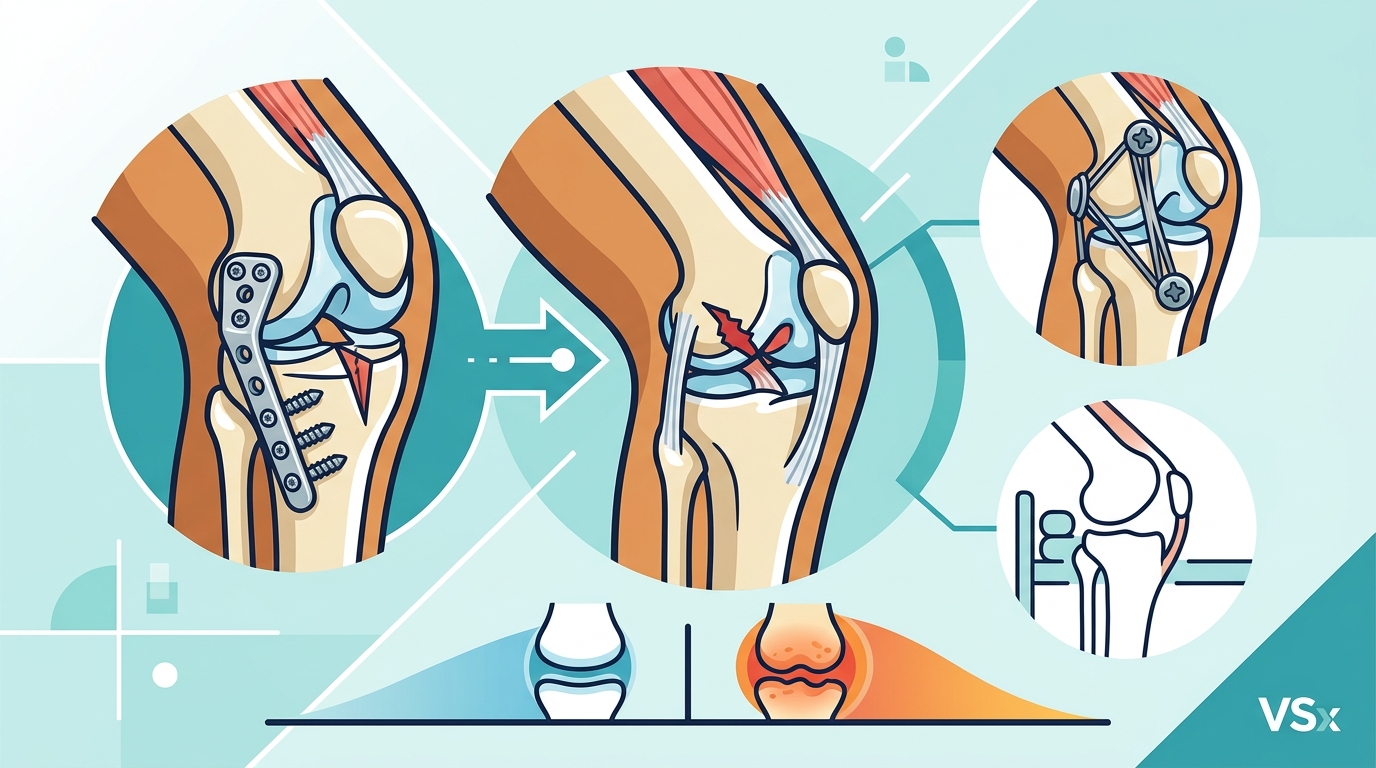
The Tibial Plateau Leveling Osteotomy (TPLO) has become the gold standard for treating cranial cruciate ligament rupture in medium to large breed dogs. The procedure addresses the root cause of instability rather than just the symptom. The core mechanism relies on neutralizing the tibial plateau angle (TPA), which is the angle between the tibial plateau and the long axis of the tibia. In a normal knee, this angle creates a shear force that pushes the tibia forward relative to the femur when the dog bears weight. By cutting the tibia and rotating it to reduce the TPA to near zero, the surgeon eliminates this shear force. This allows the dog to bear weight without relying on the torn ligament for stability.
At VSx, our board-certified surgeons utilize state-of-the-art diagnostic imaging to precisely calculate the required rotation angle for each individual patient. This precision is critical because an under-correction may leave residual instability, while an over-correction can lead to other biomechanical issues. The procedure involves a curved osteotomy, placement of a specialized plate, and insertion of bone grafts to promote healing. Because the knee becomes stable immediately after surgery, many patients can begin weight-bearing within days, significantly accelerating the rehabilitation process.
TPLO is particularly effective for active dogs and those with high body mass index (BMI). The rigid internal fixation provided by the plate ensures that the bone heals in the correct position, minimizing the risk of non-union or implant failure. Our surgeons at VSx Chicago and VSx Indianapolis perform these procedures daily, leveraging their extensive experience to manage complex cases with high success rates.
Alternative Surgical Options
While TPLO is highly effective, it is not the only surgical option available. Depending on the patient's size, age, activity level, and the referring veterinarian's recommendation, other procedures may be considered. Understanding these alternatives is vital for a comprehensive treatment plan.
TightRope (Extracapsular Lateral Suture)
The TightRope procedure is a form of extracapsular lateral suture stabilization. It involves placing a strong synthetic suture around the outside of the knee joint to mimic the function of the torn cranial cruciate ligament. This method is often preferred for smaller dogs, typically under 20 to 25 kilograms, where the shear forces are lower. The advantage of TightRope is that it is less invasive than TPLO and does not require cutting the bone. However, it does not address the underlying tibial plateau angle, meaning the joint remains susceptible to ongoing meniscal damage if the suture stretches or fails over time. For more details on our surgical services, visit our Services & Pricing page.
Tibial Tuberosity Advancement (TTA)
Tibial Tuberosity Advancement (TTA) is another osteotomy procedure similar to TPLO but with a different biomechanical goal. Instead of leveling the plateau, TTA advances the tibial tuberosity forward to change the angle of the patellar tendon. This adjustment neutralizes the shear force by altering the tension in the quadriceps muscle. TTA is often used in dogs with a high tibial plateau angle or those who are not ideal candidates for TPLO. The procedure requires a specialized cutting guide and plate system. Recovery times are comparable to TPLO, but the hardware profile is different. Our team at VSx Board-Certified Surgeons evaluates each case to determine if TTA offers a biomechanical advantage over TPLO.
Lateral Suture Techniques
Traditional lateral suture techniques involve placing sutures on the lateral aspect of the joint to provide stability. While these are less expensive than osteotomies, they are generally reserved for very small dogs or patients with significant comorbidities that preclude more invasive surgery. The long-term success rates are lower compared to TPLO and TTA, particularly in active or overweight dogs. The suture can stretch or break, leading to recurrent instability. For a deeper dive into our diagnostic capabilities, including Outpatient CT Scans, which help in pre-surgical planning, please review our resources.
Comparing Outcomes and Recovery
When comparing TPLO to alternative options, several key factors emerge regarding outcomes, recovery time, and long-term joint health. The following table summarizes the primary differences between these surgical interventions.
| Procedure | Best Candidate Profile | Biomechanical Goal | Recovery Timeline | Long-Term Stability |
|---|---|---|---|---|
| TPLO | Medium to Large Breeds, Active Dogs | Neutralize Shear Force | 6-8 Weeks | High |
| TTA | Large Breeds, High TPA | Alter Patellar Tendon Angle | 6-8 Weeks | High |
| TightRope | Small Breeds (<25kg) | Extracapsular Stabilization | 4-6 Weeks | Moderate |
| Lateral Suture | Small Breeds, Low Activity | Extracapsular Stabilization | 4-6 Weeks | Lower |
Data from veterinary orthopedic studies indicates that TPLO and TTA have significantly higher rates of returning to pre-injury activity levels compared to extracapsular techniques. This is largely due to the correction of the underlying biomechanical instability. In contrast, extracapsular techniques rely on the integrity of the suture material, which can degrade or stretch over time. For pet owners concerned about cost, our Services & Pricing page provides transparent estimates for each procedure, helping you plan for the best possible care.
Patient Selection Criteria
Selecting the right surgical option requires a thorough evaluation of the individual patient. Several factors influence this decision, including body weight, age, breed, and the degree of meniscal damage. Large breed dogs, such as Labrador Retrievers, German Shepherds, and Rottweilers, typically benefit most from TPLO or TTA due to the higher forces acting on their knees. Small breed dogs may do well with TightRope, provided they do not have significant tibial plateau angles.
Diagnostic imaging is crucial in this process. At VSx, we utilize advanced digital X-ray and Outpatient CT Scans to assess bone structure and plan the osteotomy. This precision ensures that the surgical correction is tailored to the patient's unique anatomy. Our surgeons, including Dr. Marc Wosar and Dr. Brian Martin, collaborate closely with referring veterinarians to ensure a seamless transition from diagnosis to surgery. This collaborative care model is a cornerstone of our practice, ensuring that every patient receives the highest standard of surgical care.
Key Takeaways
- TPLO is the Gold Standard: For medium to large breeds, TPLO offers the most reliable long-term stability by neutralizing shear forces.
- Biomechanics Matter: The choice between TPLO and TTA depends on the specific tibial plateau angle and patient anatomy.
- Small Breed Options: TightRope is a viable, less invasive option for dogs under 25kg with appropriate anatomy.
- Board-Certified Expertise: Outcomes are significantly better when performed by board-certified surgeons with specialized training.
- Diagnostic Precision: Advanced imaging, including CT scans, is essential for accurate pre-surgical planning.
- Recovery is Managed: Post-operative pain management and physical therapy are critical for successful outcomes.
- Collaborative Care: VSx works closely with referring veterinarians to ensure continuity of care and optimal patient results.
Frequently Asked Questions
How long does recovery take after a TPLO?
Recovery typically takes 6 to 8 weeks. During this time, strict crate rest is required for the first 10-14 days, followed by gradual leash walks and physical therapy. Most dogs show significant improvement within the first few weeks.
Is TPLO more expensive than other options?
TPLO is generally more expensive than extracapsular suture techniques due to the complexity of the surgery and the specialized implants used. However, the long-term benefits of stability and reduced arthritis may outweigh the initial cost. View our Services & Pricing for detailed estimates.
Can a dog have TPLO on both legs?
Yes, dogs can have TPLO on both legs. However, it is often recommended to stagger the surgeries by 8-12 weeks to allow for proper rehabilitation and to avoid overburdening the remaining leg during recovery.
What is the success rate of TPLO?
TPLO has a high success rate, with over 90% of dogs returning to their pre-injury activity levels. The procedure effectively eliminates the instability caused by the torn ligament.
Do you offer consultations for referring veterinarians?
Yes, VSx welcomes consultations from referring veterinarians. We provide detailed surgical plans and post-operative care guidelines to ensure the best outcomes for our shared patients. Contact our Locations & Contact page to schedule a discussion.
What are the risks of not treating a cruciate tear?
Without treatment, the knee will remain unstable, leading to rapid onset of osteoarthritis, meniscal tears, and chronic pain. This can significantly reduce the dog's quality of life and mobility.
How do you choose between TPLO and TTA?
The choice depends on the patient's tibial plateau angle, bone structure, and the surgeon's assessment. Both procedures are effective, but TPLO is more commonly performed for its predictable outcomes in a wide range of breeds.
Schedule Your Consultation Today
If your dog is suffering from a cruciate ligament injury, timely intervention is crucial for the best outcome. VSx Veterinary Surgery offers board-certified expertise and state-of-the-art facilities in Chicago, Indianapolis, and Nashville. Our team is dedicated to providing exceptional care and clear communication throughout the surgical journey. Contact us today to schedule a consultation or discuss a referral. Visit our Locations & Contact page to find the nearest facility and book your appointment.